
Odyssey Gold Ltd. (ASX: ODY) has outlined a fast-track development strategy for its flagship Tuckanarra Project in Western Australia, supported by an initial 407,000-ounce gold Mineral Resource and fresh capital to accelerate drilling and technical studies.
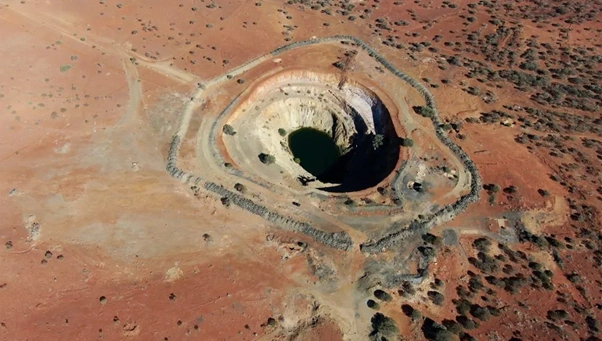
Aerial view of the Tuckanarra Gold Project in Western Australia’s Murchison Region, where Odyssey Gold Ltd is advancing a 407,000oz gold resource. [Mining.com]
The Company, listed on the Australian Securities Exchange, reported that the Tuckanarra resource comprises 5.14 million tonnes at 2.5 grams per tonne (g/t) gold for 407,000 ounces. Management stated that the project’s location within the established Murchison Region, combined with access to existing infrastructure, enhances its development potential.
The resource is largely located on granted Mining Leases surrounding historical open pits and is dominated by laterite, oxide and transitional material, which typically supports simpler processing pathways relative to refractory ore.
Key Resource Metrics and Exploration Progress
The 407,000oz Mineral Resource underpins the Company’s current development case and is expected to expand through ongoing drilling programs.
Resource highlights:
- 407,000oz of gold contained
- 14Mt at 2.5g/t gold average grade
- Majority oxide and transitional material
- Located on granted Mining Leases
- Extinguished Native Title across most deposits
At 2.5g/t, the average grade compares favourably with many global open-pit gold operations, where grades commonly range between 1.0g/t and 2.0g/t. The grade profile may support competitive operating margins, subject to final mine design and processing assumptions.
Drilling programs are continuing, with reverse circulation and diamond rigs mobilised to infill existing resources and test extensions along strike and at depth. Metallurgical and geotechnical studies are also underway to inform pit optimisation and processing strategies.
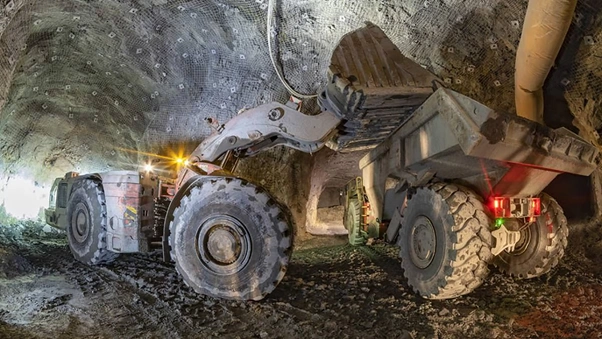
Gold mineralisation at Tuckanarra, including oxide and transitional zones targeted for development. [The Australian]
Development Strategy and Infrastructure
A scoping study is in progress to assess potential development scenarios. Rather than constructing a standalone processing facility, the Company is evaluating toll treatment and partnership options to leverage existing regional infrastructure.
Management has highlighted more than 13 million tonnes per annum of nominal gold processing capacity within a 250-kilometre radius of Tuckanarra. Discussions remain ongoing with potential processing partners, including an existing memorandum of understanding with Monument Mining Ltd regarding the nearby Burnakura plant.
Preliminary planning for site infrastructure, including camp facilities, haul roads, water supply, and power, is also advancing under the framework of an accepted mining proposal.
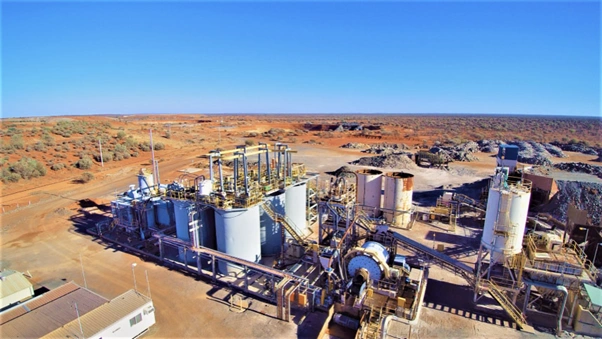
Existing regional gold processing infrastructure may provide toll-treatment options for Tuckanarra ore. [Monument Mining]
Funding and Strategic Positioning
The Company recently completed a $9 million capital raising to fund drilling, resource growth, metallurgical test work, and development studies. The placement included a $2.2 million investment from Tribeca Investment Partners, providing institutional support for the next phase of project advancement.
Progress at Tuckanarra comes amid continued strength in global gold prices, supported by central bank demand and investor allocation to safe-haven assets. In this context, higher gold prices may improve project economics and financing flexibility for near-term developers.
The Murchison remains one of Australia’s most established gold provinces, hosting multiple operating mines and processing facilities, which may reduce execution risk compared with greenfield jurisdictions.
Market Update
On the market, Odyssey Gold Ltd. (ASX: ODY) last traded at $0.034, down $0.001 or 2.857 per cent for the session. The Company recorded volume of 3,634,858 shares, with a bid-offer range of $0.034 to $0.035 and a market capitalisation of approximately $49.01 million.
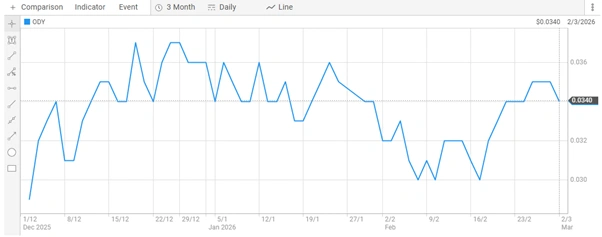
Odyssey Gold Ltd Share Price [ASX]
Investors and analysts are expected to monitor upcoming drilling results, resource updates, and scoping study outcomes as key catalysts in assessing the project’s transition from exploration to potential development.
Also Read: Australian vs US Banks: Home Loan Rates 2026 – Colitco
FAQs
- What is Odyssey Gold Ltd?
Odyssey Gold Ltd is a Western Australian gold exploration and development company listed on the Australian Securities Exchange (ASX: ODY). The Company is focused on advancing its flagship Tuckanarra Gold Project in the Murchison region of Western Australia.
- Where is the Tuckanarra Gold Project located?
The Tuckanarra Gold Project is situated in the Murchison Region, approximately 40 kilometres north of Cue and around 680 kilometres north-east of Perth. The region is a well-established gold province with existing mining operations and processing infrastructure.
- What is the current mineral resource at Tuckanarra?
The project hosts a mineral resource estimate of approximately:
- 14 million tonnes
- 5 grams per tonne (g/t) gold
- 407,000 ounces of contained gold
The resource is reported in accordance with the JORC Code and is largely located on granted mining leases.
- Has gold been mined at Tuckanarra before?
Yes. Historical operations at Tuckanarra produced gold from shallow open pits and underground workings during the 1990s. Previous mining demonstrates the presence of economic mineralisation and existing site disturbance.
- What type of gold mineralisation is present?
The mineralisation is predominantly laterite, oxide and transitional material. Oxide and transitional ore types are generally considered simpler and potentially lower-cost to process compared with refractory sulphide ore.
- What is a Mineral Resource Estimate (MRE)?
A mineral resource estimate is a technical assessment of the quantity, grade and geological continuity of mineralisation within a deposit. It is prepared using drilling data, geological modeling, and statistical analysis under regulated reporting standards such as the JORC Code.
- What do “inferred,” “indicated,” and “measured” resources mean?
These categories describe confidence levels in geological data:
- Inferred – Lowest confidence, based on limited drilling data.
- Indicated – Moderate confidence with reasonably established continuity.
- Measured – Highest confidence with detailed and closely spaced data.
Higher-confidence categories provide stronger foundations for feasibility studies and mine planning.
- How are mineral resources estimated?
Resource estimation involves:
- Geological mapping and modelling
- Drill core and reverse circulation sampling
- Laboratory assay analysis
- 3D geological modelling
- Geostatistical grade estimation
These processes allow geologists to calculate tonnage and grade across a mineralised body.
- Why is Australia a major gold exploration destination?
Australia is one of the world’s leading gold-producing nations due to:
- Extensive historic goldfields
- Advanced geological knowledge
- Strong regulatory frameworks
- Established infrastructure
- Ongoing exploration investment
Western Australia, in particular, hosts several world-class gold provinces.
- What methods are used in Australian gold exploration?
Common exploration methods include:
- Reverse circulation (RC) drilling
- Diamond core drilling
- Geochemical soil sampling
- Geophysical surveys
- Structural and geological mapping
These techniques help identify and define mineralised zones for resource estimation.
- Why are resource estimates important for investors?
Mineral Resource Estimates provide a transparent and regulated basis for evaluating a project’s scale and grade. They underpin economic studies, development planning and financing discussions. Investors and analysts rely on these estimates to assess project potential and risk.
- Is further exploration planned at Tuckanarra?
Yes. Ongoing drilling programs aim to:
- Expand the existing resource
- Convert Inferred resources to higher-confidence categories
- Test extensions along strike and at depth
- Support development studies
Future exploration success may lead to resource growth and improved project economics.