
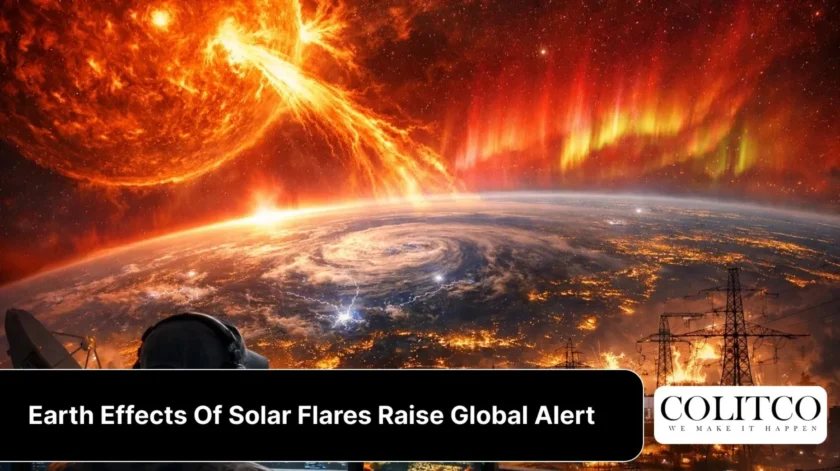
Solar flares were emitted by the sun a number of times, and the space agencies all over the world were on high alert. On Sunday, NASA observed three flares at 7.33 a.m. E.T, 6.37 p.m. E.T and 7.36 p.m. E.T.
On Monday, 3.14 a.m. ET, a fourth flare was followed. All the events were of the X-class, the strongest known type. Professionals indicate that flares of such magnitudes are rare. The second Sunday burst recorded X8.1, the strongest reading in a number of years.
Scientists caution that such eruptions are capable of going at the speed of light, and they can reach the earth in a short time. The government is becoming very cautious in the evaluation of the earth impact of solar flares.
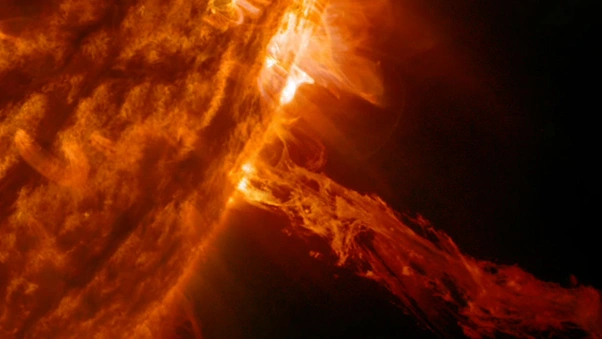
Huge sun burst bursts out of the surface of the sun as captured by a NASA observatory. [NASA Scientific Visualization Studio]
What Makes These Solar Flares So Powerful?
Solar flares come into being when the magnetic energy that is stored close to the sunspots is suddenly released into space. The energy gives off radiation throughout the electromagnetic spectrum.
The bursts may take between minutes and hours. X-class flares are the strongest, and they are able to release a lot of energy. These flares are usually produced in the presence of extremely active regions of the sun.
These are areas of heavy concentration of magnetic fields, and it twists and break. The radiation diffuses when emitted. Scientists estimate the power to be billions of nuclear explosions all at the same time.
The strong solar flares of this week show that there is a period of active solar cycles. In October 2024, the sun was at its solar maximum, which made strong eruptions more common.
Solar Storm Effects On Earth Disrupt Technology
Flares emit radiation that has the potential to disrupt satellites, aviation systems and radio networks on the sunlit side of the Earth. Without notice, high-frequency communications can be timed out. Signal faults may take minutes or hours.
Temporary errors are also experienced in the navigation systems. The severe space weather frequently affects air and sea routes by making airlines and sea operators alter their routes. According to the forecasts of NOAA, a severe geomagnetic storm is expected this week.
According to the agency, users can lose contact or suffer significant inconveniences. The emergency services and remote operations may be affected by these solar storm effects on Earth. Bosses of infrastructure are ready to secure sensitive systems.
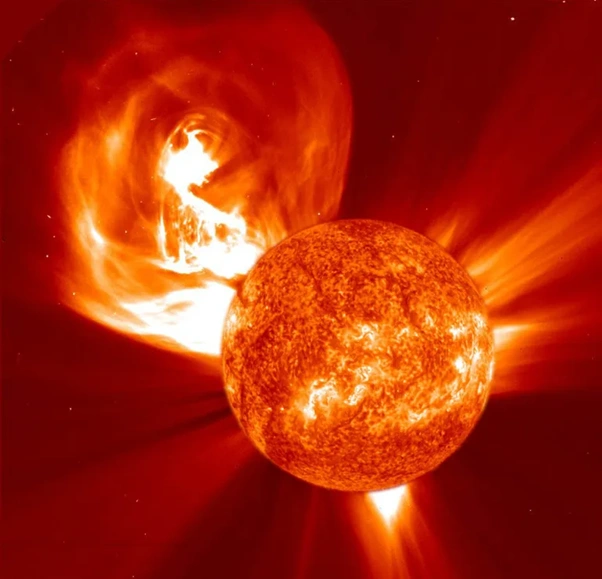
Flare radiation is observed travelling toward the Earth during geomagnetic activity, which is captured by a satellite. [NASA Science]
Could Northern Lights Be Seen Further South?
Aurora Geomagnetic storms frequently cause large displays of aurora outside polar areas. Atoms in the upper atmosphere collide with charged particles to emit coloured light. This is what constitutes the northern and southern lights.
Powerful storms drive such displays further south. Scientists indicate that unusual sightings might be experienced in some parts of the United States. The visibility is determined by cloud cover and magnetic orientation.
Time is also an important factor. Societies that have no experience of the aurora might experience vivid skies of green or red. Forecasts on peak periods should be observed by the observers. These are not harmful, but are an indication of increased solar activity.
Scientists Track Coronal Mass Ejections Closely
The coronal mass ejections are commonly followed by solar flares and consist of plasma and magnetic ejections into space. These clouds move more slowly than radiation, though they have heavier particles.
A strike of a CME on the Earth causes the compression of the magnetosphere. This squeeze is capable of enhancing geomagnetic storms. Speed, direction and magnetic alignment are monitored at monitor stations. Even minor alterations are able to change the severity of impact.
Satellites play a role in supplying early warning to the agencies. This monitoring assists the utilities and operators in planning mitigation measures. These are made with the view of minimising the harm and preserving the key services.
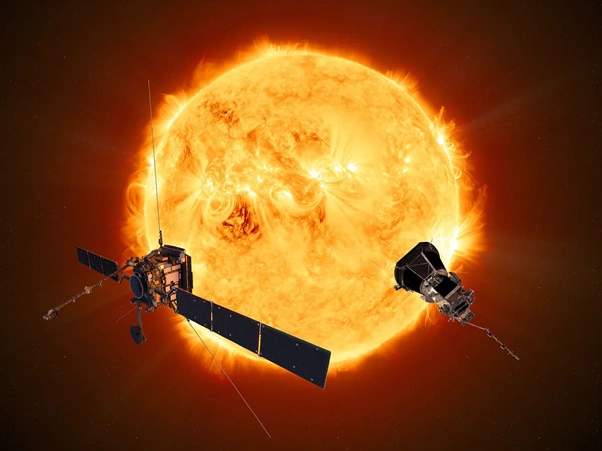
Solar monitoring satellite captures huge plasma cloud that is blowing off the sun. [Smithsonian Magazine]
How Should Communities Prepare For Space Weather Risks?
Professionals suggest utilitarian preparedness and not panic. The use of a backup communication system facilitates outage communication. Surge protectors should be strengthened by power grid operators.
Polar flights can be rerouted by aviation planners in the short term. Solar storms seldom inflict direct damage on the household. Disruption is, however, alleviated by being informed. Regular weather bulletins and alerts are posted by weather agencies.
Contingency plans should be checked in business supported by satellites. Scientists foresee high activity by the year 2026 because of the continued intensity of sunspots. Further observation will be used in the control of the earth impact of the solar flares.
Also Read: Rare Aurora Australis Spectacle Spans Across Australia as Solar Activity Peaks
FAQs
Q1: What are solar flares?
A1: Solar flares are sudden bursts of electromagnetic radiation released from the sun’s surface.
Q2: Why are X-class flares significant?
A2: They are the strongest category and can disrupt communications and satellites.
Q3: Can solar storms damage power grids?
A3: Severe geomagnetic storms may strain grids and cause temporary outages.
Q4: When is solar activity expected to remain high?
A4: Experts forecast heightened activity through 2026 during the current solar cycle.