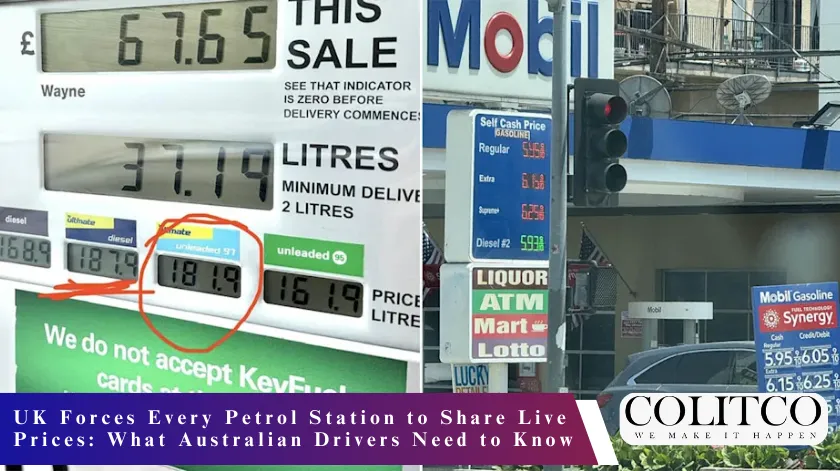
British motorists woke up to a game-changing development today. Every petrol station across the United Kingdom must now report fuel price changes within 30 minutes or face penalties.
The mandatory Fuel Finder scheme officially launched on 2 February 2026. It represents one of the most aggressive consumer protection moves in decades.
Australian drivers might wonder whether similar reforms could help ease pain at the pump. The answer is more complicated than it seems.
How Britain’s System Actually Works
The UK government established the fuel finder scheme after competition authorities found the retail fuel market wasn’t working properly. A 2023 investigation revealed that drivers struggled to compare prices across forecourts.
Under the new regulations, all 8,300 petrol stations must submit pricing data to a government-appointed aggregator. Third-party apps, sat-nav systems, and comparison websites can then access this information for free.
Forecourts face substantial fines for non-compliance. The Competition and Markets Authority will enforce the rules with monitoring powers.
The scheme promises to save motorists up to £4.50 per tank. Over ten years, total consumer savings could reach £10.4 billion according to government estimates.
“Because I know that changes in wholesale prices are not always passed onto motorists, I am bringing in new rules to mandate forecourts to share real-time price rises,” said UK Chancellor Rachel Reeves in November’s budget.
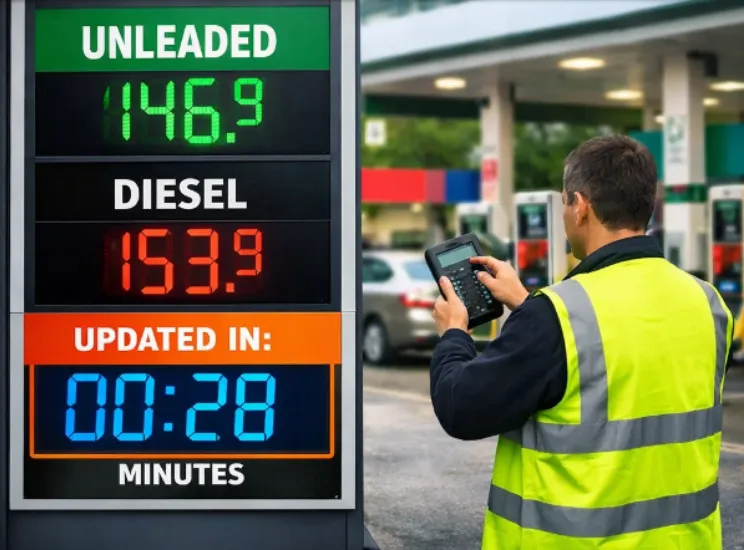
Figure 1: UK petrol stations must update prices within 30 minutes of pump changes under the new mandatory scheme.
Australia Already Has Apps – But They’re Different
Australian drivers have accessed fuel price comparison apps for years. The difference is they’re mostly voluntary.
Victoria’s Servo Saver feature launched in October 2024 as part of the Fair Fuel Plan. It marked the completion of mandatory fuel price reporting across all states and territories.
New South Wales introduced FuelCheck in 2016. Queensland followed with Fair Fuel Finder. Western Australia’s FuelWatch has operated since 2001.
The Australian Competition and Consumer Commission monitors retail fuel prices across capital cities and over 190 regional locations. The ACCC publishes regular reports on petrol price cycles and industry margins.
Australian households spent $150.47 billion on transportation in 2024 according to recent data. Fuel costs remain a significant burden amid broader cost-of-living pressures.
“We encourage motorists to utilise fuel price apps and websites to shop around for lower prices to save some money at the bowser,” said ACCC Commissioner Anna Brakey in December 2025.
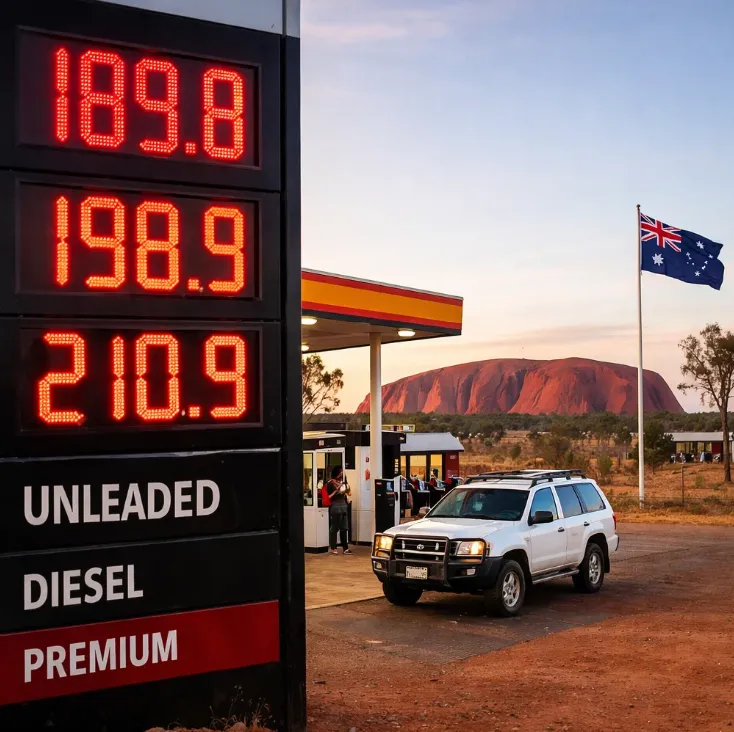
Figure 2: Australian petrol prices peaked at 189.8 cents per litre in 2023. The Northern Territory consistently records the highest rates nationally.
Key Differences Between Systems
The UK approach goes further than Australia’s existing frameworks in several ways.
British regulations carry heavier penalties for non-reporting. The Competition and Markets Authority can pursue enforcement action against retailers who fail to update prices promptly.
Australia relies more on voluntary industry participation. While some states mandate reporting, enforcement varies significantly.
The UK centralises all data through a single government aggregator. Australia operates multiple state-based systems with varying levels of real-time accuracy.
British forecourts must report within 30 minutes of any price change. Some Australian schemes allow longer reporting windows.
What Motorists Actually Save
The RAC’s Head of Policy Simon Williams noted that UK drivers benefit when competition increases. “The government has set up this scheme with the intention of increasing competition among retailers to give drivers better value at the pumps,” Williams said.
Australian data shows petrol prices move in regular cycles across major cities. Prices can increase sharply, then decrease gradually before repeating the pattern.
The ACCC found that savvy timing could save drivers substantial amounts. Buying at the bottom of price cycles in Sydney, Melbourne, Brisbane, Adelaide and Perth makes a meaningful difference.
As of early 2025, unleaded petrol averaged 179.3 cents per litre across Australia. Diesel averaged 186.8 cents per litre.
Could Australia Adopt UK-Style Rules?
Competition policy experts suggest Australia might benefit from studying the British model. However, key differences exist between markets.
Australia’s vast geography creates different distribution challenges. Remote areas face transport costs that metropolitan forecourts don’t experience.
The federal structure means states control retail trading regulations. A nationally coordinated scheme would require cooperation across jurisdictions.
Australian retailers have generally embraced transparency measures. Industry resistance to mandatory reporting appears lower than in Britain.
Energy industry analysts note that Australian consumers already exhibit price-shopping behaviour. The question remains whether additional regulation would deliver proportionate benefits.
The Enforcement Challenge
Britain’s scheme faces practical implementation hurdles. Small independent forecourts must invest in technology to report prices automatically.
The Competition and Markets Authority prioritises ensuring businesses register properly and provide accurate pricing information. Enforcement of secondary requirements, like amenities dat,a receives lower priority.
Australian experience suggests compliance improves gradually. When NSW introduced FuelCheck, participation rates increased as retailers recognised competitive advantages.
What Happens Next
British motorists will judge the fuel finder scheme by whether pump prices actually fall. Government projections assume increased transparency drives greater competition.
Australian drivers can access multiple price comparison tools. Apps like MotorMouth, PetrolSpy, and state government platforms provide comprehensive coverage.
The real question isn’t whether more data helps consumers. It’s whether mandatory reporting obligations change retailer behaviour significantly.
Rising fuel costs continue affecting household budgets globally. Both UK and Australian policymakers recognise that transport expenses represent a significant cost-of-living pressure.
For now, Australian motorists should keep using existing comparison apps. The evidence suggests that informed consumers already drive better market outcomes.
Whether Britain’s more prescriptive approach delivers superior results remains to be seen.
Also Read: Google Launches Project Genie: Your Text Prompts Now Build Interactive 3D Worlds
FAQ
Q: How does the UK fuel finder scheme work?
A: British petrol stations must report price changes to a government aggregator within 30 minutes. Third-party apps access this data for free, allowing drivers to compare prices easily.
Q: Does Australia have a similar system?
A: Australia has multiple state-based fuel price apps including FuelCheck (NSW), Fair Fuel Finder (QLD), and Servo Saver (VIC). While coverage is comprehensive, reporting requirements vary by jurisdiction.
Q: How much can drivers save using price comparison apps?
A: UK estimates suggest savings up to £4.50 per tank. Australian data shows strategic timing during price cycles can reduce costs substantially, though exact savings depend on local market conditions.
Q: Are Australian fuel prices higher than the UK?
A: As of early 2025, Australian petrol averages 179.3 cents per litre (approximately USD 1.03), slightly below the global average. Direct comparisons require accounting for tax structures and exchange rates.
Q: Could Australia adopt mandatory reporting like the UK?
A: Technically possible, but implementation would require federal-state coordination. Australia’s existing voluntary schemes provide relatively comprehensive coverage already.