
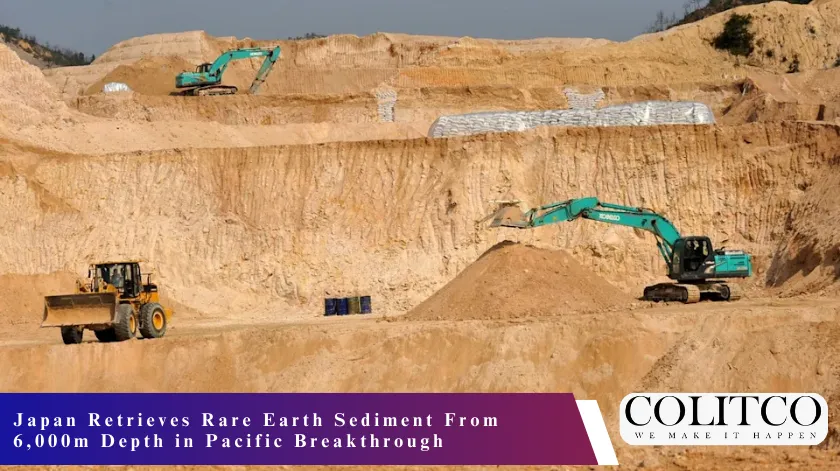
Japan has retrieved rare earth–bearing sediment from depths of up to 6,000 metres near Minami Torishima, marking a major step toward domestic supply development. The breakthrough comes as Tokyo seeks to reduce reliance on Chinese rare earth imports amid rising regional trade tensions.
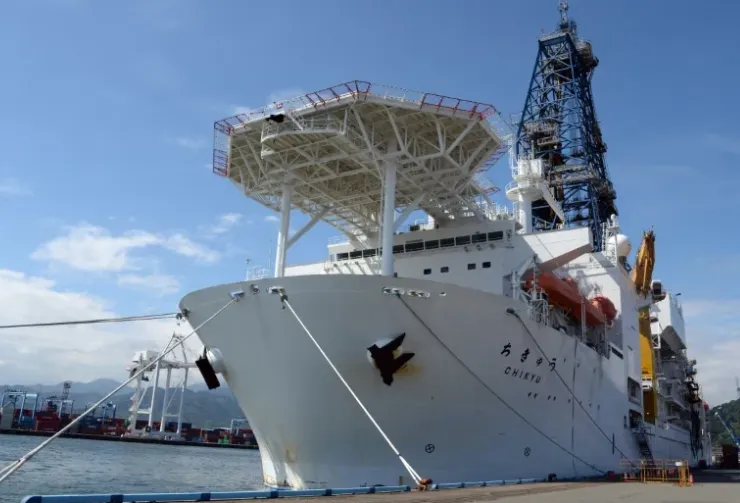
Japan’s Chikyu vessel begins deep-sea rare earth recovery at Minami Torishima. [Yahoo]
Rare Earth Sediment Retrieved at Record Depth
The Japan Agency for Marine-Earth Science and Technology confirmed the recovery using its deep-sea drilling vessel, Chikyu. The test excavation took place within Japan’s exclusive economic zone in the Pacific Ocean.
The vessel operated at depths between 5,700 and 6,000 metres off Minami Torishima. Officials described the operation as the first attempt to access deep-sea rare earth mud at such depths.
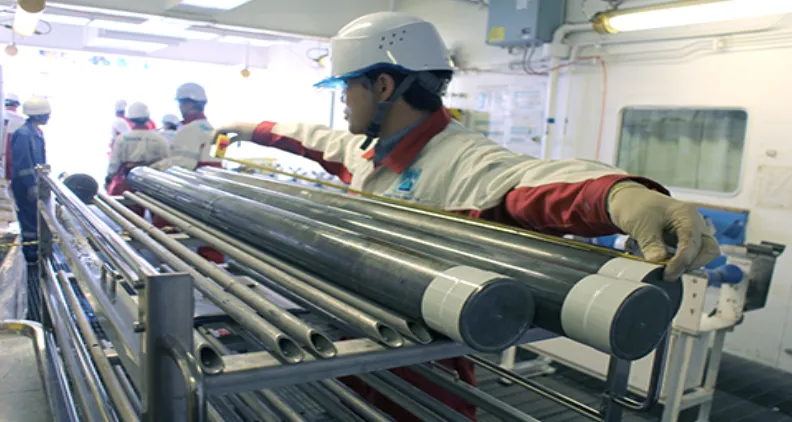
Specialised equipment enables recovery of rare earth sediments from extreme ocean depths. [Source: Jamstec]
Government spokesman Kei Sato said the sediment would undergo detailed analysis to determine rare earth concentrations. He described the recovery as meaningful for economic security and maritime development efforts.
Education Minister Yohei Matsumoto also confirmed the achievement in a post shared on X. The post stated that JAMSTEC had successfully recovered rare earth–bearing mud during the mission.
Strategic Location Within Japan’s Economic Waters
The excavation occurred near Minami Torishima, about 1,900 kilometres southeast of mainland Tokyo. The area lies fully within Japanese territorial waters, giving Tokyo sovereign control over exploration and extraction.
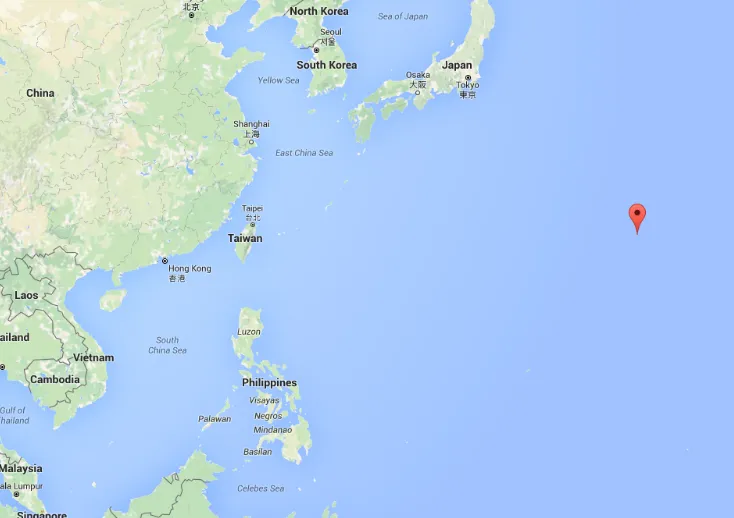
Minami Torishima, site of Japan’s deep-sea rare earth discovery, within national waters. [Source: Ocean Posse]
Researchers from the University of Tokyo first identified rare earth-rich mud in the region in 2013. Estimates suggest the deposit contains more than 16 million tonnes of rare earth resources.
Nikkei has reported that the reserve ranks among the world’s largest national deposits. The scale of the find positions Japan as a potential future supplier in global rare earth markets.
Japan currently imports around 60 to 70 percent of its rare earth supply from China. That dependency has drawn concern during diplomatic disputes between the two countries.
Technology Behind the Deep-Sea Drilling Operation
The Chikyu vessel extended a pipe system to the ocean floor to collect sediment. An unmanned submersible adjusted water flow during the operation.
Seawater pressure injected from the vessel pushed mud upward through reinforced recovery pipes. The system included a mining device designed to crush sediment before lifting it.
This trial more than doubled the depth achieved in a 2022 operation off Ibaraki Prefecture. That earlier mission recovered mud from about 2,400 metres below sea level.
Japan has invested approximately ¥40 billion under the Cross-ministerial Strategic Innovation Promotion Program. The funding supported development of specialised drilling and recovery equipment.
The program aims to assess commercial viability while ensuring operational safety at extreme depths. Equipment must withstand pressure conditions far beyond standard marine engineering thresholds.
Rare Earth Supply Security and Trade Context
Rare earth elements are used in electric vehicle motors, wind turbines, electronics and defence systems. The group includes 17 metals such as neodymium and dysprosium.
China accounts for roughly two-thirds of global rare earth mining output. It also controls about 90 percent of global refining capacity, according to international energy data.
Beijing has previously tightened export controls on certain materials. Recent restrictions on dual-use items followed comments by Japanese leaders regarding Taiwan.
These actions renewed concerns in Tokyo over supply chain vulnerability. Japan’s deep-sea rare earth program is intended to secure alternative sources within its own waters.
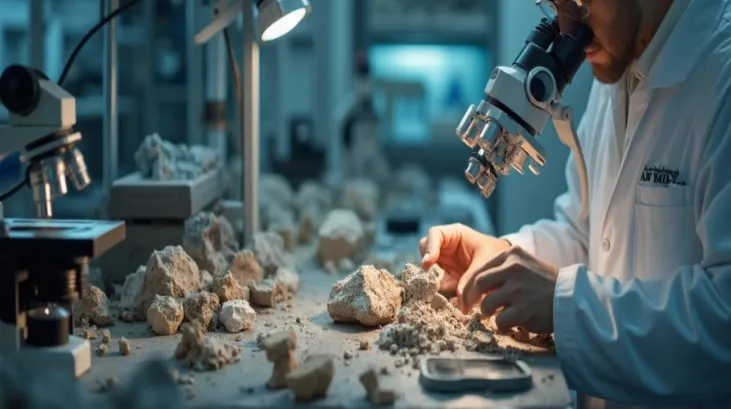
Sediment containing high concentrations of rare earths collected by the Chikyu mission. [Source: Discovery Alert]
Analysts have noted that sustained domestic production could stabilise supply for key industries. Electric vehicles and renewable energy equipment remain major consumers of rare earth elements.
Estimated Resource Scale and Future Trials
The Minami Torishima deposit is believed to contain centuries’ worth of specific rare earth elements. Estimates suggest about 730 years of dysprosium supply at current consumption levels.
Yttrium reserves in the area are estimated at approximately 780 years’ worth. These elements are used in magnets, lasers and light-emitting diodes.
Officials plan a full-scale test excavation in February 2027. The target recovery rate is up to 350 tonnes of mud per day.
Authorities intend to compile a profitability assessment report by March 2028. The review will consider operational costs, processing requirements and market pricing conditions.
Further laboratory analysis of current samples will determine concentration levels. Those results will guide decisions on scaling the project toward commercial production.
Also Read: BHP Selects Record 10 Companies for 2026 Xplor Exploration Program
Environmental Oversight and Regulatory Considerations
Deep-sea mining has raised environmental concerns among advocacy groups. Critics warn that sediment disturbance could affect marine ecosystems.
The International Seabed Authority is working toward a global code for deep-ocean mining. However, Japan’s test mission occurred within its own territorial waters.
Officials have stated that environmental monitoring forms part of the evaluation process. Detailed assessments will accompany technical and economic reviews before large-scale extraction begins.
The government has emphasised compliance with maritime and environmental standards. Regulatory oversight will continue as trials move toward expanded operations.
Japan’s recovery of rare earth sediment from 6,000 metres marks a technological and strategic development. With further testing planned, the country is positioning itself to strengthen domestic supply chains for critical minerals.
FAQs
- What rare earth discovery has Japan announced?
Japan’s deep-sea drilling vessel Chikyu has successfully retrieved sediment containing rare earth elements from a depth of about 6,000 metres off Minami Torishima.
- Why is Japan pursuing deep-sea rare earth extraction?
Japan aims to reduce heavy reliance on imported rare earths, most of which currently come from China, by securing domestic sources in its exclusive economic zone.
- What minerals are expected in the deep-sea sediment?
The retrieved seabed mud is expected to contain valuable rare earth elements such as dysprosium, neodymium, gadolinium, and terbium.
- Where is the deep-sea rare earth mining project located?
The project is near Minami Torishima (Minamitorishima), located about 1,900 kilometres southeast of Tokyo within Japan’s exclusive economic zone.
- What is the strategic importance of this discovery?
Rare earth elements are essential for high-tech industries, including electric vehicles, renewable energy equipment, electronics, and defence systems.
- When could commercial deep-sea mining begin?
Japan plans a full-scale test mining trial in early 2027 to evaluate feasibility and potential commercial operations after the current analysis.
- How much rare earth resource might be available?
Estimates indicate the Minami Torishima seabed could contain over 16 million tonnes of rare earth materials, potentially one of the largest global reserves.


