
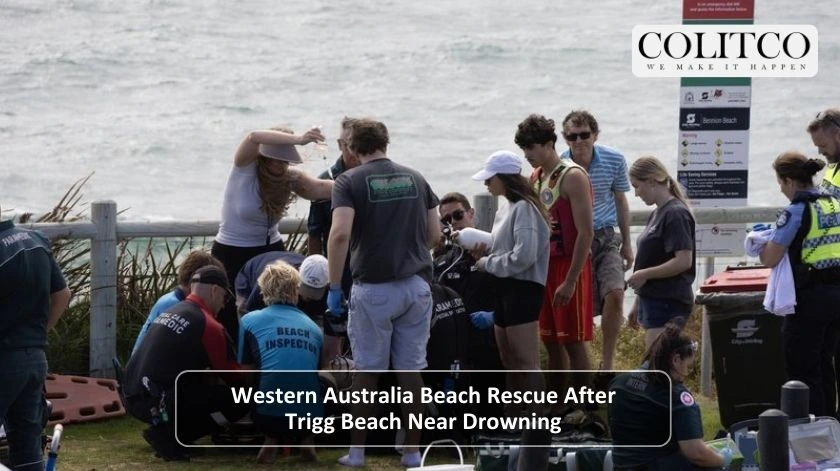
A Trigg Beach near-drowning, which happened on Australia day resulted in a rescue at a western beach in Australia. The accident took place in the afternoon of 3 pm at Trigg Beach, a northern suburb of Perth, where the two men, who were between 33 and 40 years old, were caught in an irresistible rip.
Surf lifesavers rushed to the rescue, and both men were dragged out of the water by the lifesavers. Onlookers anxiously watched as emergency services offered first aid assistance.
St John Ambulance took the two to Sir Charles Gairdner Hospital, and the status of the two was not yet reported the next morning, which was a cause of concern regarding the safety of the coastline during the season.
How Did The Western Australia Beach Rescue Unfold?
The rescue operation of the Western Australia beach commenced when the swimmers saw the witnesses in distress due to a strong current off the beach. Lifesavers hurried to the rescue and jumped in the water, applying rescue procedures to get to the drowning men before they got tired.
The victims were moved to shore and put on the sand, where emergency first aid was instituted at once to normalise their breathing and circulation.
Soon, paramedics appeared and proceeded with treatment on both men before they went to the hospital to have a better look at them, and once more, the medical responders and the volunteer surf lifesavers worked closely together to respond in urgent situations.
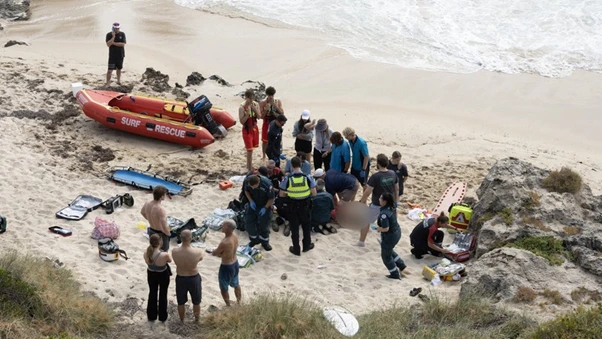
Surf lifesavers are speedy in the Western Australia beach rescue at Trigg Beach on Australia Day. [The West Australian]
Why Was Trigg Beach Near Drowning So Serious?
The near drowning at Trigg Beach was of interest due to the rip currents that may seem innocent while dragging the swimmers off the safe areas. During public holidays, crowds in the summer cause more exposure to such hidden hazards since the beaches are crowded, and the need to supervise the crowds increases.
Even the experts caution that even the most confident swimmers may find it difficult once they find themselves in a rip, as panic will cause decreased stamina and loss of decision-making skills.
The Western Australia beach rescue proved the value of seconds when the conditions change swiftly in the water, and it should be stressed that swimming between the flags and obeying the instructions of the patrols is important. Governments are constantly encouraging beach visitors to scrutinise local weather alerts and sea levels before getting into the water.
Emergency Response Highlights Coastal Safety Risks
The local surf lifesaving teams and ambulance services demonstrated professionalism in the way they coordinated their response in case of an emergency. Lifesavers used first aid measures and checked vital signs until handing over to paramedics.
St John Ambulance staff made sure that the two patients were safely transported to Sir Charles Gairdner Hospital to be assessed, as it has been the practice in cases of near drowning in the event of an emergency.
The incident supports the preparation, training, and awareness of people in minimising the effects of death during peak seasons of travelling. According to the leaders of the community, preventative education is necessary with the increasing number of visitors along the coast of Western Australia.

Rescue teams are ready to take the rescued men to the Sir Charles Gairdner Hospital. [Perth Now]
What Should Swimmers Know About Rip Currents?
Rip currents are created when the waves move the water towards the shore and direct it back through a narrow space. Swimmers who struggle directly against the current normally get tired easily, which increases the chances of submersion.
The professionals in safety recommend simply floating and swimming perpendicular to the shore until the person is out of the and then going back to land with help where necessary. Western Australia beach rescue is a lesson that knowledge about ocean behaviour can save lives, as well as avoid serious injuries.
Critical information on beach signage, patrol updates, and local weather alerts will offer essential advice to the tourists who may not be conversant with sea conditions.
Community Awareness Grows After Two Men Hospitalised at Trigg Beach
The incident where two men were hospitalised at Trigg Beach has brought a new debate on the issue of water safety education.
Promotions of awareness campaigns against near drowning incidences are still being propagated by local councils and surf clubs, especially during the seasons when the number of near-drowning cases is highest.
Schools, tourism operators and community groups are regularly supplying safety material to promote responsible swimming. It has been encouraged that families travelling to coastal areas should follow children and not indulge in swimming in unguarded areas.
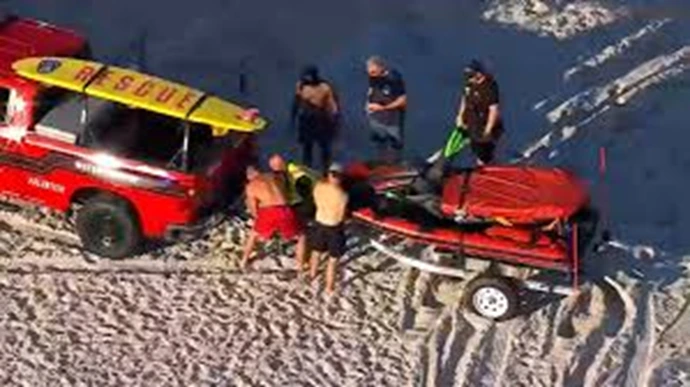
Beach safety warnings are still evident even after two men were hospitalized Trigg Beach after the rescue. [abc7NY]
Public Safety Messages Reinforced Across Western Australia
The government stresses that maintaining the safety of the beach is a collective responsibility between the swimmers, the local councils and the emergency services.
Continuous patrol financing, better signage displays and real weather surveillance enhance prevention measures.
The rescue operation on the Western Australia beach shows how one can easily be caught up in a simple leisure activity that is no longer safe without any planning.
Authorities urge people to remain on alert, take care of the situation in the ocean, and collaborate with rescue agencies to avoid future tragedies.
Also Read: Australian Dingo Attack Incident Raises Safety Concerns On K’gari Beach
FAQs
Q1. Where did the Western Australia beach rescue occur?
A1: The rescue happened near Trigg Beach in Perth’s northern suburbs around 3 pm on Australia Day.
Q2. What caused the Trigg Beach near-drowning?
A2: Both swimmers were caught in a rip current that pulled them away from safe swimming areas.
Q3. Where were the injured men taken for treatment?
A3: They were transported by St John Ambulance to Sir Charles Gairdner Hospital.
Q4. How can swimmers stay safe in rip currents?
A4: Swimmers should float calmly, swim parallel to shore, and always swim between patrol flags.


