
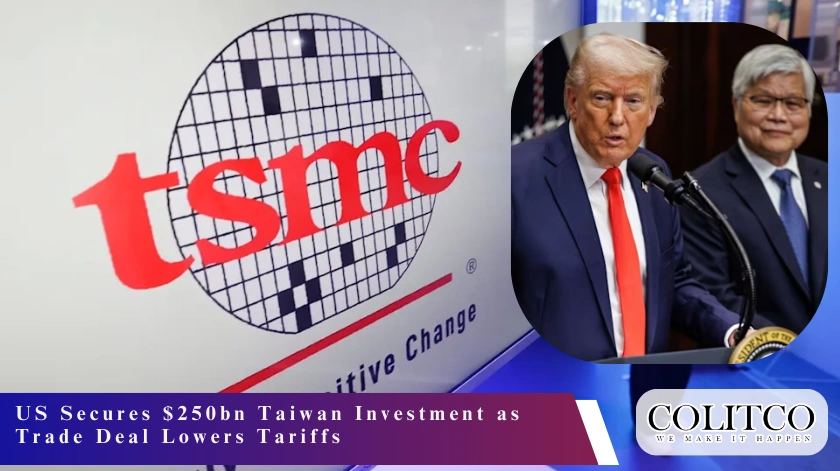
The United States and Taiwan have signed a landmark trade agreement that will reduce tariffs on Taiwanese goods to 15 per cent and secure at least US$250 billion in Taiwanese investment into the US economy, with a strong emphasis on semiconductor manufacturing and advanced technologies. The deal represents one of the most consequential economic arrangements between the two sides and highlights Washington’s intensifying push to strengthen domestic supply chains for critical technologies.
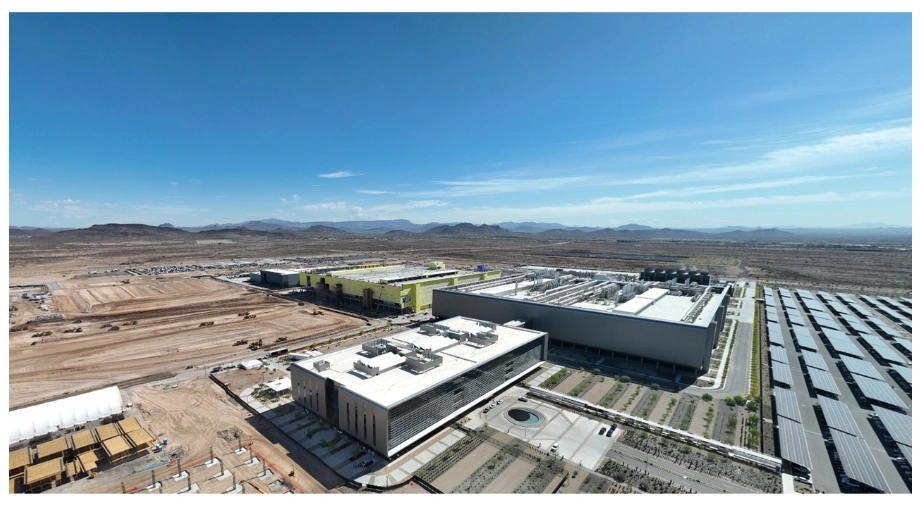
A Taiwan Semiconductor Manufacturing Company facility, as the US and Taiwan sign a $250bn trade and investment agreement focused on chip manufacturing. (Source: TSMC)
The agreement combines tariff concessions with long-term industrial commitments, reflecting a shift in US trade policy toward strategic reshoring and supply-chain security rather than traditional free-trade liberalisation alone. For Taiwan, the deal improves access to the US market while reinforcing its position as a key partner in global semiconductor production.
Tariff Reductions and Trade Access
Under the agreement, the US will lower tariffs on most Taiwanese imports from around 20 per cent to 15 per cent. The revised tariff level brings Taiwan broadly in line with other major US trading partners in the Asia-Pacific region, including Japan and South Korea.
Several categories of goods will receive more favourable treatment, with selected pharmaceuticals, aircraft parts and industrial components either exempted or subject to reduced duties. US officials said the tariff changes were designed to enhance trade flows while preserving safeguards for sensitive domestic industries.
For Taiwanese exporters, the reductions are expected to improve competitiveness in the US market, particularly for high-value manufactured goods. Taiwanese authorities described the agreement as the country’s most advantageous tariff arrangement with Washington to date.
$250bn Investment Commitment
A central pillar of the agreement is Taiwan’s pledge to invest at least US$250 billion in the United States over the coming years. The investment is expected to be led by major Taiwanese technology firms, with semiconductor manufacturing forming the core focus.
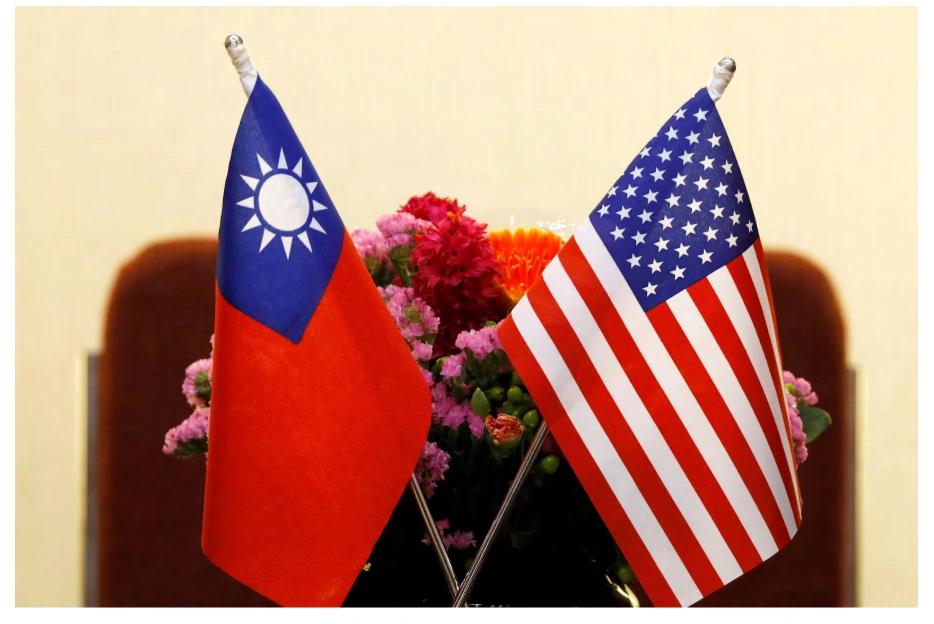
US and Taiwanese officials during talks that led to a landmark trade deal lowering tariffs on Taiwanese goods. (Source: Reuters)
Taiwan Semiconductor Manufacturing Company (TSMC), the world’s largest contract chipmaker, is expected to play a pivotal role. The company has already begun expanding its US presence, and the new agreement is set to accelerate construction of advanced fabrication plants, as well as investments in chip packaging, research facilities and supporting infrastructure.
Beyond semiconductors, the investment package also covers artificial intelligence infrastructure, advanced electronics and energy projects required to support large-scale manufacturing operations. US officials said the inflows would support high-skilled employment and enhance national resilience in strategically vital industries.
Incentives Linked to US Manufacturing
The agreement includes targeted incentives designed to lower costs for Taiwanese firms establishing or expanding operations in the US. These include preferential tariff treatment for machinery, equipment and intermediate goods imported for use in new manufacturing facilities.
Semiconductor wafers inside a cleanroom, highlighting the deal’s focus on advanced chip production. (Source: istock)
By reducing the cost of building and operating semiconductor fabs, the incentives aim to make US-based production more competitive with Asian manufacturing hubs. The measures complement existing US industrial policies, including domestic subsidies and tax credits intended to revitalise advanced manufacturing.
Taiwanese officials said the incentives would help companies manage the high capital costs associated with overseas expansion while maintaining strong production capabilities at home.
Strategic Context and China’s Response
The deal has significant geopolitical implications, particularly in the context of US-China relations. Beijing has voiced strong opposition, reiterating its stance against any agreements that it views as enhancing Taiwan’s international status or deepening official ties with Washington.
Chinese officials warned that the agreement could undermine regional stability and urged the US to adhere to the One-China principle. Analysts noted that the reaction reflects broader tensions over technology leadership, supply-chain control and strategic influence in the Asia-Pacific region.
For Washington, the agreement is widely seen as part of a broader effort to counter China’s dominance in advanced manufacturing and reduce exposure to geopolitical risk associated with concentrated production in East Asia.
Economic and Industry Impact
In the United States, the deal is expected to support long-term growth in high-value manufacturing sectors, particularly semiconductors, which underpin industries ranging from defence and telecommunications to artificial intelligence and automotive production.
Industry groups welcomed the scale of the investment commitment but cautioned that workforce shortages, construction timelines and infrastructure constraints could pose challenges to rapid implementation. Ensuring a steady supply of skilled labour remains a key issue for the success of large-scale chip manufacturing projects.
In Taiwan, reactions have been broadly positive, with officials emphasising improved market access and deeper economic ties with the US. However, some domestic observers have raised concerns about potential capital outflows and the long-term impact on Taiwan’s domestic manufacturing base, particularly if overseas investment accelerates faster than anticipated.
Implications for Global Supply Chains
The agreement is expected to influence global semiconductor supply chains by encouraging greater geographic diversification of production. By expanding US-based manufacturing capacity, the deal aims to reduce the concentration of advanced chip production in a small number of locations.
Analysts say the move could reshape investment patterns across the global technology sector, prompting other economies to reassess their own industrial strategies and trade relationships.
Also Read: Alexander Brothers’ First Accuser Found Dead
Final Thoughts
The US-Taiwan trade and semiconductor agreement marks a decisive step toward a more strategic form of economic cooperation, blending trade liberalisation with industrial policy objectives. By tying tariff reductions to substantial investment commitments, Washington has reinforced its push to reshore critical technologies while offering Taiwan improved access to its largest export market.
As the agreement moves toward implementation, its economic and geopolitical effects are likely to be closely watched by governments, investors and industry leaders worldwide, particularly as competition over technology and supply-chain security continues to intensify.


