

Capital One Financial Corporation’s stock price collapsed 6% in a dramatic sell-off triggered by President Donald Trump’s unexpected call for federal caps on credit card interest rates.
The announcement sent shockwaves through financial markets on 12 January 2026, with the credit card giant bearing the brunt of investor panic. Other major banking institutions also felt the pressure as traders scrambled to assess the potential regulatory upheaval facing the industry.
Trump’s Rate Cap Proposal Catches Markets Off Guard
President Trump unveiled the credit card interest rate cap proposal during an impromptu press conference, advocating for consumer protection measures that would fundamentally reshape the credit card business model.
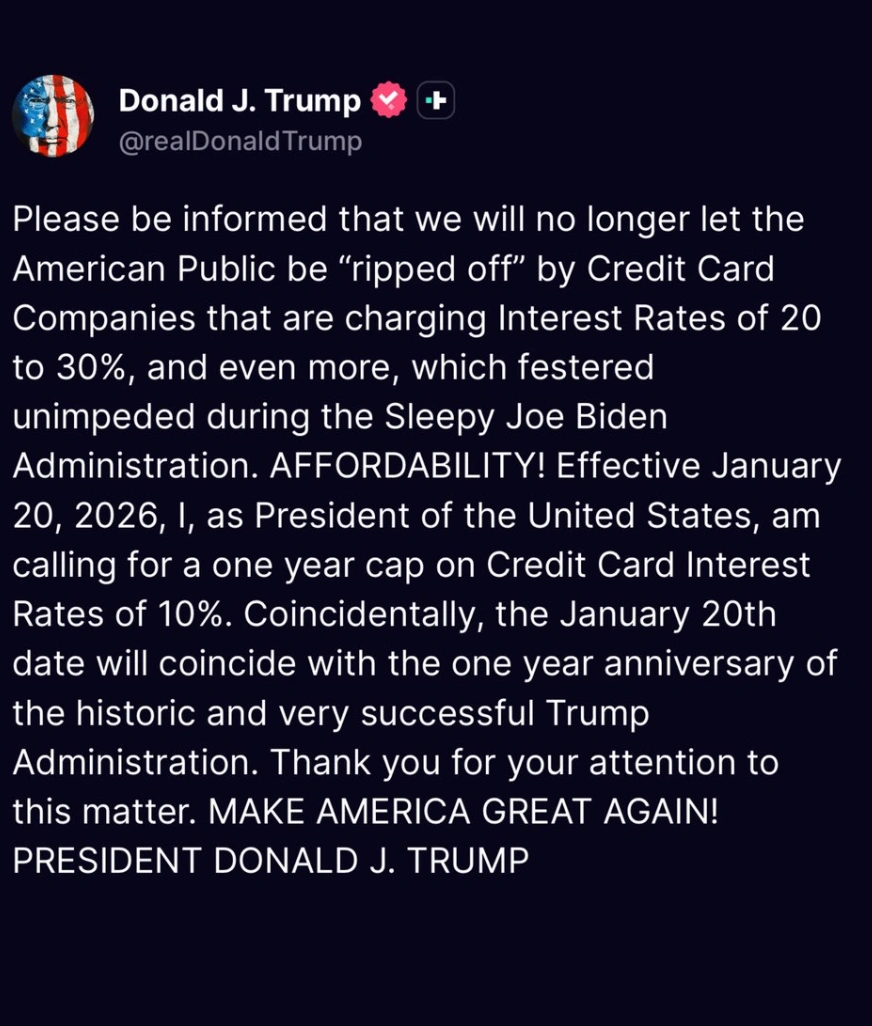
Trump’s post from TruthSocial [TruthTrumpPost on X]
The proposal calls for:
- A maximum interest rate ceiling on all credit card products
- Stricter oversight of penalty fees and charges
- Enhanced transparency requirements for card issuers
- Potential retroactive application to existing card agreements
Industry analysts describe the move as one of the most significant regulatory threats to credit card issuers in decades.
Capital One Stock Takes Heaviest Hit
Capital One stock (NYSE: COF) plummeted to its lowest level in eight months, closing 6.2% lower at USD 118.45 per share. The decline wiped approximately USD 4.8 billion off the company’s market capitalisation in a single trading session.
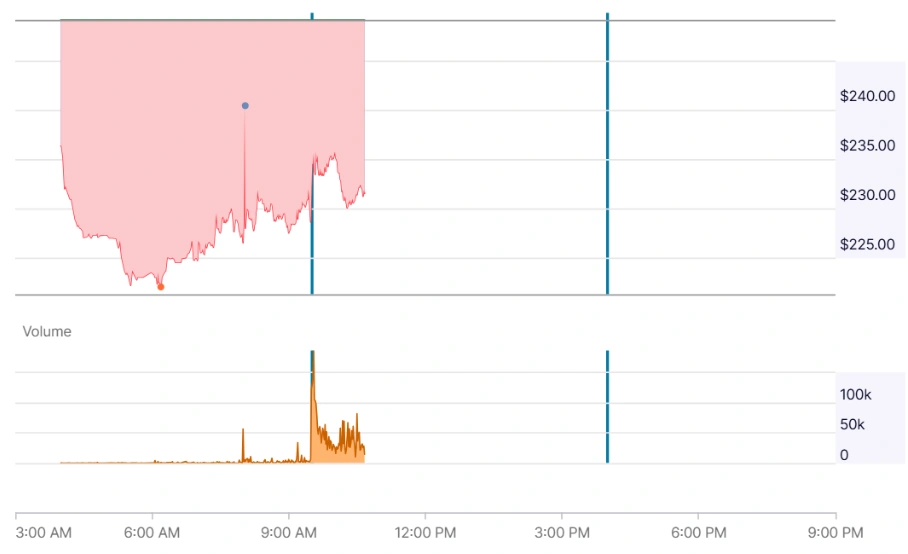
Capital One stock price chart showing 6% decline [Nasdaq]
The McLean, Virginia-based lender derives roughly 40% of its total revenue from credit card operations, making it particularly vulnerable to interest rate restrictions. Capital One’s heavy reliance on credit card interest income explains why COF stock suffered more severe losses compared to diversified banking peers.
Trading volume surged to 12.4 million shares, nearly three times the 30-day average, as institutional investors rapidly repositioned their portfolios.
Banking Sector Feels the Pressure
The regulatory concerns spread rapidly across the financial sector, with several major institutions posting significant losses:
JPMorgan Chase (NYSE: JPM) dropped 2.8% as investors weighed the impact on its Chase card portfolio, one of the largest in the United States.
Citigroup (NYSE: C) fell 3.1%, reflecting concerns about its substantial credit card operations spanning multiple markets.
Visa (NYSE: V) experienced a 2.4% decline despite not directly issuing credit cards, as the payment network would face reduced transaction volumes if credit availability contracts.
Discover Financial Services (NYSE: DFS) tumbled 5.3%, with its business model heavily concentrated in credit card lending.
Industry Pushback Begins
The American Bankers Association issued a statement within hours of Trump’s announcement, warning that interest rate caps could severely restrict credit access for millions of Americans.
“Arbitrary rate caps ignore the fundamental economics of risk-based lending,” the trade group argued. “Consumers with lower credit scores could find themselves completely shut out of the credit market.”
Credit card issuers maintain that interest rates reflect the risk profile of individual borrowers. Industry executives argue that blanket caps would force banks to either stop serving higher-risk customers or dramatically tighten lending standards across the board.
Historical Context and Market Precedents
The United States previously experimented with interest rate caps during the late 1970s and early 1980s. Those restrictions led to a credit crunch that disproportionately affected lower-income borrowers and small businesses.
Several states currently maintain usury laws capping interest rates, but most credit card issuers operate from states like Delaware and South Dakota with more permissive regulatory frameworks.
The current average credit card interest rate sits around 21.5%, according to Federal Reserve data. Trump’s proposal reportedly seeks to cap rates at 15%, though specific details remain unclear.
Global Banking Stocks Mirror US Sell-Off
The sell-off extended to international markets during European and Asian trading sessions. Major European banks with US credit card exposure posted losses, while payment processors across multiple jurisdictions faced pressure from concerned investors.
Australian banking stocks remained relatively insulated given their limited exposure to US credit card markets, though ANZ and Commonwealth Bank saw modest declines on general financial sector weakness.
Also Read: Why Niobium Could Be Australia’s Next Critical Minerals Goldmine
Investor Outlook
Financial sector analysts have scrambled to reassess earnings projections for credit card issuers. Several major investment banks downgraded Capital One stock and competitors, citing regulatory uncertainty and potential margin compression.
Morgan Stanley analyst Betsy Graseck cut her price target for COF stock from USD 145 to USD 125, noting that “even a moderate rate cap could reduce Capital One’s earnings by 20-30% while simultaneously increasing credit losses.”
The proposal faces significant hurdles in Congress, where both chambers would need to approve legislation. However, the mere threat of regulation has already inflicted substantial damage on bank valuations.
Market participants now watch closely for additional policy details and congressional reaction. The coming weeks will prove critical in determining whether this represents a temporary shock or the beginning of a fundamental restructuring of the credit card industry.
As volatility grips financial markets, Capital One shareholders face an uncertain path forward. The company’s next earnings call will provide crucial insights into management’s strategic response to the regulatory threat hanging over the sector.


