
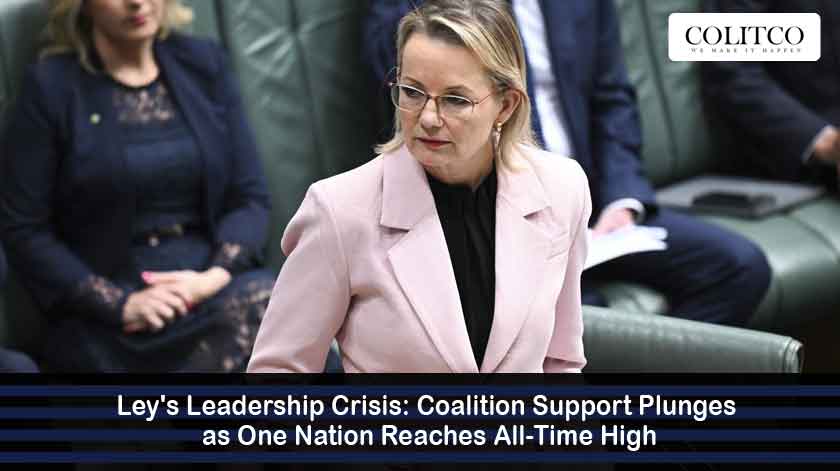
The Coalition’s primary vote has collapsed to a historic low of 24 per cent, coinciding with Sussan Ley’s approval rating crashing to minus 33. The latest Newspoll paints a grim picture for Australia’s opposition, six months after their devastating election loss.
Labor retained a commanding 57 to 43 per cent margin on two-party-preferred vote, according to polling published in The Australian on Monday, 3 November 2025.
One Nation Reaches Record Support
One Nation hit an unprecedented 15 per cent of the primary vote, marking the party’s strongest showing in decades. The right-wing minor party has capitalised on voter dissatisfaction with the major parties, particularly the Coalition.
Political experts say this represents a fundamental shift in Australia’s political landscape. The latest Resolve poll shows One Nation at 12 per cent, edging out the Greens at 11 per cent, suggesting sustained momentum beyond a single poll.
Key factors driving the One Nation surge include:
- Growing frustration with major party policies on immigration
- Cost-of-living pressures affecting regional communities
- Dissatisfaction with climate change positions
Pauline Hanson has announced she would begin the process to change the party’s name from Pauline Hanson’s One Nation to simply One Nation, signalling plans to broaden appeal beyond her personal brand.
Ley’s Approval Rating Hits Crisis Point
Sussan Ley’s net approval rating crashed to minus 33, below that of former Liberal leader Peter Dutton on the eve of his election loss. The figures place her among the most unpopular opposition leaders in recent Australian history.

Sussan Ley, 16th Leader of the Liberal Party
Her performance is closing in on the records of other unpopular opposition leaders, including then-Labor leader Bill Shorten’s minus 38 rating in 2015 and then-Liberal leader Andrew Peacock’s minus 44 in 1990.
The timing couldn’t be worse for Ley. Internal Coalition tensions over climate policy have dominated headlines, overshadowing attempts to hold the government accountable.
Coalition Tensions Explode Over Net Zero
The Nationals have dumped their support for net zero emissions, sparking fears of a Coalition split. The decision came at a Federal Council meeting in Canberra on Saturday, creating a major headache for Ley.
Prime Minister Anthony Albanese labelled the Coalition’s net zero process a “circus”, capitalising on the opposition’s disarray.
Liberal leader Sussan Ley is facing an impossible decision: cede net-zero policy to the Nationals or consider breaking apart the Coalition. The dilemma threatens to end her brief leadership tenure.
Nationals leader David Littleproud defended the move, arguing the party would pursue “a balanced energy mix” including coal, gas, and renewables. The decision reflects frustration among regional voters who feel climate policies harm their livelihoods.
@The_Nationals today have abandoned net zero.
Under Labor’s net zero failure, household power bills are up nearly 40%, our industry is fleeing offshore, taxpayers are being slugged the bill and our environment is worse off.
Net zero is past its use by date and is leaving… pic.twitter.com/ocVVAnzl8B
— Senator Matt Canavan (@mattjcan) November 2, 2025
Historical Context
This isn’t the first time the Coalition has struggled in opposition. At the May 2025 election, the Coalition was wiped out for a second consecutive election, losing 15 seats it held in 2022.
The leader who took them to that election, Peter Dutton, was voted out by his electorate. Ley narrowly scraped to the leadership, seeing off right-wing challenger Angus Taylor by four votes.
The moderate faction hoped Ley would appeal to centrist voters who abandoned the Liberals for Teal independents. Six months later, that strategy appears to have backfired spectacularly.
What This Means for Australian Politics
The Coalition low support and One Nation surge Australia creates a complex electoral landscape. If this result was replicated at an election, it would put One Nation in a position to win House of Representative seats.
Political analysts warn the Coalition faces a strategic dilemma. Competing with One Nation for conservative voters risks alienating moderates. Chasing the centre ground allows One Nation to consolidate support on the right.
Since the 2025 federal election, One Nation has experienced a renewed polling surge, reaching up to 15 per cent and overtaking that of the Australian Greens. This marks a significant realignment in Australia’s minor party landscape.
Voter Sentiment
The numbers reflect deep frustration with the Coalition’s direction. Regional voters feel abandoned by major parties on issues like energy security and rural industries. Urban moderates question whether the Coalition can govern effectively given internal divisions.
Labor strategists are watching carefully. While current polling gives them a comfortable lead, they recognise voter sentiment can shift quickly. The government’s challenge is maintaining support while One Nation and the Coalition fight for second place.
Also Read: Australian Energy Giants Santos and Woodside Poised to Benefit as OPEC Hits the Brakes
Looking Ahead
Ley faces mounting pressure from within her own party. Conservative MPs want her to match One Nation’s rhetoric on immigration and climate. Moderates fear this would cost crucial seats in urban areas.
The big unknown is One Nation’s future without Pauline Hanson, as the party has consistently lost members through disputes. However, current polling suggests the party has established itself as a permanent fixture in Australian politics.
The next federal election isn’t due until 2028, but these numbers suggest the Coalition needs urgent course correction. Whether Ley can survive long enough to implement changes remains an open question.
For now, Australian politics remains in flux. The traditional two-party system faces its greatest challenge in decades, with One Nation positioning itself as a legitimate alternative to the Coalition on the right.


