

Australia’s heavyweight energy producers, Santos (ASX: STO) and Woodside Energy (ASX: WDS) are back in the spotlight. The reason? OPEC’s pause on output hikes has injected fresh optimism into oil markets that have been grinding lower for months.
After three consecutive months of declining prices, the oil market received a boost on 3 November 2025. The Organisation of Petroleum Exporting Countries and its allies announced they would pause production increases for the first quarter of 2026.
This development comes at a critical time for Santos and Woodside, both of which have seen their share prices battered by softening crude benchmarks throughout 2025.
OPEC’s Strategic Pause Provides Market Support
OPEC+ confirmed a modest production increase of 137,000 barrels per day for December 2025. However, the group will then freeze further hikes through March 2026.
The decision reflects growing concerns about:
- Oversupply risks in global oil markets
- Sluggish demand, particularly from China
- Seasonal weakness typically seen in the first quarter
Oil prices responded positively. Brent crude climbed above USD 65 per barrel, marking its longest winning streak since late September. West Texas Intermediate (WTI) traded near USD 61.
“The group is walking a tightrope between maintaining stability and clawing back market share in a surplus environment,” said Jorge Leon at Rystad Energy.

OPEC+ headquarters in Vienna, Austria
Santos and Woodside Navigate Choppy Waters
The rise in oil prices following OPEC’s pause on output hikes offers a reprieve for Australian energy majors. Both companies have struggled with depressed commodity prices throughout 2025.
Santos shares closed at around AUD 6.75 in late October, down more than 12% over the past year. The company reported a 14% decline in full-year net profit to USD 1.22 billion in February 2025, missing analyst expectations.
Woodside has fared similarly. The stock traded around AUD 24.50 in late October, down approximately 12% over 12 months. Analysts have maintained largely “Hold” recommendations as the company navigates the downturn.
Despite these headwinds, both companies remain committed to major growth projects. Santos is advancing its Barossa LNG project and Pikka oil development in Alaska. Woodside continues work on the Scarborough and Pluto Train 2 LNG projects.
The recent uptick in oil prices could provide much-needed breathing room as these capital-intensive developments progress.
Santos in ADNOC’s Crosshairs
Adding another layer to the Santos story is the recent AUD 18.7 billion takeover bid from an ADNOC-led consortium. The proposal values Santos at AUD 8.89 per share, representing a 28% premium to its October closing price.
If successful, the deal would give ADNOC control of Santos’ prized LNG assets, including:
- Darwin LNG operations
- PNG LNG stakes
- The undeveloped Papua LNG project
- Alaska’s Pikka oil project
Santos’ board has indicated it intends to recommend shareholders vote in favour of the transaction. The deal would mark Australia’s largest all-cash corporate buyout.
However, regulatory approvals from Australia’s Foreign Investment Review Board (FIRB) and Papua New Guinea authorities remain hurdles. Analysts have flagged FIRB approval as a “major risk to the deal.”
Oil Market Dynamics Remain Complex
OPEC’s pause on production increases doesn’t eliminate market challenges. The cartel has raised output quotas by approximately 2.9 million barrels per day in 2025, unwinding years of supply cuts.
This strategy aims to regain market share from rivals like U.S. shale producers. But it has pressured prices at a time when demand growth remains muted.
Key market factors include:
- Continued production increases from non-OPEC sources
- China’s economic slowdown affecting energy demand
- Tighter U.S. sanctions on Russian oil producers
- Geopolitical risks in the Middle East and Venezuela
Vandana Hari, CEO of Vanda Insights, noted that talk of an oil glut may be “exaggerated.” She pointed to strong crude demand driven by China’s stockpiling and upcoming winter consumption.
“The market is not seeing the glut and it’s not evident yet in the physical market,” Hari told The National.
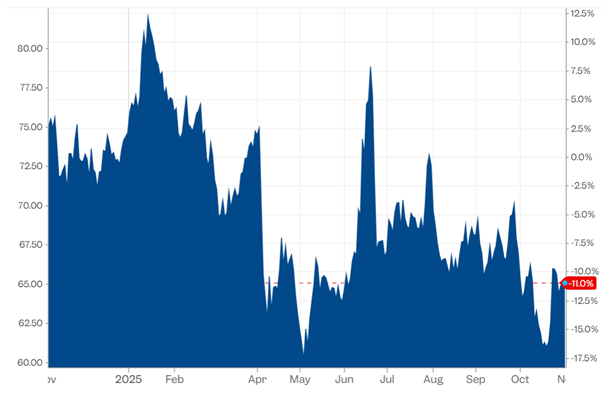
Brent crude oil price movements
What This Means for Investors
The ASX Energy sector has been the worst-performing major sector over the past 12 months. Earnings forecasts have been slashed by around 18% since late 2024, according to broker Macquarie.
However, OPEC’s decision to pause output increases in early 2026 could mark a turning point. The move signals the cartel’s recognition that supply discipline is necessary to stabilise prices.
For Santos and Woodside, higher oil prices translate directly to improved cash flow and project economics. Both companies have maintained production guidance despite market challenges.
Santos expects 2025 production of 90-97 million barrels of oil equivalent (MMboe). Woodside has raised its guidance to 192-197 MMboe, citing strong asset performance.
The companies’ strategic positioning in LNG also provides downside protection. Asian demand for liquefied natural gas remains robust, even as oil markets struggle.
Also Read: When Your Local Supermarket Becomes a Crime Scene: Coles Takes a Stand
Final Thoughts
Santos and Woodside find themselves at a crossroads. Oil market fundamentals remain uncertain, but OPEC’s pause on production increases offers a window of opportunity.
Whether this translates into sustained share price gains depends on how long the production freeze holds and whether demand recovers in 2026.
For now, Australian energy investors have reason for cautious optimism. The worst of the price decline may be behind them, especially if OPEC maintains discipline through the typically weak first quarter.
The coming months will reveal whether this marks the start of a recovery or just another false dawn in a volatile commodity cycle.


