Vulcan Energy Resources (ASX: VUL, FSE: VUL) has successfully closed its institutional placement and institutional entitlement offer, securing €398 million (A$710 million) from both existing shareholders and new strategic investors. The oversubscribed raise marks a watershed moment for the Perth-based company as it prepares to break ground on Europe’s first fully domestic lithium supply chain.
The announcement came just hours after trading resumed on the ASX following a brief halt. Investors responded with measured caution, pricing in the significant dilution from approximately 178 million new shares issued at A$4.00 each.
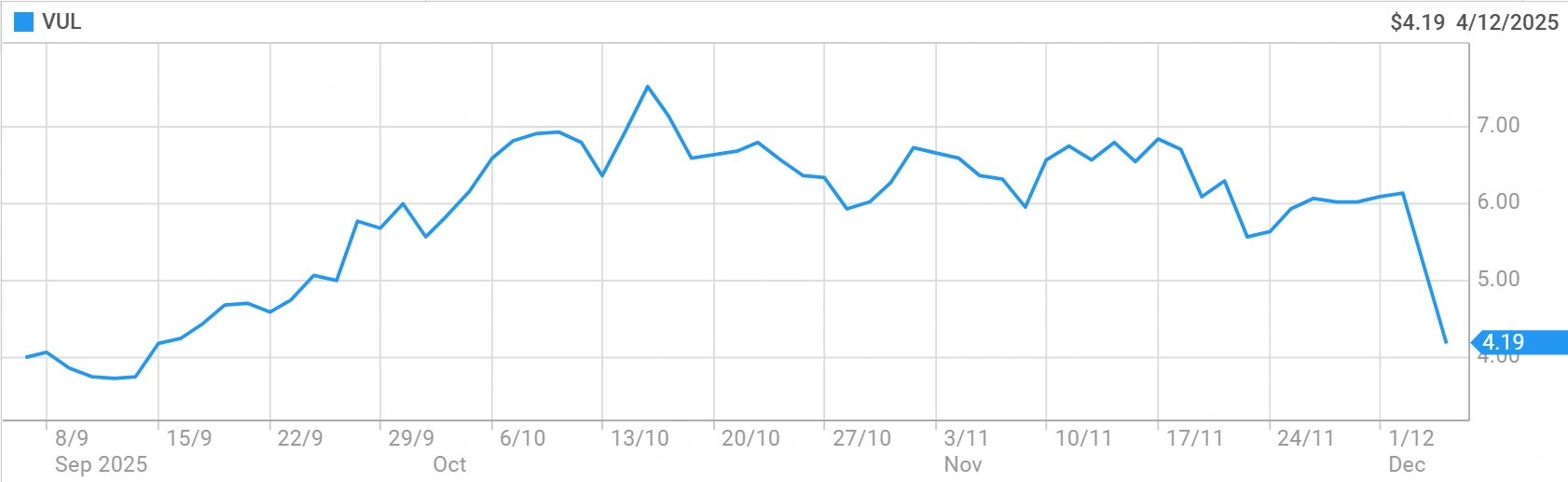
That price sits 34.7% below the last traded price of A$6.13, but CEO Cris Moreno remained bullish about what comes next.
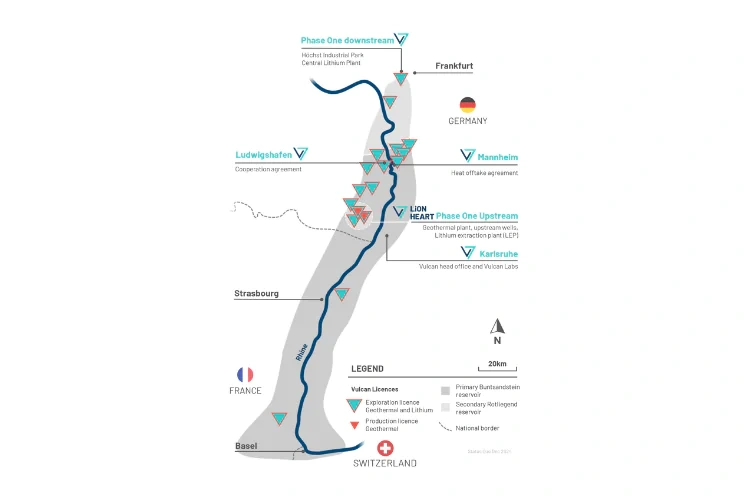
Location of Vulcan’s Lionheart Project in Germany’s Upper Rhine Valley
Institutional Support Reflects European Strategic Priorities
The institutional placement drew strong support from existing eligible institutional shareholders, who subscribed for approximately 23.2 million new shares at their entitlement. The remaining shares were snapped up by new local and global institutions, reflecting growing confidence in Vulcan’s zero-carbon lithium extraction model.
Settlement of the institutional offer is scheduled for 10 December 2025, with new shares expected to commence trading on 12 December 2025. The shares will rank equally with existing Vulcan shares from their date of issue.
The institutional entitlement offer bookbuild saw participation from strategic European and Australian investors, underscoring the geopolitical significance of the Lionheart Project. With China controlling approximately 80% of global lithium refining capacity, Western governments are actively seeking to diversify supply chains.
Vulcan’s technology extracts lithium from geothermal brines while simultaneously generating renewable heat and power. This integrated approach positions the company as both a critical minerals supplier and a climate solution provider.
Retail Shareholders Get Their Turn
Eligible retail shareholders will now have their opportunity to participate in the entitlement offer, which opens on 10 December 2025 and closes on 23 December 2025. The retail component is expected to raise up to €205 million (A$366 million) through the issue of approximately 91 million new shares.
Retail participants will be offered the same terms as institutional investors: one new share for every 1.128 existing Vulcan shares held at the record date of 5 December 2025.
German construction giant HOCHTIEF has entered into agreements to subscribe for up to €130 million of shortfall under the retail entitlement offer. If necessary, HOCHTIEF will also participate in a conditional top-up placement to increase its ownership in Vulcan to at least 10%.
Eligible retail shareholders who take up their full entitlement can also apply for additional new shares, up to 100% of their original entitlement. Additional shares will only be available if there is a shortfall, and applications may be scaled back at Vulcan’s discretion.
Part of a Landmark €2.2 Billion Financing Package
The institutional placement forms part of a comprehensive €2.2 billion (A$3.9 billion) financing package that Vulcan announced on 3 December 2025. That package includes:
- €1.185 billion in senior debt from a 13-financier syndicate
- €204 million in German Government grants
- €150 million equity investment from Germany’s KfW Raw Materials Fund
- €133 million from strategic investors including Siemens, Demeter, and HOCHTIEF
- €528 million guaranteed proceeds from the equity raising
The European Investment Bank is providing €250 million as part of the senior debt facility, marking its first major investment in a direct lithium extraction project. Five export credit agencies and seven commercial banks complete the syndicate.
Germany’s Raw Materials Fund investment represents the first initiative to receive funding from this newly established vehicle, demonstrating federal commitment to securing domestic critical mineral supplies.
Construction Begins This Week
With the financing now complete, Vulcan’s board has taken the final investment decision for Phase One of the Lionheart Project. Construction is scheduled to commence this Friday, marking the transition from development phase to execution phase.
The company expects a build-out period of approximately two and a half years, with first commercial production of lithium hydroxide monohydrate targeted for 2028. At full capacity, the project will produce 24,000 tonnes per annum of battery-grade lithium, enough to supply approximately 500,000 electric vehicles annually.
Moreno commented on the milestone: “The Placement will enable Vulcan to transition from development phase into execution phase with project execution of Project Lionheart due to commence in the coming days. This is a lighthouse project for Europe, Lionheart is set to redefine lithium production, delivering Europe’s first fully domestic and sustainable lithium value chain.”

Cris Moreno, Managing Director and CEO
The project has already secured full offtake agreements for its first ten years of production. Stellantis will receive 128,000 tonnes of lithium hydroxide over ten years. LG Energy Solution has secured 31,000 tonnes over six years, while Umicore will take 23,000 tonnes over the same period. Glencore has contracted for between 36,000 and 44,000 tonnes over eight years.
Zero-Carbon Lithium Extraction Technology
Vulcan’s proprietary VULSORB direct lithium extraction technology extracts lithium from geothermal brines without the use of evaporation ponds, mining, or fossil fuels. The process harnesses naturally heated brine from deep geothermal wells in the Upper Rhine Valley.
The extracted heat generates renewable electricity and provides district heating to nearby communities. Vulcan already supplies geothermal heat to EnergieSüdwest AG in Landau, cutting fossil fuel use for residential and commercial heating in the city.
This integrated approach has earned the project a Dark Green rating from S&P Global, representing the highest sustainability rating ever awarded to a mining and metals company. The rating reflects the project’s contribution to climate change mitigation, circular economy principles, and sustainable communities.
Europe’s Critical Lithium Supply Gap
Europe faces a mounting lithium supply crisis. The EU has mandated that all new cars be 100% electric by 2035, yet currently has zero domestic supply of battery-quality lithium hydroxide. The continent relies on imports for approximately 98% of its lithium needs, with most arriving as finished batteries from Asia.
European lithium demand for electric vehicles is projected to exceed one million tonnes annually by 2030, surpassing the size of today’s entire global lithium market. The EU’s Critical Raw Materials Act aims to source 10% of its lithium demand domestically by 2030.
Vulcan’s 24,000 tonnes per annum production capacity is expected to meet approximately 12% of Europe’s projected demand by 2030, making it a cornerstone of the continent’s critical minerals strategy.
Major European automakers have announced over €100 billion in European battery manufacturing capacity investments, all contingent on reliable raw material supply chains. Vulcan has already secured binding offtake agreements with several tier-one customers, providing revenue visibility through 2038.
Market Context and Pricing Strategy
The institutional placement comes during a challenging period for the lithium sector. Spot lithium prices have declined approximately 80% from their 2022 peaks as new supply came online faster than demand growth. Many lithium developers have paused or shelved projects amid weak pricing.
However, Vulcan’s economics are partially insulated from spot market volatility. Approximately 72% of its contracted volumes are covered by floor or fixed pricing for the first decade. These prices are “well above the spot price,” according to Executive Chairman Francis Wedin, providing downside protection during the project’s critical early years.
The company’s updated FID Case economics reflect more conservative assumptions than its earlier End of Validation Study. Average realized lithium hydroxide prices have been reduced by approximately 21% over the 30-year project life, yet the project still demonstrates robust returns with a post-tax NPV of €1.152 billion and a levered post-tax IRR of 16.6%.
Wedin told Reuters that Vulcan is “very positive” on the lithium market going forward despite the price downturn. “There’s been a deficit of new projects being FID-approved, so at some point that deficit is going to hit home,” he said.
The counter-cyclical timing of the investment reflects institutional confidence that lithium market fundamentals will have tightened by the time Vulcan reaches commercial production in 2028.
Investor Outlook
The institutional placement success demonstrates strong institutional appetite for strategic resource projects that offer supply security premiums alongside traditional commodity exposure. The calibre of financial backers, including the European Investment Bank, Germany’s KfW, and major industrial players like Siemens and HOCHTIEF, validates the project’s strategic importance.
However, existing shareholders face significant dilution from the equity raising. The approximately 178 million new shares issued under the institutional offer, plus up to 91 million under the retail offer, represent substantial ownership dilution relative to the pre-existing share base.
Trading resumed on the ASX on 4 December 2025 following completion of the institutional bookbuild. The stock had traded at A$6.13 before the trading halt, making the A$4.00 offer price a 34.7% discount. The new shares from the institutional offer are expected to commence trading on 12 December 2025.
The financing package removes the major development risk that has hung over Vulcan’s valuation for years. With full funding secured, operational execution becomes the primary focus. Construction delivery on time and budget, successful technology scale-up from pilot to commercial operations, and ramp-up to nameplate capacity will be critical milestones to watch.
For investors, the discounted share placement may represent an entry point into Europe’s energy transition story. The project offers leveraged exposure to both lithium fundamentals and European energy security policy. However, patience will be essential as the real test of Vulcan’s investment case won’t arrive until production begins in 2028.
The successful institutional placement, combined with the comprehensive financing package, positions Vulcan Energy to deliver on its promise of establishing Europe’s first fully integrated domestic lithium supply chain. Whether the company can execute on this ambitious vision while navigating the challenges of scaling unproven technology at commercial scale will determine its long-term investment merit.
Also Read: After 11 Years of Silence, the Hunt for Flight MH370 Enters Final Phase
Frequently Asked Questions
Q: When will Vulcan Energy begin commercial lithium production?
A: Vulcan Energy is targeting first commercial production of lithium hydroxide in 2028, following a construction period of approximately two and a half years that begins this week.
Q: What makes Vulcan’s lithium extraction different from traditional methods?
A: Vulcan uses proprietary direct lithium extraction technology that extracts lithium from geothermal brines without mining, evaporation ponds, or fossil fuels. The process simultaneously generates renewable heat and electricity, creating a zero-carbon lithium product.
Q: How much lithium will the Lionheart Project produce?
A: Phase One will produce 24,000 tonnes per annum of lithium hydroxide monohydrate, sufficient to supply approximately 500,000 electric vehicles annually. This represents about 12% of Europe’s projected lithium demand by 2030.
Q: Who are Vulcan’s offtake customers?
A: Vulcan has secured binding offtake agreements with Stellantis (128,000 tonnes over 10 years), LG Energy Solution (31,000 tonnes over 6 years), Umicore (23,000 tonnes over 6 years), and Glencore (36,000-44,000 tonnes over 8 years).
Q: Why is the institutional placement priced at a significant discount?
A: The A$4.00 per share offer price represents a 34.7% discount to the last traded price of A$6.13. This discount is typical for large capital raisings and reflects the need to place approximately 178 million new shares quickly while ensuring strong institutional participation.