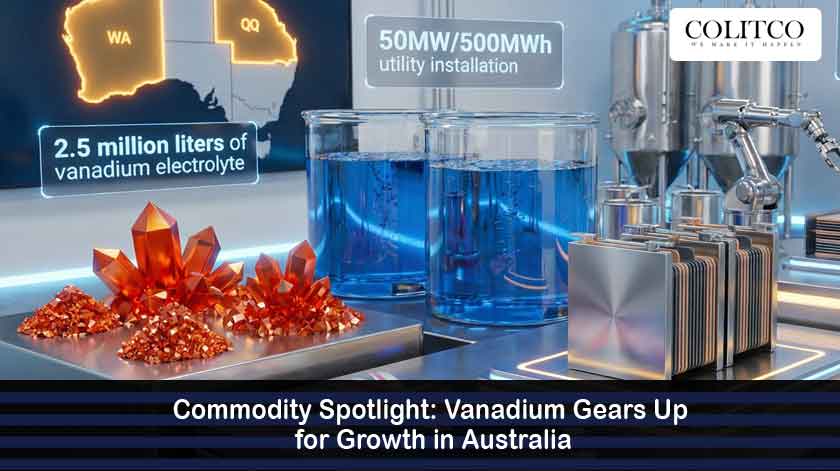
Australia stands on the verge of transforming its vanadium sector. The nation possesses approximately one-third of the world’s recoverable primary vanadium reserves. Multiple major projects advance toward production across Western Australia and Queensland. Vanadium demand is accelerating as energy storage technologies mature globally. Australia currently operates zero vanadium mines despite inventing vanadium redox flow battery technology. This paradox creates significant opportunity for domestic producers.
Market Momentum Builds Behind Battery Storage Revolution
Global vanadium redox flow battery markets are expanding rapidly. The market reached USD 922.65 million in 2025 and projects to surpass USD 2.09 billion by 2030. This represents compound annual growth of 17.85 percent through 2030. Long-duration energy storage systems require a vanadium electrolyte as a core component. Renewable energy integration now accounts for 48 percent of new installations globally.
Global vanadium demand demonstrates significant growth trajectory. Supply will need to expand substantially to meet projected requirements. The International Energy Agency estimates vanadium demand reaching 556.35 kilotonne in 2040. This exceeds 2030 projected demand of 35.23 kilotonne by more than 15 times. Australia’s three-decade absence from vanadium production has created genuine supply constraints.
Vanadium pricing reflects strengthening market fundamentals. United States prices reached USD 9,584 per tonne in June 2025. Canadian prices stood at USD 11,200 per tonne during the same quarter. Netherlands prices climbed to USD 13,355 per tonne. Market analysts project prices will remain elevated despite supply additions expected in 2026 and 2027.

Vanadium’s global market and supply chain
Five Investment-Ready Projects Target Production Commencement
Australian Vanadium Limited’s project represents the most advanced development pipeline. The Australian Vanadium Project anticipates producing 11,200 tonnes of vanadium pentoxide annually over a 25-year mine life. The company completed an optimised feasibility study targeting the third quarter of 2025. Western Australia’s Environmental Protection Authority approved the Gabanintha project in January 2025. The Western Australian Planning Commission granted development approval for the Tenindewa processing facility in August 2025.
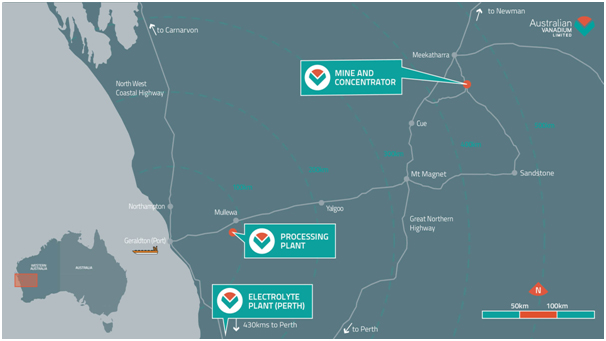
The Australian Vanadium Project
Graham Arvidson, CEO of Australian Vanadium, stated the company received environmental approval enabling project progression. AVL received $24.5 million in grant funding from the Australian Government with potential for an additional $24.5 million contingent upon milestone achievement. The company established a vanadium electrolyte manufacturing facility in Perth producing high-purity electrolyte for up to 33 megawatt-hours annually.
Richmond Vanadium Technology’s Queensland project holds significant scale advantages. The Richmond-Julia Creek Vanadium Project remains the largest non-titanomagnetite vanadium deposit globally of its type. The project comprises a mineral resource of 1.8 billion tonnes at 0.36 percent vanadium oxide. An ore reserve totals 459 million tonnes at 0.49 percent vanadium oxide. Richmond Vanadium expects to complete a bankable feasibility study by mid-2025.
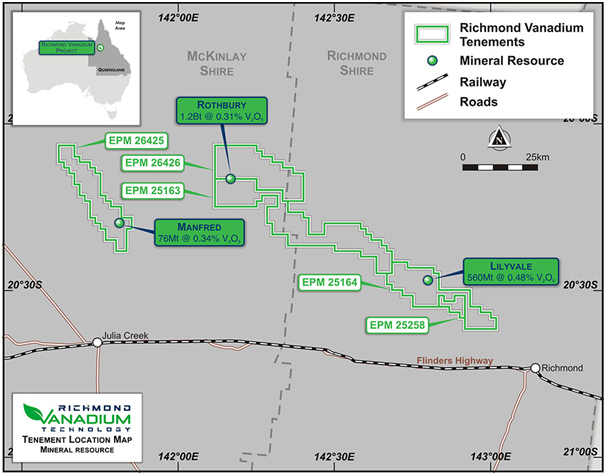
The Richmond-Julia Creek Vanadium Project
The project targets producing 790,000 tonnes of vanadium concentrate annually from processing 4.2 million tonnes of ore. Richmond Vanadium plans downstream processing to produce 12,700 tonnes of vanadium electrolyte for flow batteries. The Queensland Government designated the project with ‘Coordinated Project’ status, the first critical minerals project receiving this recognition. Queensland allocated 75 million dollars for common user infrastructure supporting critical minerals development.
Atlantic Vanadium’s Windimurra project represents the world’s next major primary vanadium producer. Windimurra anticipates producing 7,600 tonnes of high-purity vanadium pentoxide annually over a 31-year minimum mine life. Atlantic Vanadium expects to make final investment decision for project redevelopment by year-end 2025. Windimurra possesses all development approvals and Traditional Owner agreements in place. The project utilises proven open-cut mining and vanadium production processes including ore milling, magnetic separation, salt roasting, leaching, and vanadium recovery.
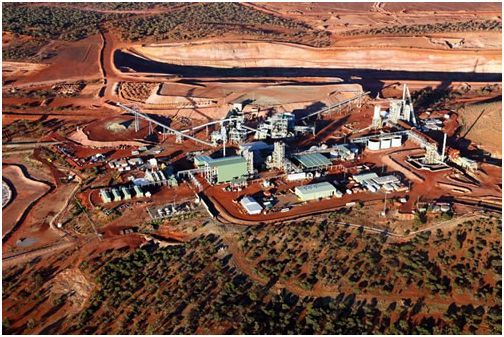
Atlantic Vanadium’s Windimurra Vanadium Mine
Atlantic Vanadium benefits from significant existing infrastructure at the Windimurra site. Historic investment in plant and infrastructure exceeds AU$700 million. The company is investigating and developing downstream processing options to become a vertically integrated vanadium flow battery producer. Atlantic Vanadium currently engages with prospective project financiers and strategic offtake partners.
Vecco Group’s Critical Minerals Project targets high-purity vanadium pentoxide production. The Vecco project anticipates producing approximately 8.7 kilotonne of high-purity vanadium pentoxide annually. The operation will produce around 56 megalitre of vanadium electrolyte from collective facilities in Townsville and the United States. The project will generate valuable by-products including high-purity alumina and molybdenum. A definitive feasibility study is underway with the project advancing steadily.
Surefire Resources’ Victory Bore project rounds out Australia’s major vanadium pipeline. The company continues progressing development activities for its vanadium resource. Each of these five projects appears on Australia Trade and Investment Commission’s Critical Minerals Prospectus as an investment-ready opportunity.
Western Australia Emerges as Energy Storage Hub
The Western Australian government committed to supporting major vanadium battery initiatives. The Cook Labor Government opened expressions of interest for a 50 megawatt, 500 megawatt-hour vanadium flow battery system in November 2025. The state committed AU$150 million toward the vanadium battery energy storage system. The facility will be located in Kalgoorlie, approximately 600 kilometres northeast of Perth.
This represents the largest vanadium redox flow battery project outside China. The Kalgoorlie project will connect to the Wholesale Electricity Market covering Western Australia and the South-West Integrated System. Western Australia designated the Australian Vanadium Project with ‘green energy major project status’ in January 2025. This recognition streamlines approvals and signals government commitment to the sector.
The Kalgoorlie project presents commercial operation in 2029. Project teams require more than 30 million litres of vanadium electrolyte to support 500 megawatt-hour energy storage. AVESS Energy, Atlantic Vanadium, and Lycopodium submitted consortium applications for the initiative. Domestic component manufacturing will require facility expansion acceleration according to AVESS Energy representatives.
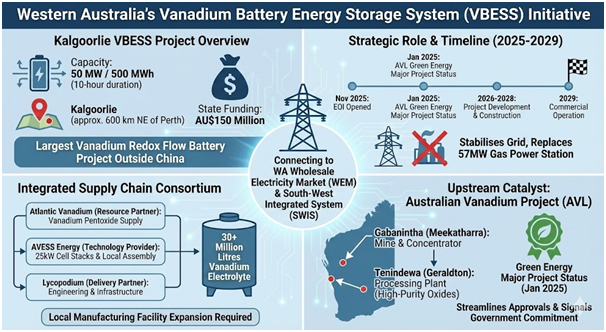
Western Australia’s Energy Storage Hub
Critical Minerals Strategy Drives Government Backing
Australia’s Federal Government designated vanadium as a critical mineral supporting the nation’s energy transition goals. The Future Made in Australia plan prioritises critical minerals production, establishing domestic supply chains. Australia’s Critical Minerals Strategy emphasises moving up the value chain beyond raw material exports. These initiatives directly support domestic vanadium project development and manufacturing expansion.
Government support extends across multiple programs and funding mechanisms. Australian Government funding organisations, overseas export finance agencies, and banks represent potential financing sources. Superannuation and institutional investors provide equity capital for project development. The government provided a $2.5 million grant to Avess Energy exploring vanadium flow battery manufacturing in the Indo-Pacific region. This grant supports assessing manufacturing feasibility across the region.
The Queensland Government announced Australia’s first commercial-scale vanadium flow battery electrolyte manufacturing facility in Townsville. The facility will serve multiple mining operations without requiring individual capital investment in recovery facilities. CopperString 2032, a 1,100-kilometre high-voltage electricity transmission line, will connect Queensland’s North West Minerals Province to the national grid. This infrastructure supports mining operations and battery manufacturing co-location.
Industry Experts Cite Favorable Fundamentals for Vanadium Projects
Vanadium market outlook remains constructive despite short-term volatility. Commodity pricing forecasts indicate supply deficits in 2025 driven by rebar standards and battery demand. CRU analyst estimates vanadium prices will rise in 2025. As additional supply enters 2026 and 2027, prices are expected to decline relative to 2025 levels while remaining elevated versus the previous twelve months.
Jon Price, Richmond Vanadium Technology managing director, identified vanadium flow batteries as the primary growth opportunity for the company. Price indicated prices at USD 9 to USD 10 per pound would trigger project commencement for Richmond. Vanadium flow batteries exhibit 98 percent recyclability making them environmentally advantageous.
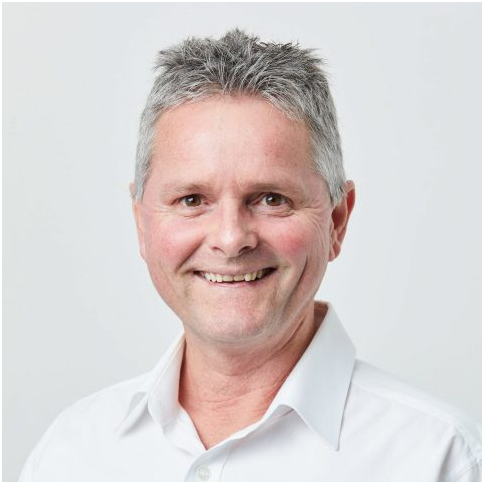
Jon Price, Richmond Vanadium Technology
Graham Arvidson emphasised Australia’s unique position in the global vanadium sector. Australia possesses one of the world’s largest vanadium resources yet produces none. The nation created the vanadium redox flow battery technology through University of New South Wales research in the early 1980s. Establishing domestic production secures both Australia and potentially the Western world’s supply chains.
Vertical Integration Strategy Differentiates Australian Producers
Multiple Australian vanadium developers pursue vertically integrated business models. Australian Vanadium constructed an electrolyte manufacturing facility in Perth before completing mining operations. The company operates an on-site electrolyte facility producing specialised battery-grade products. This mine-to-battery platform provides competitive advantages through direct cost control and supply chain security.
Richmond Vanadium Technology targets complete supply chain integration from raw materials to finished batteries. The company collaborates with Queensland government common user facilities for downstream processing. Richmond intends to produce vanadium electrolyte in Queensland positioned over-the-fence from battery manufacturers and renewable energy companies.
Also Read: Snicko under fire as Australian Cricketers Association calls for overhaul after Adelaide blunder
Atlantic Vanadium investigates downstream processing options to achieve vertical integration at Windimurra. Vertical integration reduces exposure to commodity price volatility through internal processing and battery manufacturing. Established long-term offtake contracts provide additional risk mitigation.
Conclusion
Australia stands positioned to become a major vanadium supplier during the global energy transition. Five investment-ready projects represent hundreds of millions of dollars in planned capital investment. Global vanadium demand accelerates as energy storage deployments scale. Domestic government support continues through critical minerals strategies and funding mechanisms. Project developers pursue vertically integrated business models creating competitive advantages. Market fundamentals support production expansion despite commodity price volatility. The coming years will determine whether Australia fulfils its potential in the vanadium sector.