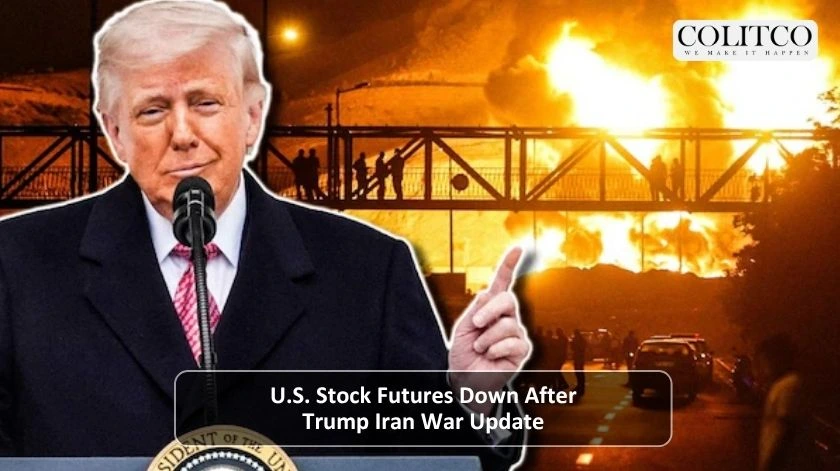
U.S. stock futures also dropped sharply in advance of the session on Thursday after President Donald Trump issued the most recent news on the war in Iran. The investors responded hesitantly because the speech did not give a clear indication of the time of resolution.
The Nasdaq 100 futures plummeted 1.59%, the Dow Jones Industrial Average futures plummeted 1.04%, and the S&P 500 futures plummeted 1.24% at 1.38 a.m. EDT on April 2. The declines represent the increased uncertainty in the world’s financial markets.
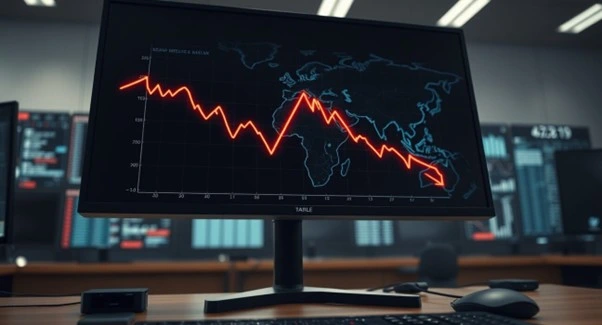
U.S. futures fall as geopolitical uncertainty intensifies. [Courtesy: Bitcoin World]
Why Did Trump’s Iran Update Shake Markets?
According to President Donald Trump, the U.S. is on course to achieve all of America’s military goals in the near future, but warned that Iran was going to be struck hard in the next two to three weeks. The comments were an indication of possible escalation and not de-escalation, which was disturbing to investors.
There was also the lack of an exit strategy or a sign of a cease-fire, which further increased the concerns. The markets are usually sensitive to any geopolitical uncertainty that lasts long, particularly in regard to major global energy areas. The statements were seen by the traders as an indication that the tensions can continue and risk appetite will not be high in the short-term perspective.
Oil Prices Surge As Conflict Intensifies
The oil markets responded with a sharp reaction to the worsening situation, and the prices surged. Brent crude extended 5.63 per cent to 106.87 per barrel, and West Texas Intermediate extended 4.63 per cent to 104.59 per barrel. Such wins underscore the apprehension of supply upsets in the Middle East, a region that holds significance in the oil flows in the world.
Inflation has been a concern with the increase in oil prices because the energy prices affect transportation, production, and consumer goods. Investors are also becoming concerned that long-term rising prices may slow down monetary relaxation and put a strain on the economy all over the world.
Crude oil prices climb amid supply disruption fears. [Courtesy: The CSR Journal]
How Did Markets Perform In The Previous Session?
In spite of the present downturns in futures, the U.S. major indices showed positive results in the last trading session. The Nasdaq rose 1.2%, the S&P 500 increased 0.7%, and the Dow gained 0.5%. These returns were fuelled by cautious optimism that the Iran conflict will soon calm down.
The recent events have, however, changed that feeling as it has shown how fast the market direction changes. Investors are very sensitive to the geopolitical news, especially that of oil supply and worldwide stability.
What Key Economic Data Are Traders Watching?
The traders are currently paying attention to future economic indicators that may affect the direction of the market. First-time jobless claims of the week ending March 28 will be released on Thursday morning. Further, on Friday morning, the Non-Farm Payrolls report for March will be released.
Such data points are essential in determining the health of the U.S. labour market and the economy at large. Good data may compensate for certain geopolitical issues, and poorer statistics may lead to a further rise in market volatility. The fact that the trading week was reduced with the Good Friday holiday contributes further to the complexity of the market dynamics.

Investors track economic data alongside geopolitical developments. [Courtesy: Acumen Capital]
What Does This Mean For Investors And Markets?
Geopolitical tension and the increase in oil prices are a difficult prospect for investors. Short-term volatility will probably keep its high level due to the tendency of the markets to respond to the new developments in the Iran conflict. Investors can still invest in defensive assets and lower their exposure to risky equities.
The market will be stable in the long-term based on the transparency about the conflict and its effects on the world energy supply. In case of de-tension, equities may easily rebound. But the long period of uncertainty can be a burden on growth and investor confidence.
Also Read: 3 Best Stocks to Buy Amid Mounting Stagflation Fears
FAQs
Q1. Why are U.S. stock futures down today?
A1: U.S. stock futures are down due to uncertainty following Trump’s Iran war update and rising geopolitical risks.
Q2. How did oil prices react to the Iran conflict?
A2: Oil prices surged, with Brent at $106.87 and WTI at $104.59 per barrel.
Q3. What economic data are traders watching?
A3: Traders are monitoring jobless claims and the Non-Farm Payrolls report for insights into the economy.
Q4. How might this affect investors?
A4: Investors may face increased volatility and could shift toward safer assets during uncertainty.
Disclaimer
This article is for informational purposes only and does not constitute financial or investment advice. The information is based on publicly available data and market updates. Readers should conduct independent research or consult a licensed financial advisor before making decisions. Market conditions can change rapidly, and geopolitical developments may significantly impact asset prices and investor outcomes.
Sources
- https://www.tipranks.com/news/u-s-stock-futures-flat-as-traders-await-updates-on-u-s-iran-conflict-2
- https://www.tipranks.com/news/stock-market-news-today-4-2-26-stock-futures-plunge-after-trump-warns-of-hitting-iran-extremely-hard