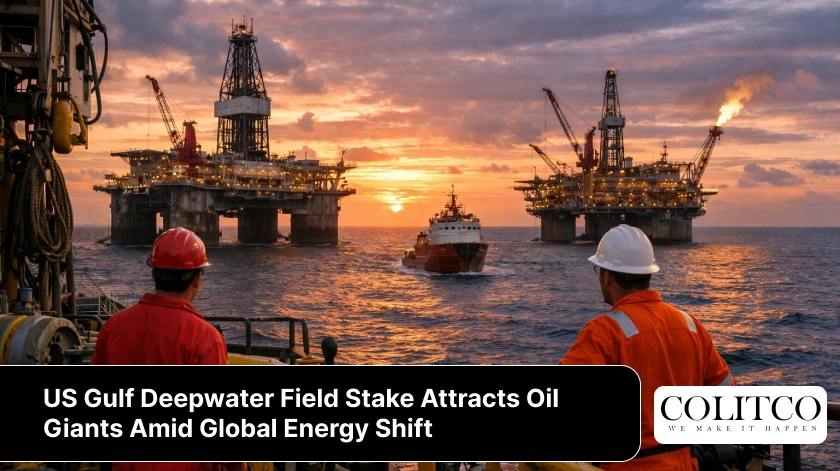
A US Gulf deepwater field stake is attracting early attention among major oil companies as the world energy dynamics become more dynamic and the industry participants find stable production resources beyond the conflict-ridden territories.
Sources familiar with the matter say that European energy giants TotalEnergies and Shell are considering a potential acquisition, and London-based BP has also shown interest, along with Spain-based Repsol and US-based Chevron, which could contemplate making a bid.
Recently, Beacon Offshore Energy and HEQ Deepwater have initiated the sale process, offering a 51 per cent share in the Shenandoah offshore field, with Navitas Petroleum remaining as the other shareholder and still a significant stakeholder in the project.
Shell branding reflects growing global interest in offshore energy assets. [Courtesy: Reuters]
US Gulf Deepwater Field Stake Gains Strategic Importance
The Shenandoah offshore field is considered one of the most promising ultra-deepwater developments in the US Gulf of Mexico due to its scale and production capacity.
The oil and gas reserves lie around 30,000 feet below the sea floor, where pressure reaches approximately 20,000 pounds per square inch. This makes extraction highly complex but rewarding for experienced operators.
Production began in July, and Beacon Offshore Energy announced in October that four phase-one wells were achieving 100,000 barrels of oil per day, making the field a high-value asset with stable return potential.
Why Are Oil Giants Eyeing The US Gulf Deepwater Field Stake Now?
Geopolitical conflict, especially in the Middle East, has become a major factor influencing investment decisions in the global energy sector.
Oil majors are focusing on assets that offer stability, scalability, and lower exposure to geopolitical shocks. North American energy assets, including the US Gulf, are increasingly seen as safer investment destinations due to their distance from conflict zones.
They also offer reliable infrastructure and global export capabilities, making them attractive during uncertainty and for long-term energy security strategies.
Global conflicts are reshaping where oil companies invest in energy assets. [Courtesy: Nature]
Energy Security Trends Support US Gulf Deepwater Field Stake Demand
Energy security concerns are driving a broader shift in capital allocation as oil producers seek to diversify supply chains and improve resilience against disruptions affecting traditional supply routes.
The US Gulf of Mexico offers a stable regulatory environment, mature infrastructure, and established production networks, making it an attractive long-term investment destination.
Rising oil prices have further increased the value of such assets. This has encouraged companies to pursue acquisitions that deliver stable output and consistent revenue in the evolving global energy landscape.
How Will The US Gulf Deepwater Field Stake Sale Process Unfold?
The sale process is progressing steadily, with several key developments shaping how the deal may unfold in the coming weeks:
- Initial bids are expected to be submitted in the coming weeks.
- Not all interested companies may proceed to the final bidding stages.
- Oil price movements will influence final valuation outcomes.
- The final deal depends on how much of Shenandoah is sold.
- Additional bidders from the Middle East and Asia may join.
- Increased competition could drive higher asset valuation.
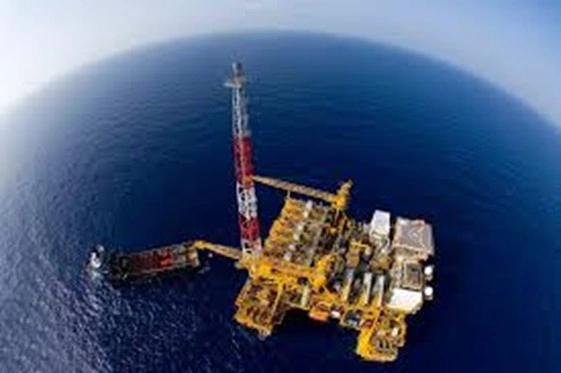
Offshore rigs in the Gulf highlight the scale of deepwater exploration projects. [Courtesy: Upstream Online]
What Does This Mean For Global Energy Markets?
The growing interest in the US Gulf deepwater field stake reflects a broader industry shift towards renewed offshore exploration and investment.
This follows years of underinvestment in new oil projects despite sustained global demand and declining output from mature fields. The trend highlights the need to balance energy transition goals with maintaining a stable oil supply.
Ongoing geopolitical risks continue to disrupt traditional markets, making deepwater projects critical for meeting future energy demand and supporting global economic stability.
Also Read: Global Oil Shock Fuels Rapid Surge in Electric Vehicle Interest
FAQs
Q1. What is the Shenandoah offshore field?
A1: It is an ultra-deepwater oil and gas field in the US Gulf of Mexico, producing about 100,000 barrels daily.
Q2. Who is selling the stake?
A2: Beacon Offshore Energy and HEQ Deepwater are offering a 51% stake in the project.
Q3. Which companies are interested?
A3: TotalEnergies, Shell, BP, Repsol, and Chevron have shown early interest.
Q4. Why is this deal important?
A4: It reflects rising demand for stable energy assets amid global geopolitical tensions.
Disclaimer
This article is based on publicly available information and credible sources. It is for informational purposes only and does not constitute financial advice. Market conditions and company strategies may change without notice. Readers should conduct independent research before making investment decisions. The companies mentioned have not confirmed all details, and forward-looking statements involve inherent risks and uncertainties.
Sources
- https://www.reuters.com/business/energy/oil-giants-show-early-interest-us-gulf-deepwater-field-stake-sources-say-2026-04-02/
- https://www.investing.com/news/stock-market-news/exclusiveoil-giants-show-early-interest-in-us-gulf-deepwater-field-stake-sources-say-4596645
- https://money.usnews.com/investing/news/articles/2026-04-02/exclusive-oil-giants-show-early-interest-in-us-gulf-deepwater-field-stake-sources-say