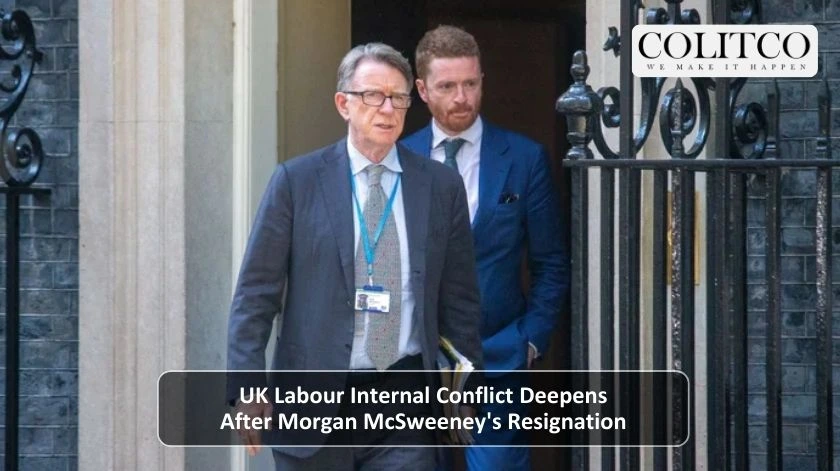
The resignation of Morgan McSweeney has made the UK Labour Party’s internal strife more acute and shown a new turmoil around the Prime Minister, Keir Starmer.
Days of criticism followed McSweeney’s stepping down due to his position taken on the appointment of Peter Mandelson as the Washington ambassador. He was the chief of staff and closest strategist of Starmer within Downing Street.
During the tenure of Boris Johnson, his influence was largely likened to the impact of Dominic Cummings. Other labour MPS complained that his presence gave too much power to unelected individuals. They thought that he was protecting Starmer.
The backlash and scrutiny from people led to his resignation. Those who supported the decision explained it as a sacrifice to save the prime minister. Critics considered it as too late damage management.
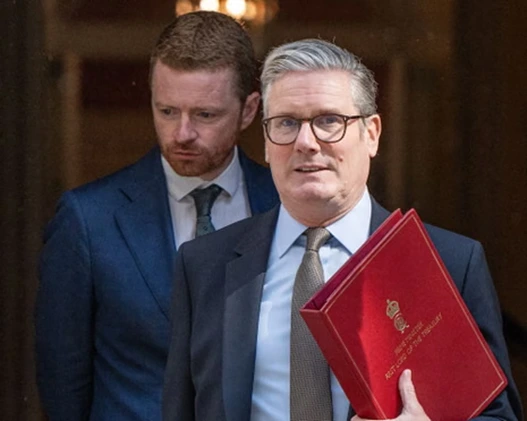
Morgan McSweeney and Keir Starmer outside Downing Street during the period of increased political tensions. [The Guardian]
McSweeney Held Unmatched Power Inside Downing Street
McSweeney developed his position of power through years of political planning and internal organisation. He had been the former leader of the think tank, Labour Together, and contributed to moving Labour back to the centre ground.
Allies give him credit for destroying the hard-left utility of the party. They further give him credit for the fact that he led Starmer to a historic landslide election victory in 2024. He had unlimited direct access to the prime minister.
There are even fewer advisers with such staffing and messaging control. This balance of power did not augur well with a number of MPs. Some of them identified the structure as opaque and exclusionary.
The parliamentary party was filled with resentment towards the environment. The Labour Party power struggle, which is currently playing out in public, is now influenced by that resentment.
Does His Departure Strengthen Or Weaken Starmer?
The short-term impact is still uncertain to the government. Other MPs think the exit would give Starmer breathing space. Others say that it portrays him as indecisive.
One of the critics stated that it is a sign of weakness to permit a resignation instead of a dismissal. Starmer has been forced to own all his decisions by doing away with his long-time adviser. Even the protective buffer that surrounds him no longer exists.
He will be directly responsible for politics. Future byelections and local elections would soon challenge that authority. Leadership speculation proceeds faster due to losses. The internal struggle in the UK labour may thus be aggravated instead of being lightened.
Critics Cite Culture And Accountability Concerns
Critics label the style of leadership at McSweeney as confrontational and closed-minded. They accuse him of operating a male inner circle. People complain that elected members were not involved in critical decision-making.
There were also questions as to the attitude of Labour Together in commissioning investigations into journalists in the past. McSweeney was aware of that probe, though he did not order the probe. This connection supported poor judgment claims.
The resignation was no cleansing moment, according to Clive Lewis. He said the matter indicated more party culture. He said that culture started in the Blair and Mandelson years. These assertions are indications that it is not just a single individual who is dissatisfied.
What Happens To Labour’s Leadership Battle Now?
The focus is now on the next political challenge to Starmer. Already manoeuvring within factions within the Labour Party. McSweeney had long demanded to be removed from the Tribune group. Their short-term objective seems to have been met.
Yet, other MPs think that his absence is eliminating a barrier to confronting Starmer himself. They claim that he used to internalize blame and externalize criticism. In the absence of such a firewall, pressure would end up squarely on the prime minister.
Defeat in electorals in Gorton and Denton or local competitions can result in more grove uprising. It may also then be a sharper phase of the power struggle in the Labour Party.
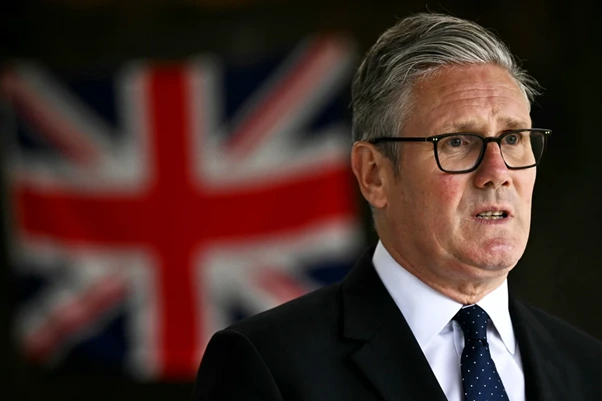
Keir Starmer is facing reporters as internal party cracks continue to grow after the exit of his aide. [NBC News]
Starmer Faces A Defining Moment For Authority
Starmer has now faced a test of leadership. He will have to appease MPs and put the party on track. Political stability in Britain is a subject that is being closely monitored by investors and the international community.
It is a danger that internal fractures will destroy trust in the policy direction. Markets desire stable governance. Further unrest might undermine the reform agenda of Labour.
The Morgan McSweeney resignation has implications outside Westminster drama. It transforms the views of dominance and ability. Labour will move either way depending on whether Starmer will consolidate power or lose authority.
The UK labour in fighting is no longer in the closed-door policy. It has turned into a social struggle for power.
Also Read: UK Parliament Building Upgrade Faces £40bn Decision Amid Rodent Concerns
FAQs
Q1: Why did Morgan McSweeney resign?
A1: He resigned after criticism over his influence and the Mandelson ambassador appointment.
Q2: How does this affect Keir Starmer?
A2: Starmer loses a key adviser and must now shoulder full political responsibility.
Q3: What is the UK Labour internal conflict about?
A3: It centres on leadership style, power concentration, and factional disagreements.
Q4: Could this trigger a leadership challenge?
A4: Poor election results could intensify calls for change within the party.