
Global financial markets retreated after former US President Donald Trump issued fresh tariff threats against Europe, raising concerns about renewed trade tensions that unsettled equities, weakened risk appetite, and pushed investors toward safer assets across major regions.
Tariff Threats Target Europe Over Greenland Dispute
Donald Trump warned that the United States could impose new tariffs on European imports if diplomatic disputes over Greenland remain unresolved. The warning revived trade tensions between Washington and key European capitals.
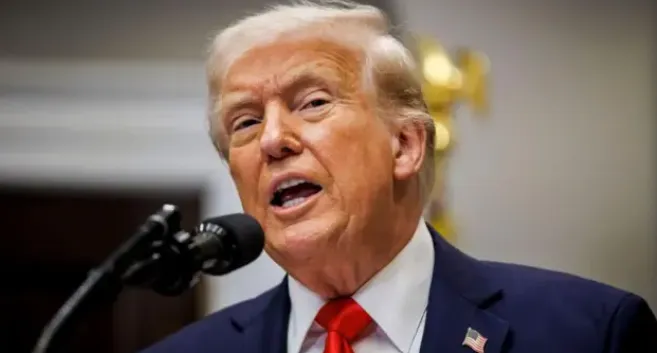
Former US President Donald Trump addresses the media, issuing renewed tariff warnings on European imports that unsettled global markets. (Source: BBC)
According to reports, the proposed tariffs could start at 10 percent before rising sharply later in the year. This timeline added urgency to investor concerns across global markets.
The warning followed Trump’s renewed public statements linking trade measures to geopolitical negotiations. These remarks placed trade policy at the center of a broader diplomatic dispute.
European governments responded with firm resistance to any conditions involving Greenland. Officials stressed that trade policy should not be used to pressure sovereign political decisions.
Global Equities Slide as Risk Appetite Weakens
Equity markets across Europe fell sharply after Trump’s remarks circulated among investors. Major indices in France, Germany, and the United Kingdom all recorded notable declines.
Market participants reduced exposure to cyclical stocks, especially those tied to global trade. Export-heavy firms came under pressure during early trading sessions.
Asian markets followed the same direction as European trading ended weaker. Several major Asian benchmarks closed lower amid rising uncertainty over trade relations.
US equity futures also moved lower despite US markets being closed for a public holiday. The futures decline reflected caution rather than panic among investors.
Investors Seek Shelter in Safe-Haven Assets
As equities retreated, investors shifted toward assets traditionally viewed as safer during periods of uncertainty. Gold prices climbed to fresh record levels in several trading sessions.
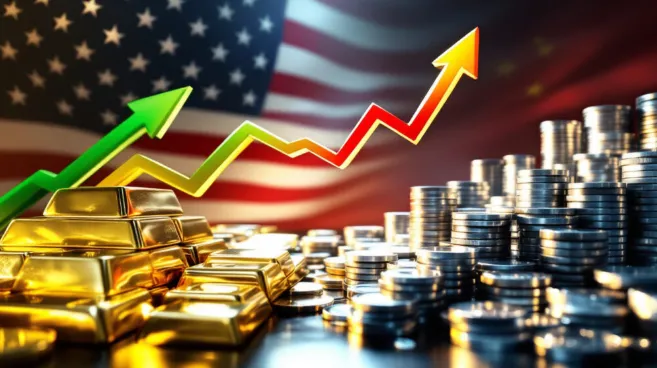
Gold and silver prices climb as investors seek safe-haven assets amid trade tensions triggered by US tariffs. (Source: discoveryalert)
The Japanese yen and Swiss franc also strengthened as demand rose for currencies perceived as stable. These movements reflected a broad move away from risk-sensitive positions.
At the same time, the US dollar weakened against several major currencies. This reversal followed weeks of relative strength in the greenback.
Market analysts said the shift showed a classic response to rising geopolitical tension. Traders sought protection rather than chasing short-term returns.
Pressure Mounts on European Export Sectors
European exporters faced immediate market pressure following the tariff warnings. Automotive manufacturers and luxury goods firms saw share prices fall sharply.
These industries depend heavily on access to the US market. Any increase in tariffs would raise costs and reduce pricing flexibility for European producers.
British car exporters also drew attention as trade with the United States remains vital for several manufacturers. Industry groups warned about higher costs across supply chains.
Financial service providers linked to vehicle financing were also affected. Investors priced in potential slowdowns in vehicle sales should tariffs become reality.
UK and European Industry Braces for Higher Costs
Reports from the UK automotive sector pointed to concerns over rising export costs. Manufacturers warned that tariffs could make European vehicles less competitive.
Finance providers supporting vehicle purchases also expressed caution. Higher vehicle prices could reduce consumer demand and affect credit growth in the sector.
Trade groups stressed that the automotive industry already faces challenges from energy prices and tighter credit conditions. Tariffs would add further strain.
Several European industry bodies urged political leaders to pursue diplomatic solutions. They warned that prolonged trade disputes could weaken recovery efforts.
Market Commentary Reflects Growing Caution
Market strategists described the tariff warnings as a renewed source of volatility rather than an isolated political statement. Traders adjusted portfolios to reflect a more cautious outlook.
Some analysts noted that earlier trade disputes had similar market effects. Equity declines and safe-haven flows often follow such announcements.
At the same time, several institutions said the situation remains fluid. Diplomatic talks could still prevent any formal tariff action from taking place.
However, uncertainty itself became a driver of market behavior. Investors reacted to the risk rather than confirmed policy decisions.
Tweets Amplify Market Sensitivity
Trump’s comments gained wider reach through social media and public statements. Market reactions intensified as these messages circulated rapidly across trading desks.
Several widely shared posts repeated the tariff warnings and referenced possible timelines. These posts contributed to short-term volatility in equity and currency markets.
Financial market participants monitored these updates closely. Rapid information flow increased intraday price movements across asset classes.
The posts did not include detailed policy plans. Still, their political tone proved sufficient to influence investor sentiment.
Talk of “Sell America” Returns in Market Discourse
The tariff threat revived discussion about a possible “sell America” trade among global investors. This phrase reflects concerns about US-driven market instability.
Some investors reduced exposure to US-linked assets, especially companies reliant on cross-border trade. These adjustments appeared in both equities and fixed income markets.
At the same time, European bonds attracted modest inflows as investors searched for alternatives. This movement suggested diversification rather than capital flight.
Analysts cautioned that such trends remain limited for now. Broader shifts would depend on whether trade tensions escalate further.
Central Banks and Policymakers Monitor Developments
Central banks in Europe and Asia monitored market reactions closely. Officials remained cautious about commenting on political developments.
However, policymakers acknowledged that trade tensions can influence inflation and growth forecasts. Any prolonged dispute would complicate monetary policy planning.
Some European officials signaled readiness to respond if tariffs are enacted. Possible responses include reciprocal trade measures and diplomatic negotiations.
For now, governments emphasized stability and dialogue. They aimed to prevent political disputes from spilling into economic disruption.
Also Read: Sydney Shark Attack Leaves Teen Critical at Harbour Beach
Outlook Hinges on Diplomatic Direction
The next phase will depend on whether tariff warnings turn into formal action. Markets will continue reacting to both statements and negotiations.
Investors remain sensitive to trade-related developments after years of global disruptions. Even limited remarks now carry outsized influence over price movements.
Until clarity emerges, financial markets are likely to remain cautious. Safe-haven demand may persist alongside restrained equity positioning.
For global traders, the focus remains on political signals and official responses. These factors now shape near-term market direction more than economic data alone.