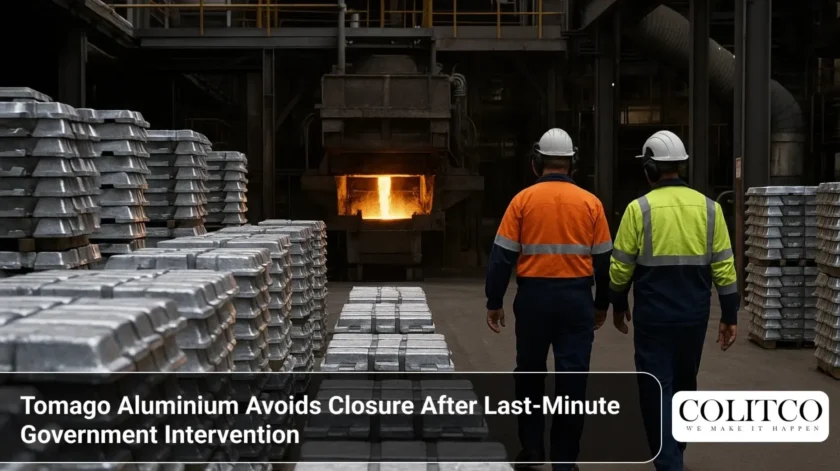
Prime Minister Anthony Albanese travelled to Newcastle on Friday morning to announce a breakthrough in negotiations that will keep Australia’s largest aluminium smelter operating beyond 2028. The intervention comes after months of uncertainty for Tomago Aluminium’s 1500-strong workforce.
The federal government has committed taxpayer funds to provide cheaper renewable power to the facility, which consumes roughly 12 per cent of NSW’s entire electricity grid. While exact financial details remain undisclosed, industry sources suggest the support package could rival recent smelter bailouts worth hundreds of millions.
“It’s important we as a nation continue to make things here, and the program that we’ve been working on to ensure that long term future, by giving security going forward,” Albanese said during his visit to the Hunter facility.
Crisis Point for Hunter’s Biggest Employer
Tomago Aluminium launched a four-week staff consultation process in September about potential closure. Management warned the plant might shut permanently when its current electricity contract with AGL expires in December 2028.
The smelter’s predicament stems from a fundamental economic challenge. Electricity accounts for 40 per cent of operating costs at the facility, which requires a constant 950-megawatt power supply to operate its pot lines around the clock.
Recent market proposals for both coal-fired and renewable energy showed future prices would render the operation commercially unviable. Rio Tinto, which owns a 51.55 per cent majority stake through a joint venture, had been unable to secure an affordable replacement contract.
The potential closure threatened:
- 1500 direct jobs at the smelter
- An estimated 5000 indirect jobs across the region
- Loss of 590,000 tonnes annual aluminium production (40% of Australia’s output)
- The largest Hunter industrial shutdown since BHP steelworks closed in 1999
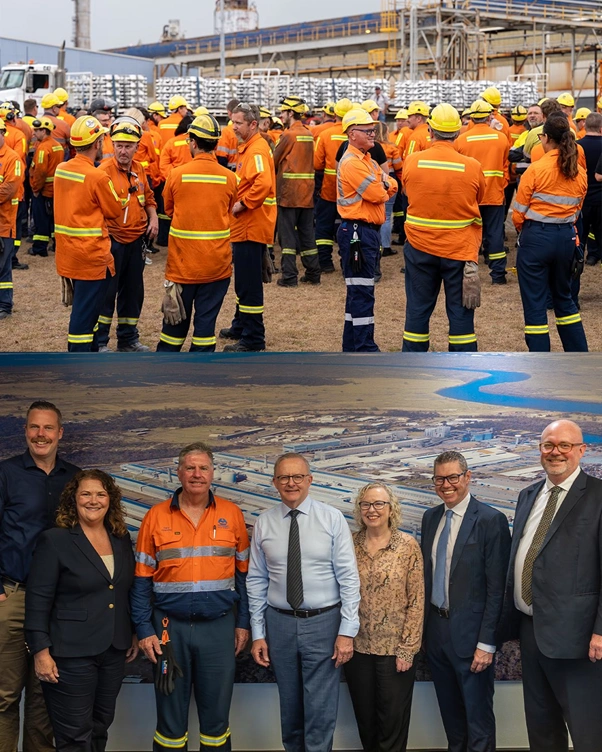
Prime Minister Anthony Albanese visiting Tomago Aluminium facility near Newcastle
Deal Structure Involves Federal and State Support
The rescue package represents a collaborative effort between Commonwealth and NSW governments. Industry Minister Tim Ayres confirmed negotiations had been ongoing for weeks, exploring various ownership and subsidy models.
Sources familiar with the discussions indicate the agreement will likely involve:
- Government contracting for renewable energy through power purchase agreements
- On-selling electricity to Tomago at stable, subsidised rates
- Potential involvement from Snowy Hydro and the Clean Energy Finance Corporation
- Underwriting new renewable energy generation and storage projects
The NSW government is expected to provide additional support, though specific contributions have not been publicly confirmed. Both levels of government view Tomago as critical infrastructure for grid stability and manufacturing capability.
Federal Labor appears particularly sensitive to the political implications. The Hunter region has experienced decades of industrial decline, and another major closure could prove politically catastrophic ahead of elections.
Hunter’s Clean Energy Transformation
Tomago’s future is intrinsically linked to the Hunter’s transition away from coal-fired power. The smelter currently relies heavily on electricity from AGL’s Bayswater coal plant, which faces an uncertain timeline for closure.
Recent polling data shows strong public support for government investment in renewable-powered manufacturing. A survey of 4711 Australians found:
- 71% nationally support helping manufacturers access cheaper renewable energy
- 72% of Hunter residents back government investment in clean energy for industry
- 65% of Hunter respondents believe renewables would strengthen Australia’s economy
The region is positioning itself as a renewable energy zone with several major projects in development. However, uncertainty around project timing and capacity has complicated planning for energy-intensive manufacturers like Tomago.
Australia’s aluminium industry faces broader challenges from Chinese competition and rising power costs. The sector has been steadily losing ground internationally despite Australia’s world-class bauxite reserves and proximity to Asian markets.
Pattern of Smelter Bailouts Continues
Tomago’s rescue follows a series of government interventions to keep metal smelters operating across Australia. The country’s energy-intensive manufacturing sector has struggled with the transition from cheap, stable coal power to more expensive renewable alternatives.
Recent support packages include:
- $600 million joint federal-Queensland support for Mt Isa copper smelter (October 2025)
- $135 million multi-government funding for Nyrstar’s lead-zinc smelters (mid-2025)
- Various undisclosed agreements for Queensland aluminium operations
Critics argue these bailouts represent poor value for taxpayers, while supporters contend they protect strategic manufacturing capability and thousands of jobs during the energy transition.
The Australian Workers’ Union welcomed Friday’s announcement as “a pivotal moment for Australian manufacturing.”
“For months we’ve been saying that Tomago isn’t just another industrial site. It’s the test case for whether Australia is serious about having a manufacturing future,” said AWU national secretary Paul Farrow.
Rio Tinto’s Australian Aluminium Strategy
Rio Tinto operates multiple aluminium smelters in Australia, making the company’s positioning critical to the sector’s future. The mining giant has announced plans to become Australia’s largest industrial buyer of renewable power through several major agreements.
The company secured Australia’s largest renewable power purchase agreement in early 2024 for its Gladstone operations, involving the Bungaban wind project and Upper Calliope solar farm. These developments demonstrate Rio Tinto’s commitment to decarbonising its Australian aluminium production chain.
However, the pace of renewable project development hasn’t matched the urgency of expiring coal contracts. This mismatch created the crisis point that required government intervention at Tomago.
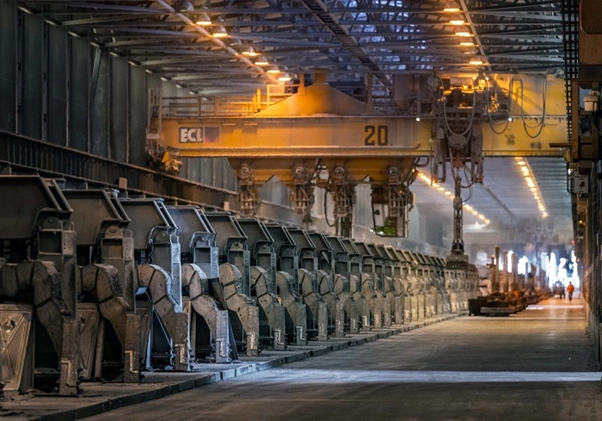
Tomago Aluminium facility near Newcastle produces 590,000 tonnes annually.
What Happens Next
While Friday’s announcement provides breathing room, significant work remains to finalise the support structure. The federal government’s Green Aluminium Production Credit, worth $2 billion nationally, won’t commence until 2028.
Tomago needs interim arrangements to bridge the gap when its AGL contract expires. Industry Minister Tim Ayres indicated negotiations would continue to flesh out details around:
- Specific subsidy levels and duration
- Renewable energy sourcing arrangements
- Long-term commercial sustainability measures
- Plant maintenance and modernisation requirements
The 40-year-old facility requires ongoing capital investment to remain competitive. Any support package must balance immediate viability concerns with longer-term strategic positioning.
Australia’s broader steel and aluminium sector continues to face headwinds from international competition and trade policy uncertainty. The Tomago rescue demonstrates government willingness to intervene, but questions remain about the sustainability of this approach.
Also Read: Bupa Slapped with Record Fine After Wrongly Rejecting Thousands of Health Claims
Frequently Asked Questions
Q: How many jobs does Tomago Aluminium employ?
A: Tomago employs approximately 1500 workers directly, with an estimated 5000 additional jobs across the Hunter region dependent on the smelter’s operations through supply chains and related services.
Q: Why is Tomago Aluminium at risk of closure?
A: Rising electricity costs threaten the plant’s viability when its current power contract expires in December 2028. Electricity represents 40% of operating costs, and recent market proposals showed both coal and renewable energy options would be commercially unviable at proposed pricing.
Q: What is the government doing to help Tomago Aluminium?
A: The federal and NSW governments are providing financial support to help Tomago access cheaper renewable electricity. Specific details remain under negotiation, but the package will likely involve government contracting for renewable power and on-selling it to the smelter at subsidised rates.
Q: How much aluminium does Tomago produce?
A: The facility produces approximately 590,000 tonnes of aluminium annually, representing about 40% of Australia’s total aluminium output. The plant operates 24 hours per day and requires 950 megawatts of constant power supply.
Q: Who owns Tomago Aluminium?
A: Tomago operates as an independently managed joint venture owned by Rio Tinto (51.55%), Gove Aluminium Finance Ltd (36.05%), and Norsk Hydro (12.40%).
Disclaimer