Researchers from Imperial College London and Kyushu Sangyo University have published findings showing a direct link between playing Super Mario Bros. and Yoshi games and lower burnout risk among university students. The study examined 336 university students across two countries to understand how casual gaming influences emotional resilience and academic stress management. Dr. Andreas Benedikt Eisingerich, who leads the marketing and well-being research at Imperial College London, spearheaded the investigation into everyday play habits.
The research reveals that childlike wonder, described as open curiosity combined with delight in ordinary details, boosts happiness and explains the burnout reduction pattern observed across the study participants. Burnout develops when deadlines, constant messages, and financial worries overwhelm sleep schedules and eliminate recovery time for stressed individuals. The World Health Organisation defines burnout as an occupational phenomenon marked by exhaustion, cynicism, and diminished effectiveness in daily tasks.
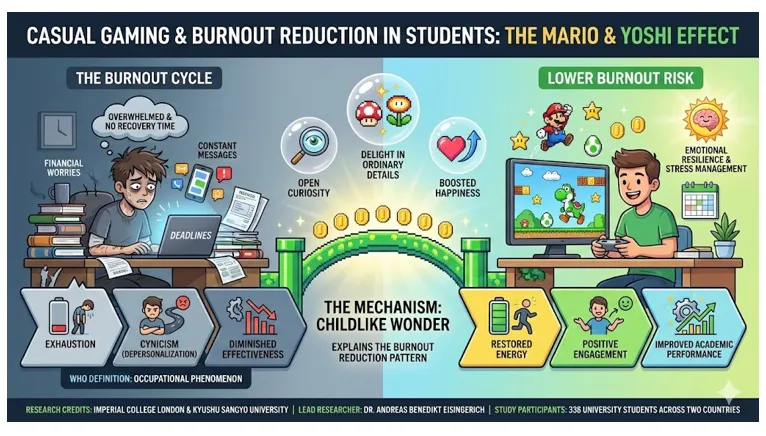
The Mario & Yoshi Effect
How Video Games Combat Student Stress
Super Mario Bros. and Yoshi games function as practical stress-relief tools when students engage with them voluntarily and maintain short play sessions. Dr. Eisingerich commented on the findings: “Games like Super Mario Bros. and Yoshi may offer a potent antidote to the cynicism and fatigue characteristic of burnout.” The study focused on everyday play rather than therapeutic gaming interventions, making the findings relevant to students’ existing routines.
A 2021 systematic review examined 28 studies and found evidence that platform games reduced stress and anxiety, particularly amongst young adults. Commercial games calm stress effectively when gameplay remains voluntary and brief rather than becoming another obligation or escapist habit. The bright worlds and simple objectives within Super Mario games reduce mental load considerably. Players concentrate on timing and movement instead of wrestling with complex decisions that demand emotional energy.
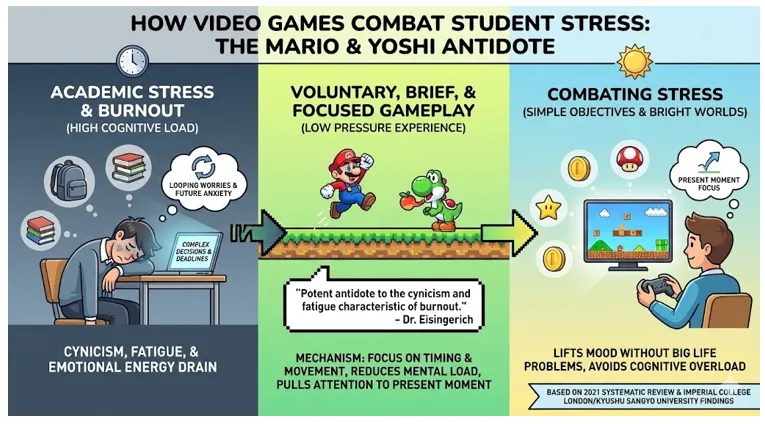
How Video Games Combat Student Stress
Platform challenges pull player attention into the present moment, leaving minimal space for worries that loop continuously during study periods. This focused gameplay lifts mood without asking players to solve bigger life problems, which maintains a low-pressure experience throughout sessions. The game’s straightforward design prevents cognitive overload that often accompanies stressful academic responsibilities.
Research Methodology and Study Design
The research team employed a mixed-methods approach combining interviews and surveys to capture authentic student experiences with gaming. During July and August 2025, interviewers conducted conversations with 41 university students, with each session lasting between 25 and 40 minutes. These interviews revealed strong themes of relief and nostalgia amongst participants who engaged with the games regularly.
The survey phase extended the workplace burnout framework to address the realities of student life and daily demands. Researchers measured happiness as an intervening factor to determine whether wonder directly reduced burnout or operated through mood improvements. Happiness in the survey encompassed more than simple enjoyment and included gratitude and satisfaction with life’s direction overall.
The study captured one moment in time, meaning results cannot prove that playing games directly caused emotional changes in participants. However, people who reported experiencing more childlike wonder whilst playing also reported feeling happier overall. That higher happiness, in turn, demonstrated a strong link to lower burnout risk, indicating mood played a central role in the emotional pattern.
When researchers accounted for happiness in their analysis, wonder by itself no longer displayed a clear link to burnout. This finding shows that joy functioned as the key factor driving the burnout reduction observed across the study. One respondent reflected on the experience, stating: “Not everything seems lost anymore when you got Yoshi to cheer you on.”
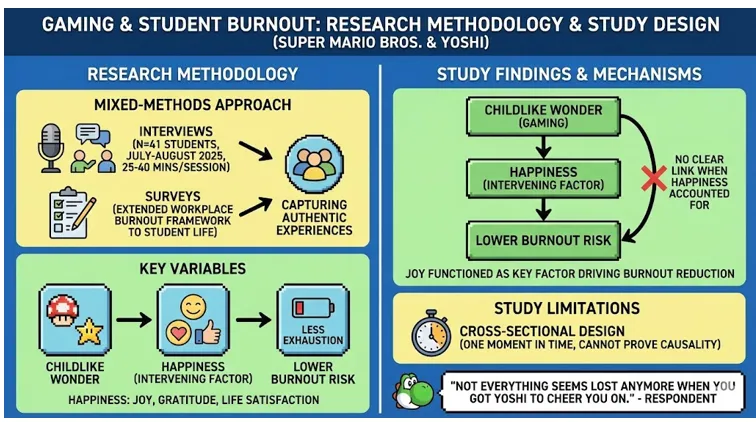
Research Methodology
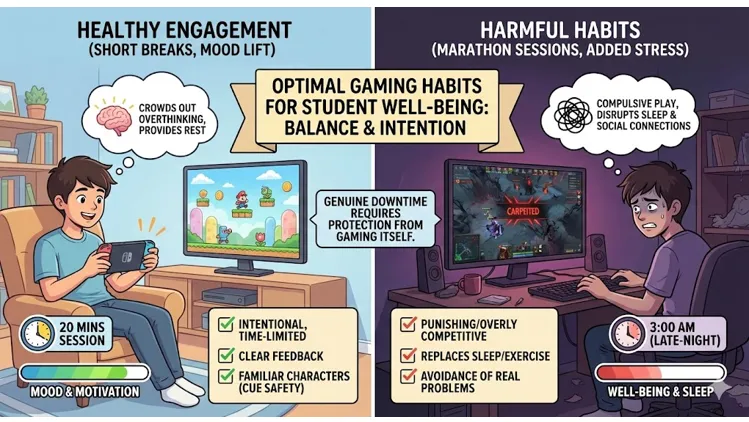
Optimal Gaming Habits for Student Well-being
Games lift mood most effectively when students use them as short breaks rather than late-night marathon sessions that disrupt sleep. Fast jumps and quick reactions demand attention, which crowds out overthinking and provides the brain with the necessary rest from worries. Clear feedback for successful moves can trigger a small sense of competence, a feeling that frequently boosts mood and motivation.
However, games that feel punishing or overly competitive can backfire and add stress rather than relieve it for vulnerable students. Compulsive play can replace sleep, exercise, and social connections, transforming a helpful tool into a harmful habit within days. Using games exclusively to avoid real problems can deepen feelings of helplessness, particularly when stressors remain unaddressed in daily life.
Also Read: New York City Prepares for First Winter Storm Warning in Four Years with Heavy Snow Expected
Intentional, time-limited sessions aligned better with the study’s message than extensive level-grinding marathons, and genuine downtime requires protection from gaming itself. Familiar characters and cheerful music cue safety, allowing players to relax faster than they would with unfamiliar or dark-themed games. Predictable rules and clear goals reduce decision stress because the game rewards effort quickly and displays progress visibly.
Optimal Gaming Habits for Student Well-being
Implications for Campus Support Services
Students often lack time for lengthy wellness programmes, making short play breaks practical within studying and part-time work schedules. Campus counsellors and educators could introduce familiar games as optional downtime tools whilst setting limits and monitoring for harmful patterns. The findings suggest gentle, familiar play can spark wonder and lift mood in stressed students facing academic pressures.
Longer studies must test how long benefits persist, and students require genuine rest and fair workloads alongside any screen-based interventions. The study appears in the journal JMIR Serious Games and represents growing evidence supporting non-traditional approaches to student well-being.