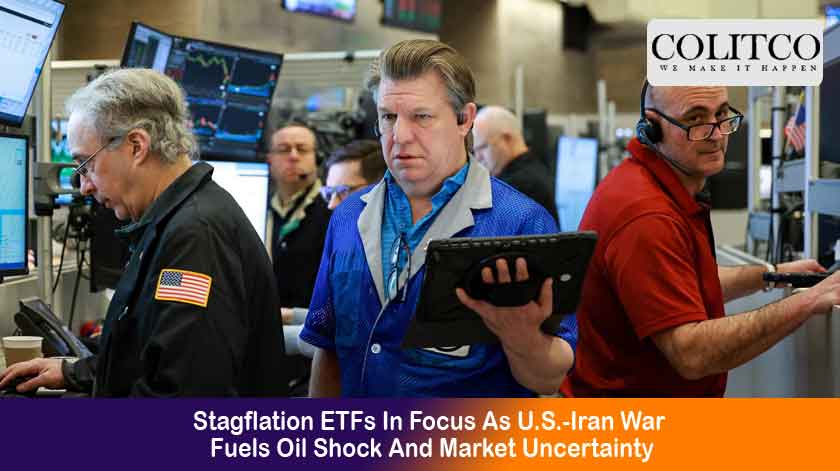
The increase in stagflation ETFs demand is being associated with the burgeoning geopolitical conflict between the United States and Iran, which is driving oil prices up, whilst the U.S. labour market continues to weaken.
Analysts caution that this is a 1970s-style stagflation process in which inflation continues to be high as economic growth decelerates. The oil price spurt is driving up the cost of inputs in any industry, and poor employment statistics are indicating low economic growth.
Investors around the world are being thrown into confusion by this two-fold pressure. With the uncertainties associated with more conventional growth assets, investors are moving towards defensive investments.
Diversified ETFs with a target of key industries are being sought after because of their stability. These funds offer exposure to the industries that are not affected by economic conditions. Consequently, stagflation ETFs are gaining favour as an investment option in turbulent markets.
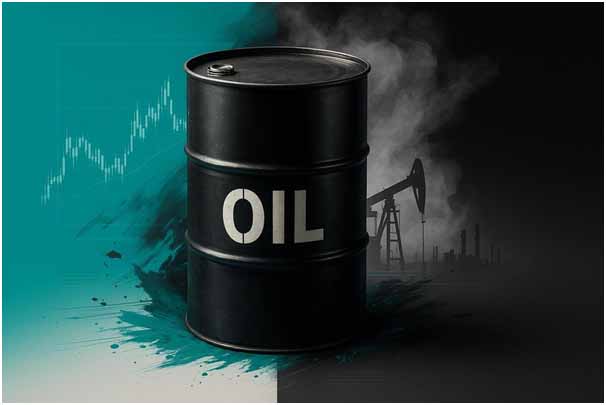
Rising oil prices and weak labour data spark stagflation concerns.[Courtesy: FXEmpire]
Which Stagflation ETFs Are Analysts Backing?
There are three stagflation ETFs that have been noted by analysts as having strong defensive attributes and upside. These are iShares U.S. Healthcare ETF (IYH), the Utilities Select Sector SPDR Fund (XLU) and the Consumer Staples Select Sector SPDR Fund (XLP).
All ETFs address industry segments that supply necessities, which remain in demand even when the economy slows down.
These are considered to be appealing funds since they have Buy ratings and have a stable performance future.
They are not as subject to economic cycles as more general market indices because of their sector focus. Analysts feel that these ETFs will enable investors to maneuver through volatility whilst ensuring that their portfolio remains stable.
Why Do Defensive Sectors Support Stagflation ETFs’ Growth?
Defensive industries are important in the support of stagflation ETFs as they offer important services that are needed even in periods of recession.
Inelastic sectors are healthcare, utilities, and consumer staples. This implies that the consumers would still be spending on these services irrespective of economic times. The demand for health care is constant because of medical needs.
Utilities, including electricity and water supply essential infrastructure. Examples of consumer staples are food and household goods. The sectors produce regular cash flows and are therefore appealing in difficult times.
As prices increase, these industries tend to transfer the costs to the consumers, keeping the margins. Such stability makes stagflation ETFs attractive to risk-averse investors.
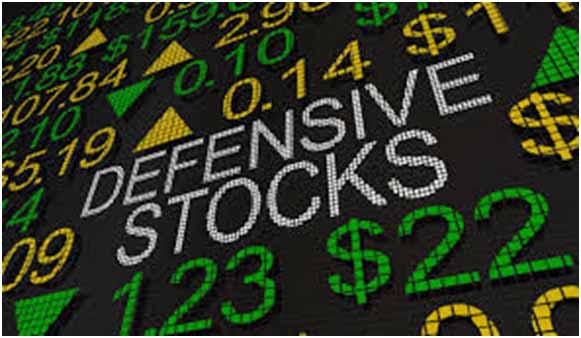
Defensive sectors like healthcare and utilities remain resilient during downturns. [Courtesy: Market Beat]
How Are IYH, XLU, And XLP Performing Currently?
The three ETFs that analysts have pointed out are demonstrating different performance patterns, though all have significant upside potential and high consensus ratings in the current turbulent market.
- iShares U.S. Healthcare ETF (IYH): Down ~7% YTD but offers ~24% upside; $76.21 target with 85 Buys, 17 Holds, 1 Sell (Moderate Buy).
- Utilities Select Sector SPDR Fund (XLU): Up ~6% YTD with ~10% upside; $49.76 target and 22 Buys, 10 Holds (Moderate Buy).
- Consumer Staples Select Sector SPDR Fund (XLP): Up ~5% YTD with ~15% upside; backed by 24 Buys, 10 Holds, 3 Sells (Moderate Buy).
What Risks And Opportunities Do Stagflation ETFs Present?
Stagflation ETFs offer opportunities and risks to investors in uncertain markets. On the opportunity front, these funds provide exposure to those areas that are not affected by the slowdown in the economy.
They are able to cushion portfolios against certain losses caused by inflation and decreasing growth. Nevertheless, there is still the risk of market volatility coupled with geopolitical processes. Inflation trends and investor sentiment can be affected by changes in oil prices.
Also, long-lasting economic weakness may still have an impact on the performance of sectors. The defensive sectors will not be immune to a downturn, although they are resilient. These are the factors that an investor should put into consideration when investing. Risk and returns should be managed in a balanced approach.
Market volatility creates both risks and opportunities for ETF investors. [Courtesy: Sapient Investor]
What Does This Mean For Investors Going Forward?
The increasing popularity of stagflation ETFs indicates the transition towards risk-averse investment policies in international markets. Stability and steady returns are taking precedence over high growth rates among investors.
This trend is expected to continue due to the U.S.-Iran conflict and economic uncertainty that is still present. Analysts propose to keep an eye on the following indicators: oil prices, inflation data, and employment figures. These will affect the defensive ETF’s performance.
With a changing market environment, investors can still increase their exposure to more resilient sectors. In the near future, stagflation ETFs will likely continue to be an important part of diversified portfolios.
Also Read: Three Vanguard ETFs That Could Be the Smartest ASX Buys in 2026
FAQs
Q1. What Are Stagflation ETFs?
A1: Stagflation ETFs are funds designed to perform during periods of high inflation and slow economic growth.
Q2. Why Are IYH, XLU, And XLP Recommended?
A2: They focus on essential sectors with stable demand, making them resilient during economic uncertainty.
Q3. How Much Upside Do These ETFs Offer?
A3: IYH offers about 24% upside, XLU around 10%, and XLP roughly 15% based on analyst estimates.
Q4. Are Defensive ETFs Completely Risk-Free?
A4: No, they still face risks from market volatility and broader economic conditions.
Disclaimer
This article is for informational purposes only and does not constitute financial advice. The information is based on publicly available data and analyst opinions, which may change without notice. Investments in ETFs involve risks, including market volatility and geopolitical uncertainties. Readers should conduct independent research and consult a licensed financial advisor before making any investment decisions.
Sources
- https://www.tipranks.com/news/morning-news-wrap-up-3-24-26-todays-biggest-stock-market-stories
- https://www.businessinsider.com/stock-market-forecast-oil-price-shocks-recession-risk-iran-war-2026-3
- https://www.marketwatch.com/story/america-is-being-haunted-by-a-1970s-bogeyman-known-as-stagflation-heres-how-big-the-threat-is-5a03b32a
- https://www.businessinsider.com/bond-market-stress-signal-stock-market-outlook-iran-war-2026-3