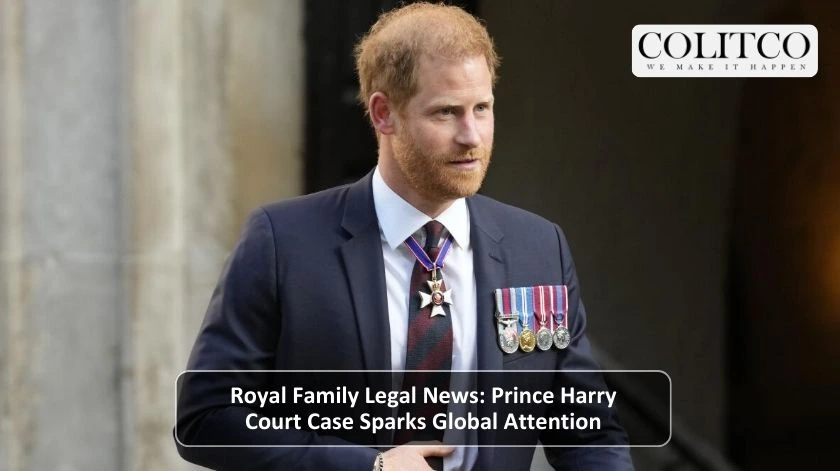
The Royal family’s legal news that followed a dramatic court appearance in London brought about international attention that was quite dramatic. The Prince Harry case was a High Court’s such saga that it was able to command the strongest reactions from legal experts and the media across the world.
Prince Harry, under cross-questioning, which was a very tense situation, let out his deep annoyance with the newspapers’ ways. The court proceedings stressed the issues of the right to privacy, the responsibility of the media, and the openness of the royal family at a time when the standards of reporting were at their biggest crossroads.
There was a question among the observers as to whether the allegations still remained unambiguous. When more and more evidence comes out from the past publications.
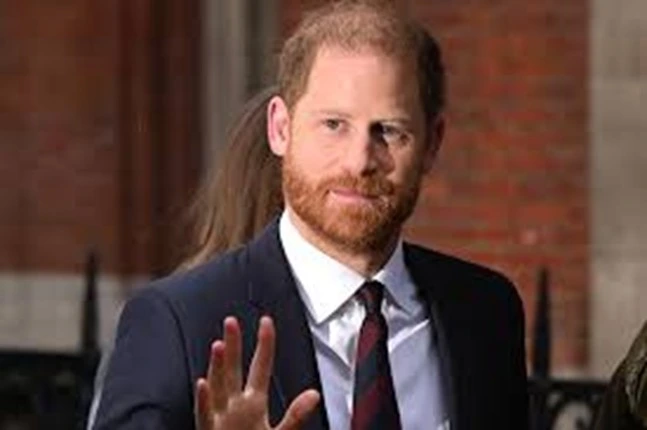
Royal family legal news drew intense international attention after the London court appearance. [Variety]
Why Does Royal Family Legal News Matter For Media Accountability?
The royal family’s legal wars directly determine how the international audience perceives the ethics of the press and the rights of public figures. The centre of the Prince Harry case is the alleged illegal gathering of information by Associated Newspapers Limited.
There are 14 related articles, which were published between the years 2001 and 2013. The stories were said to be about tapping the telephone and listening to the voicemails between ’93 and ’11.
Prince Harry gets on the stand to relate how the continuous rumors have undermined the trust in his close circle. He told the court that his rights to privacy were over and over ignored, which he termed filthy. His emotional side came out when talking about the suffering of Meghan.
He said she was under such media pressure that it was turning her life into hell, which made her very distressed in court. This very statement pointed out the connection between public attention and mental toughness among the celebrity families.
Prince Harry Denies Claims Of Journalist Friendships
Harriet, the Prince’s court case, involved very strong disputes about connections with reporters. He turned down the talk that the leaks had been from people around him.
He refused to say that he had invited the Mail on Sunday reporter Katie Nicholl to a party at Kensington Palace in 2003. He said she was often at the royal happenings just to get stories. He further said that each and every article that quoted unnamed sources diminished his trust circle right away.
Also, he remarked that the royal protocols did not allow for open complaints against published articles. The whole setup in those days was such that silence was preferred over confrontation.
This situation was turned around after Meghan met him, changing his perception of the press boundaries. Royal family legal news keeps emphasising this change in personal accountability expectations.
Did Prince Harry Take The Stand To Defend Privacy Rights?
Prince Harry is the one to testify, as he is the one who considers the fundamental right to privacy. He mentioned feeling under the constant watch of the two journalists, Barbara Jones and Caroline Graham.
He even said that their presence was like full-blown stalking and constant monitoring. He mentioned that certain places became known to people despite there being hardly any entrances. He also brought up the death of his mother when he was 12 years old.
He confessed that the whole thing made him develop an uneasy relationship with the media that lasted a lifetime. The Prince Harry court case sheds light on the fact that trauma influences legal motivation and public advocacy.
The major question was whether the existing rules and regulations were strong enough to protect vulnerable families. Consequently, royal family legal news is not only of interest to the glitzy world of stars but also to the discussions of civil liberties in general.
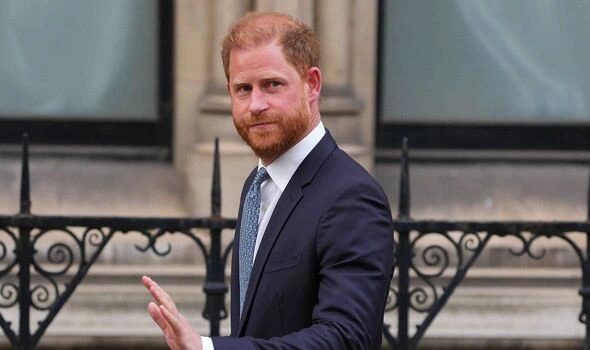
Prince Harry took the stand, describing eroded trust. [Daily Express]
Associated Newspapers Rejects All Allegations
Throughout the hearing, Associated Newspapers Limited categorically denied any wrongdoing. The lawyers characterised the assertions as absurd and harmful to the reputation of reporters.
Also, they asserted that the claimants were desperate and had no backing proof. The defence insisted that all along during the years in question, the publications remained within the bounds of legal reporting standards.
The Prince Harry court case is still open to dispute because both parties give contradictory explanations of the past conduct. Meanwhile, international legal experts keep on watching how the court’s decisions might affect the governance of the media in the future.
What Could The Prince Harry Court Case Mean Globally?
The case of Prince Harry might change the way courts consider privacy violations of public persons. The legal news around the royal family attracts policymakers who are looking for unambiguous digital surveillance regulations.
On the other hand, media organisations are reviewing their risk management strategies in line with ever-changing compliance requirements. Moreover, investors are closely monitoring the reputational impacts on the big publishing houses. It is the public that is in the middle; their trust is dependent on the transparency of reporting and the balancing of rights with personal rights.
When Prince Harry takes the witness stand, it opens a new chapter for accountability in the world of journalism. Wouldn’t it be a challenging question for the observers to answer whether the outcomes will still be unclear? It will be so until the final rulings are made.
Trial Continues Amid Intense Public Scrutiny
The trial has not ended yet, and still, more witnesses are expected to testify. Harry is still one of the seven claimants who include Liz Hurley, Elton John and Sadie Frost. The whole process is still very much scrutinised and commented on by the legal and international community.
The royal family’s legal news will most probably be a decisive factor in future privacy litigation strategy. The public is waiting for judicial decisions that could change the rules of press freedom on a global scale.
Also Read: New Year Honours 2026: Torvill and Dean Lead Fresh Wave of Royal Recognition
FAQs
Q1: What is the Prince Harry court case about?
A1: The case alleges unlawful information gathering by Associated Newspapers between 1993 and 2011.
Q2: Why did Prince Harry take the stand?
A2: Prince Harry takes the stand to defend privacy rights and challenge historic media practices.
Q3: How many articles are involved in the claims?
A3: The claims relate to 14 articles published between 2001 and 2013.
Q4: Has Associated Newspapers admitted wrongdoing?
A4: No, the company strongly denies all allegations and disputes the claims.