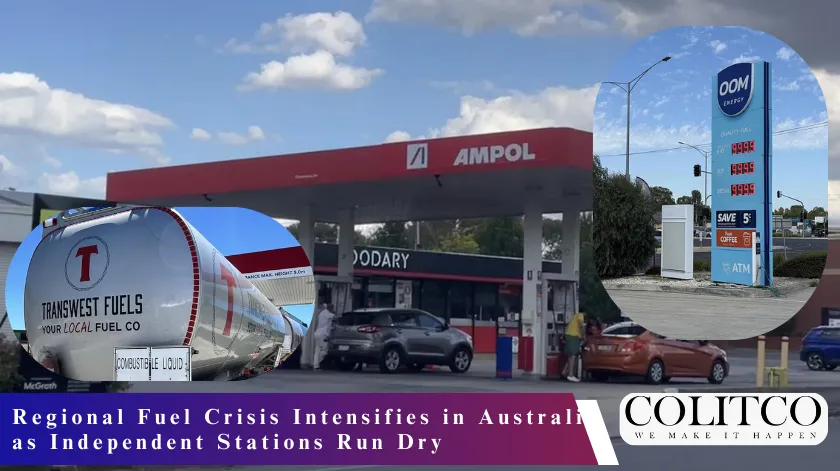
Independent petrol stations across regional Australia report a total exhaustion of fuel supplies. This development contradicts federal government claims regarding national stock levels. Wholesalers currently ration fuel deliveries to smaller retailers. Farmers now face a critical production crisis. Motorists continue to engage in aggressive panic-buying across several states.
Regional independent retailers exhausted their supplies of E10 and unleaded petrol first. Transwest Fuels co-owner Sam Clifton confirmed his diesel stocks disappeared in New South Wales and Queensland. Wholesalers drastically limited the volume of fuel available to independent operators. These businesses struggle to meet the basic needs of rural communities.
The shortage threatens the continuity of essential regional services. Farmers require consistent diesel access to maintain primary production schedules. A lack of fuel halts the transport of food and essential goods. Local economies face significant disruption as vehicles remain stationary.
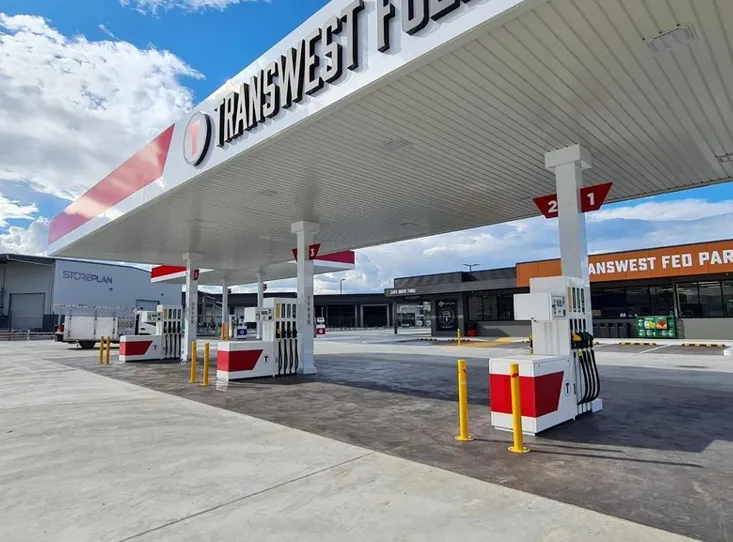
Independent retailers like Transwest Fuels are out of petrol and diesel [Transwest Fuels]
Economic Impact and Local Hardship
The fuel drought places immense pressure on regional families and businesses. Higher transport costs increase the price of everyday grocery items. Rural residents often travel long distances for medical appointments and education. Empty bowsers prevent these essential movements across the interior.
Small business owners fear for their long-term financial viability. They cannot generate revenue without products to sell to customers. Standing down staff reduces the household income of local families. This cycle of economic decline worries community leaders deeply.
- Retailers report zero stock of primary fuel types.
- Farmers cannot operate heavy machinery without diesel.
- Regional transport links face immediate suspension risks.
Key Stakeholders and Government Response
Transwest Fuels operates a significant service station network from Tamworth. Co-owner Sam Clifton manages the logistics for these regional sites. He recently stood down his entire fleet of fuel delivery drivers. Clifton blames the federal government for failing to intervene in distribution.
Energy Minister Chris Bowen maintains that Australia holds sufficient fuel reserves. Employment Minister Amanda Rishworth also denies the existence of a national shortage. Rishworth stated on Today that Australia holds record fuel levels. She claimed the country possesses more fuel than in the last 15 years.
Minister Bowen attributed the current difficulties to a spike in extra orders. He suggested the industry struggles to process this sudden increase in demand. Former Nationals leader David Littleproud urged the government to unlock held stocks. Littleproud wants immediate action to solve the regional supply crisis.
- Sam Clifton: Co-owner of Transwest Fuels.
- Chris Bowen: Federal Energy Minister.
- Amanda Rishworth: Employment Minister.
- David Littleproud: Former Nationals leader.
- Peter Khoury: NRMA spokesperson.
- Saul Kavonic: MST Financial energy analyst.
Geographic Scope of the Shortage
The crisis primarily impacts regional areas of New South Wales and Queensland. Towns like Tamworth experience the most acute supply failures. Residents in these locations see “no fuel” signs at local independent bowsers. Metropolitan areas like Sydney, Melbourne, and Brisbane face different challenges.
Sydney motorists saw prices rise by nearly 30 cents per litre recently. Canberra experienced a more modest increase of 8.8 cents per litre. Metropolitan averages reached 203.5 cents per litre during the last week. Regional averages rose by 16.6 cents to reach 186.7 cents.
Australia relies on only two major oil refineries for its needs. These facilities operate in Brisbane and Newcastle. They provide roughly 20 per cent of the national liquid fuel demand. The remaining 80 per cent arrives via international shipping routes.
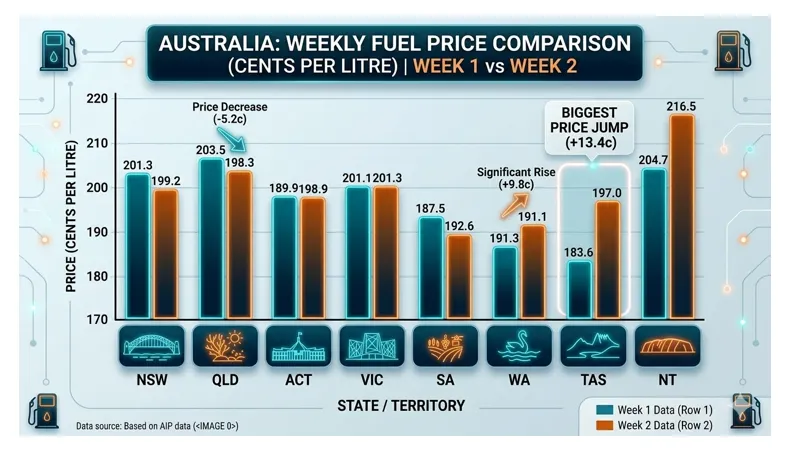
Australia’s weekly fuel price comparison
Timeline of the Supply Failure
The current volatility began following geopolitical events on February 28. US and Israeli strikes on Iran triggered instability in the Middle East. Global oil prices reacted immediately to the threat of wider conflict. Crude prices spiked to approximately $US120 per barrel yesterday.
Wholesale prices for unleaded petrol climbed throughout the previous week. The national average wholesale price hit 161.2 cents per litre on Friday. This represented a 6.8-cent increase over seven days. Retail prices reached a national average of 198 cents on Sunday.
Transwest Fuels warned of dwindling diesel supplies on Wednesday. By Thursday, the company reported having absolutely nothing left at its bowsers. Sam Clifton indicated a potential total shutdown of his network by Friday. This timeline highlights the speed of the regional stock depletion.
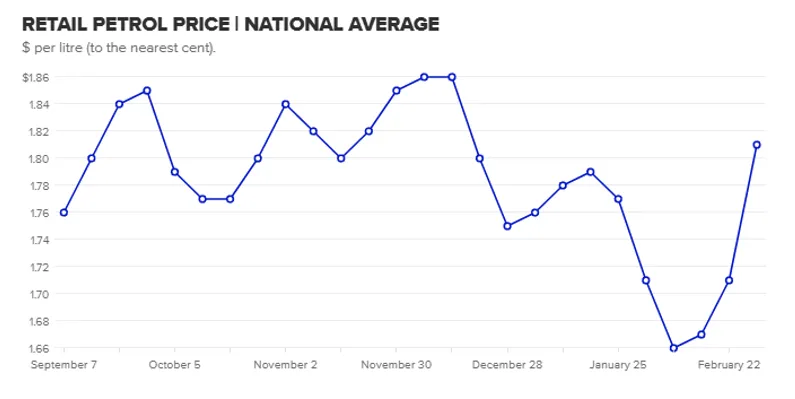
Retail petrol price in Australia over a few months [Australian Institute of Petroleum]
Causes and Future Outlook
Industry experts identify panic-buying as a primary driver of local shortages. Motorists filled jerry cans and stockpiled fuel in residential areas. This behaviour placed unprecedented strain on the domestic supply chain. NRMA spokesperson Peter Khoury urged the public to return to normal habits.
Khoury noted a lack of delay between wholesale and retail price hikes. Service stations in major cities increased prices almost instantly. Usually, a lag exists between global market shifts and pump prices. This immediate escalation concerned consumer advocacy groups significantly.
- Panic-buying drains local storage tanks faster than refills arrive.
- Global crude prices remain volatile due to Middle East tensions.
- Wholesalers prioritise larger retail chains over independent operators.
- Limited domestic refining capacity increases reliance on imports.
Building more regional refineries could protect local communities from future shocks. Sam Clifton advocates for refineries near every major capital city. He believes these facilities would provide a vital buffer for the nation. The government often cites high infrastructure costs as a major deterrent.
Clifton argues that keeping investment money in Australia benefits the economy. He prioritises energy security over the initial expense of construction. This local production would reduce the impact of international shipping disruptions. Currently, the Strait of Hormuz remains a critical chokepoint for global supply.
MST Financial analyst Saul Kavonic predicts ongoing market volatility. The duration of the conflict will determine future price points. Crude prices might reach $US150 per barrel if the war drags on. Such high prices could cause “demand destruction” across the global economy.
Retailers hope for a de-escalation of tensions in the coming weeks. A resumption of normal flows would stabilise the Australian market. Until then, regional stations continue to wait for delivery trucks. The government must decide whether to force a more even distribution.