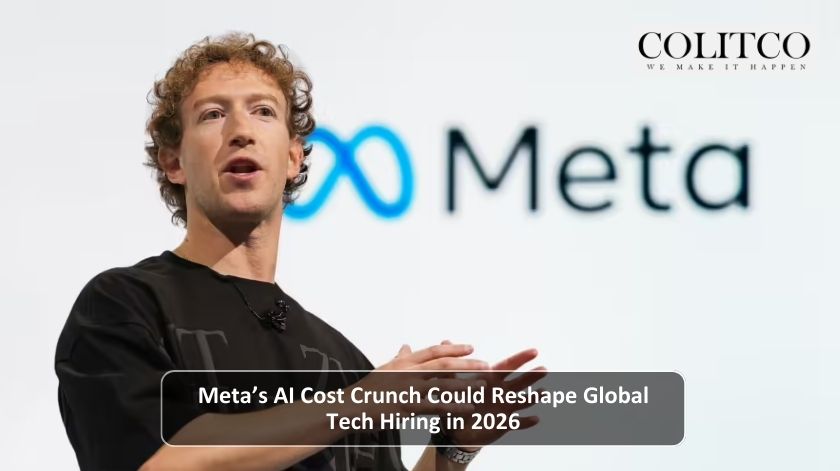
Meta Weighs Major Layoffs as AI Spending Accelerates
The Meta AI cost crunch has intensified as Meta Platforms considers sweeping job cuts while sharply increasing spending on artificial intelligence infrastructure. Reports indicate that the company may reduce up to 20% of its workforce, potentially affecting around 16,000 employees, based on its workforce of approximately 79,000 at the end of 2025.

Meta CEO Mark Zuckerberg has prioritised artificial intelligence investments as the company evaluates potential workforce restructuring. [Wired]
Senior executives have reportedly asked managers to prepare cost-cutting plans as the company seeks ways to streamline operations.
The potential layoffs have not been finalised, and no specific timeline has been confirmed. A company spokesperson described the reports as speculative discussions about possible strategies rather than confirmed decisions.
The move comes as Meta prepares to spend heavily on AI infrastructure. The company has outlined plans to invest as much as $600 billion in data centre expansion by 2028. The infrastructure is intended to support the development and operation of advanced AI models and tools across Meta’s platforms and internal systems.
The possible workforce reduction would represent the largest restructuring at the company since earlier layoffs. Meta cut about 11,000 jobs in 2022 and another 10,000 positions in 2023 as part of a cost-cutting initiative described by leadership as a “year of efficiency.”
Why Meta’s AI Investment Strategy Is Driving Workforce Changes
The Meta AI cost crunch reflects a broader shift in the technology sector, where companies are redirecting resources toward artificial intelligence development. As businesses increase spending on AI research, computing infrastructure, and specialised talent, workforce structures are also changing.

Meta plans to expand data centre capacity significantly to support the development of advanced artificial intelligence systems. [IBM]
Technology firms increasingly believe AI-assisted tools can automate tasks that previously required larger teams. Company leaders have suggested that highly skilled employees equipped with advanced AI systems can complete projects faster and with fewer personnel.
This shift has implications for global technology hiring patterns. Companies that expanded rapidly during the pandemic are now reassessing workforce needs as automation improves productivity. The restructuring trend could influence employment strategies across major technology companies and startups that compete for the same talent.
Investors are also closely monitoring the cost of large-scale AI projects. Building advanced computing infrastructure requires substantial capital, and firms are seeking ways to offset those expenses while maintaining profit margins and long-term growth strategies.
Key Players Behind Meta’s Expanding AI Push
Meta Platforms is one of the world’s largest technology companies and operates major social media platforms, including Facebook, Instagram, and WhatsApp. The company generates most of its revenue through digital advertising while expanding into artificial intelligence, virtual reality, and wearable technology.
The organisation is led by Mark Zuckerberg, who has increasingly positioned artificial intelligence as a central pillar of the company’s future strategy.
Under his leadership, Meta has accelerated hiring of AI researchers and engineers, offering high-value compensation packages to build specialised teams focused on advanced AI systems.
The company’s internal AI development has included projects based on the Llama AI model family. Earlier versions of these models faced criticism regarding benchmark results and performance expectations, prompting further development of new models such as Avocado.
How Meta’s AI Strategy Is Shifting Global Tech Hiring Priorities
Meta’s strategy suggests a shift toward large-scale computing infrastructure and specialised AI development rather than workforce expansion in traditional engineering roles. The company is concentrating resources on technologies expected to support long-term AI capabilities.

Meta Platforms continues to expand its AI strategy while reassessing workforce needs across global operations. [Wired]
Key strategic focus areas
- AI infrastructure expansion: Building large data centres to train and operate advanced AI models.
- Advanced model development: Accelerating work on next-generation AI systems and internal research initiatives.
- Specialised talent recruitment: Hiring elite AI researchers and engineers with deep expertise in machine learning.
- Operational efficiency: Restructuring teams and processes to increase productivity through AI-assisted tools.
Timeline of Meta’s Workforce Restructuring and AI Expansion
Reports about potential layoffs emerged in early 2026 as Meta continued expanding its AI investments. Internal discussions appear to be ongoing, with leadership evaluating options to balance spending on infrastructure with overall operating costs.
The company has not announced an official implementation timeline. Any workforce adjustments would likely follow internal planning and consultation processes.
Key timeline details
- Announcement period: Reports of potential layoffs surfaced in March 2026.
- Planning stage: Managers reportedly asked to prepare cost-reduction proposals.
- Communication phase: Leadership discussions with internal teams about operational changes.
- Implementation timeline: No confirmed date for layoffs or restructuring decisions.
Also Read: Microsoft & Meta Drive $700B Data Centre Expansion – Colitco
Future Outlook and Industry Impact
The Meta AI cost crunch illustrates how artificial intelligence is reshaping the structure of major technology companies.
Increasing investment in computing infrastructure and research is prompting firms to reconsider how many employees are required to deliver products and services efficiently.
Other technology companies have taken similar steps as AI capabilities expand. Several firms have announced layoffs or workforce restructuring while directing resources toward AI platforms, data centres, and specialised engineering teams. This pattern suggests a gradual transformation in hiring priorities across the sector.
In the longer term, AI-driven productivity gains may lead to leaner teams but greater demand for highly specialised technical skills.
Companies will likely compete for researchers and engineers capable of developing advanced models and managing large computing systems.
For Meta, the balance between aggressive AI investment and operational efficiency will remain a central challenge. The company must demonstrate that its substantial spending on infrastructure and research can produce meaningful technological advances while maintaining sustainable financial performance.
FAQs
- Why is Meta considering layoffs in 2026?
Ans. Meta is evaluating potential workforce reductions as it increases spending on artificial intelligence infrastructure, including large data centres and advanced AI models.
- How many employees could be affected by Meta’s layoffs?
Ans. Reports suggest the cuts could impact up to 20% of Meta’s workforce, which would represent roughly 16,000 employees based on current staffing levels.
- What is driving Meta’s increased AI spending?
Ans. Meta is investing heavily in AI computing infrastructure, research, and talent to compete in the rapidly expanding generative AI market.
- Are other technology companies also cutting jobs due to AI?
Ans. Yes. Several technology firms are restructuring workforces while increasing AI investment, reflecting a broader industry shift toward automation and AI-driven productivity.
- How could Meta’s strategy affect global tech hiring?
Ans. If companies increasingly rely on AI tools, demand may shift toward specialised AI engineers and researchers while reducing the need for larger traditional development teams.
Disclaimer:
This article is for informational purposes only and does not constitute financial, investment, or professional advice. Readers should conduct independent research before making decisions based on the information provided. Colitco does not guarantee the accuracy or completeness of third-party data referenced in this report.
Sources
https://www.business-standard.com/technology/tech-news/meta-may-cut-around-20-of-workforc
https://economictimes.indiatimes.com/news/international/us/meta-began-2026-with-a-sharp-cut