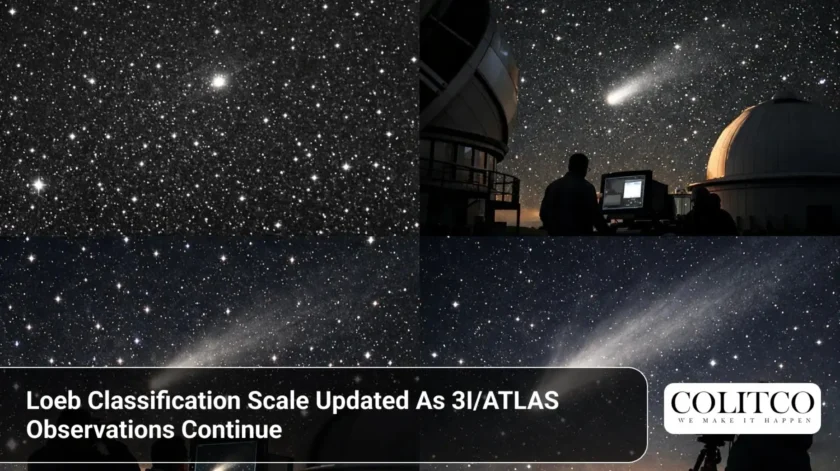
The Loeb Classification Scale, created by Avi Loeb, is a system that categorises interstellar objects according to the probability of their artificial origin. The scale has a range from 0, which is the description of naturally occurring icy stones, to 10, which is the case of alien technology that brings possible risks.
Avi Loeb created the scale to change continuously as new evidence comes in. Scientists can assign different ranks to the objects as the observations improve. The whole idea behind this method is to cut down on guessing while still leaving the door open for science. The Loeb Classification Scale, which has been a subject of peer-reviewed research for its quantification, has recently been extended.
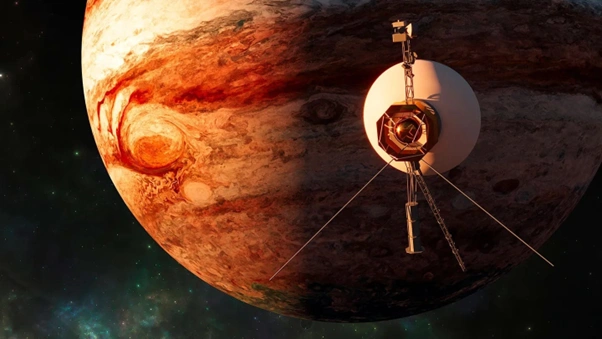
The Loeb Scale ranks interstellar objects by artificial likelihood
Why Was 3I/ATLAS Ranked A Four Initially?
Avi Loeb, soon after the object was found in July 2025, assigned it 4 on the Loeb Classification Scale. The rating was based on a number of observed anomalies. The anomalies did not rule out the possibility of an artificial origin, but they were considered worth investigating.
Loeb has been saying that the object is most probably of natural origin. The rank has pointed out the extraordinary characteristics and, at the same time, exercised scientific caution. This equilibrium continues to be the heart of the classification system.
Has Avi Loeb Changed His Position On 3I/ATLAS?
Avi Loeb has never stopped claiming that 3I/ATLAS is very likely a natural one. He has stood by this position in his interviews and articles since July 2025. Some recent media reports interpreted it as a change in Loeb’s position, but he strongly disagrees with this view.
He mentioned that there has been no significant shift. His views are the same in his peer-reviewed papers and public comments. The Avi Loeb 3I/ATLAS update signifies a process of continuity rather than that of revision.
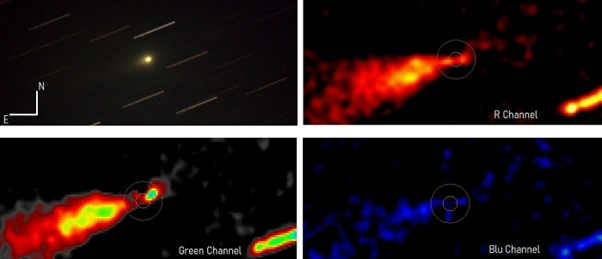
Avi Loeb consistently maintains that 3I/ATLAS is likely natural
Loeb Classification Scale Evolves With New Data
Loeb’s Classification Scale is going to rely on new evidence coming to light in future. A paper recently published presented a form of automatically updating ranking by a new method. Loeb, however, has refused to make any ranking changes until new data is made available to the public.
The investigations of the events that took place during the Earth’s closest approach to the meteorite are still going on. It is quite possible that the additional data may not be obtained until 3I/ATLAS is near Jupiter on March 16, 2026. This approach of caution is characteristic of scientific practice.
3I/ATLAS Astronomical Observations Highlight Key Anomalies
Eight anomalies were detected first in October 2025, and this number has been raised to 15 now. Among these are such things as tail behaviour and non-gravitational effects. The main observation was the anti-tail jet, which was almost a million km long and directed towards the Sun.
An occurrence of this kind is not typical for comets. The astronomical research on 3I/ATLAS has not lost its importance among the scientists, and they keep monitoring it.
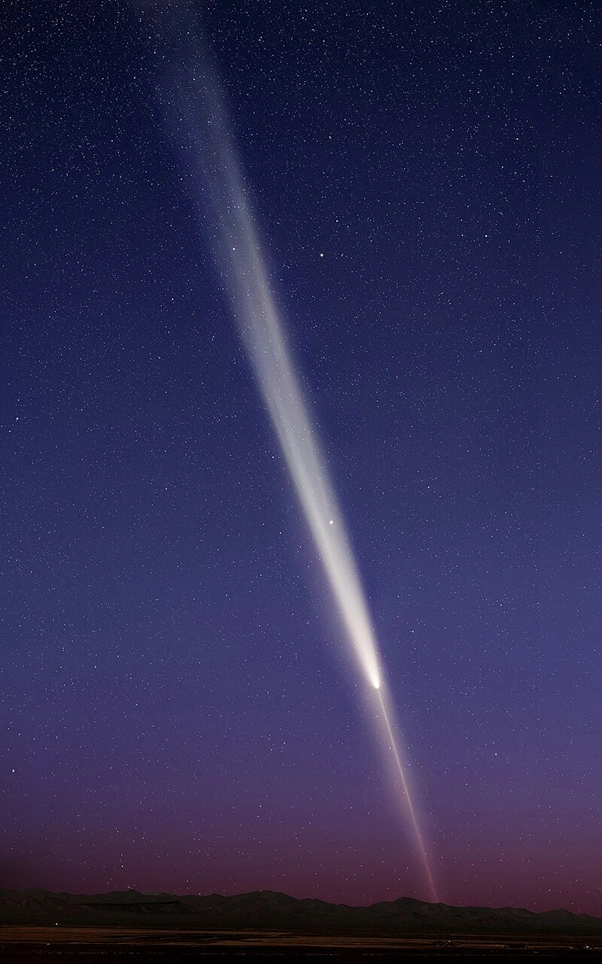
Anomalies rose to fifteen, highlighting unusual anti-tail behaviour
Future Data May Determine Final Classification Outcome
Loeb thinks that the spectral evaluation will be the key factor. It is natural sublimation that gives rise to the CO2, CO, and H2O gases, which are moving at hundreds of meters per second through the air. A chemical thruster, in contrast, would not only have a different chemical makeup but also much faster exhaust speeds.
Other points might include unexpected manoeuvres or artificial light detection. In the absence of such evidence, the ranking would be lowered. According to Loeb, science goes on a more dependable than media cycles.
Scientific Caution Shapes Ongoing Loeb Classification Scale Review
Scientific Caution is the main character in the ongoing Loeb Classification Scale Review of 3I/ATLAS. Avi Loeb is very precise about the need for evidence-based revision instead of just speculation. He claims that the rush to conclude will, in fact, discredit science.
The framework emphasises the building up of data to the detriment of the media stories. This tactic makes it possible for infrequent but significant scenarios to be considered but not blown up out of proportion. Thus, the Loeb Classification Scale is a disciplined instrument and not a source of sensationalism.
Also Read: Aurora Australis Alert Issued for Tonight Across Southern Australia
Frequently Asked Questions
Q1: What does it mean if the Loeb Classification Scale is rated four?
It denotes the presence of abnormal attributes, but it does not necessarily mean that the origin is artificial and confirmed.
Q2: Is 3I/ATLAS regarded as extraterrestrial technology?
Not at all; it is presently thought to be natural, most likely.
Q3: When will new evidence be provided?
The examination might last until March 16, 2026, and beyond.
Q4: What is likely to happen that would result in a lower current classification?
The showing of undeniable proof supporting a natural cause would be a factor that would decrease the classification.