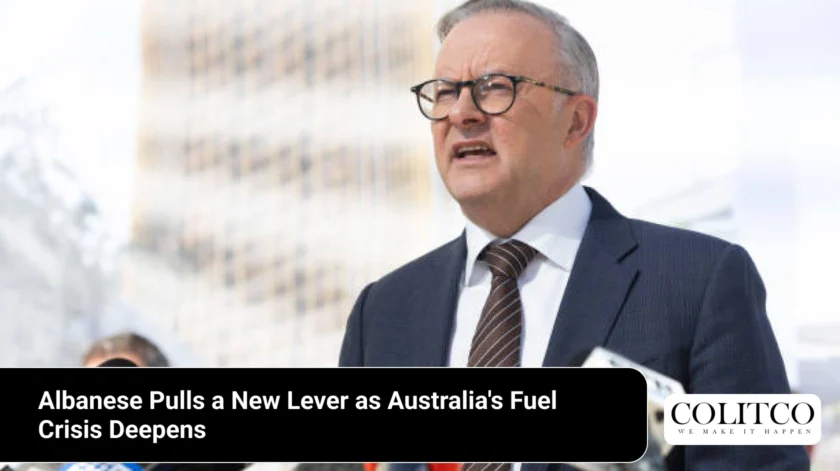
In a significant move to protect Australian drivers from global volatility, the Albanese government has officially activated new fuel security powers. The Prime Minister confirmed that the government will now underwrite additional fuel shipments.
This isn’t just a policy shift; it’s a direct shield against the supply squeeze caused by escalating conflicts in the Middle East.
Labor’s Fuel Security Powers Explained
Australia will amend its export-finance laws to bolster fuel security, with new powers enabling the country’s export-finance agency to underwrite the purchase of fuel shipments by the private sector.
In plain terms, the government backs private companies financially when they buy additional petrol and diesel cargoes for Australia. It is not a subsidy. It is a government guarantee that removes the commercial risk, stopping suppliers from committing to discretionary shipments during periods of uncertainty.
“This is about risk mitigation for private companies to add to supply, and it will give suppliers the confidence to secure additional and discretionary cargoes used to service uncontracted demand, including for regional and independent fuel suppliers,” Albanese told reporters.
Why Australia’s Fuel Supply Is Under Pressure
Australia imports roughly 90% of its fuel. That dependence has long been flagged as a national vulnerability. The Iran conflict has made it tangible.
When US and Israeli military operations against Iran began on 28 February 2026, the Strait of Hormuz was effectively shut. Roughly 20% of the world’s oil passes through this 33-kilometre-wide chokepoint every day. As of late March 2026, Australia holds just 36 days of petrol supply, 29 days of jet fuel, and 32 days of diesel.
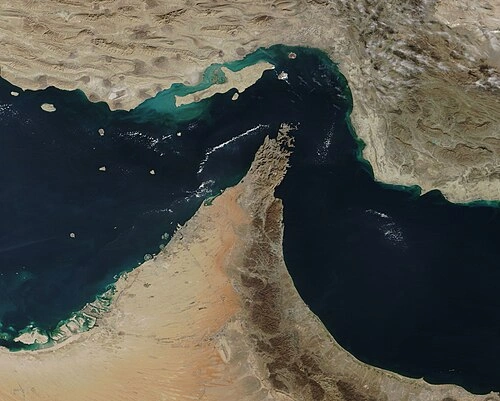
A satellite image of the Strait of Hormuz [Wikimedia]
Those margins are thin. Any further disruption to shipping routes could shift shortages from localised to nationwide very quickly.
Petrol and Diesel Prices Hitting Australians Hard
The ACCC’s weekly fuel monitoring data tells a stark story about what this crisis is costing at the bowser.
Average diesel prices across the five largest cities hit 303.5 cents per litre, rising 27.8 cents in a single week. Unleaded petrol reached 252.2 cents per litre. Regional Australia fared worse, with diesel averaging 307.6 cents per litre, a 28.6-cent jump week-on-week.
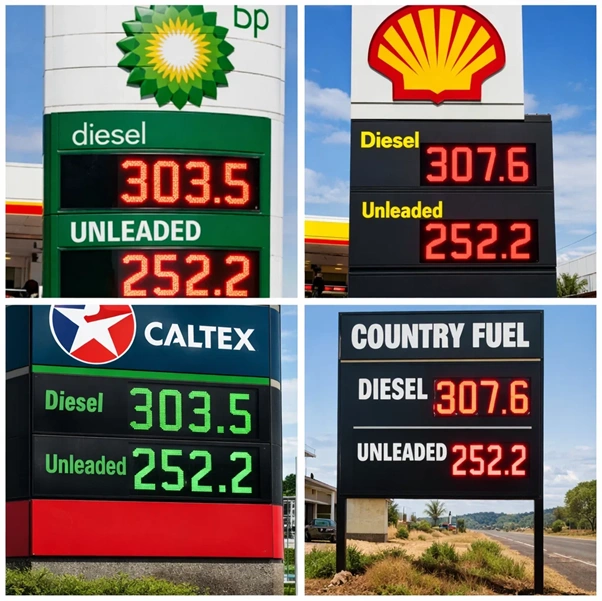
Fuel prices at Australian petrol stations have surged sharply since late February 2026, following Middle East supply disruptions.
For households already under cost-of-living pressure, that is a serious additional burden. Westpac economists now forecast inflation could reach 5.5% year-on-year by mid-2026, driven largely by fuel. The Housing Industry Association has warned that sustained price increases could add $8,000 to $15,000 to the cost of building a new home.
The downstream effects on freight, food logistics, and construction are already appearing.
How the Government’s Intervention Will Work
The mechanism operates through Australia’s export-finance agency rather than a direct government purchase of fuel. The agency underwrites private sector purchases, removing the price risk that would otherwise stop companies from committing to high-cost, uncertain shipments in volatile market conditions.
Six out of 81 fuel cargo ships scheduled to arrive in Australia in April cancelled their arrivals, but these have since been replaced by others. Albanese said the government was taking steps to be “over prepared”, given uncertainty about the trajectory of the conflict.
Distribution is also a focus. The government has directed that released fuel reserves are being prioritised for regional areas and communities with the greatest need, not just major city terminals.
The Opposition’s Position on Fuel Relief
The Coalition is pushing a different approach to address the price surge. Opposition spokesperson Angus Taylor has called on the government to halve the 52.6 cents per litre fuel excise, as well as the heavy vehicle road user charge, to provide direct relief to households and businesses.
That would deliver faster relief at the pump but would also cut billions from federal revenue at a time when the budget is already absorbing significant emergency expenditure. The government has not signalled any movement on the excise question.
Australia’s Long-Standing Fuel Vulnerability in Focus
The current crisis has brought back into sharp focus a structural problem that successive governments have deferred.
The Maritime Union of Australia has called for urgent national action, including rebuilding Australia’s strategic tanker fleet, restoring domestic fuel production capacity, and implementing a genuine national fuel security strategy.
“A country that cannot transport its own fuel cannot guarantee its economic stability, its emergency response capability or its defence readiness,” said MUA Assistant National Secretary Jamie Newlyn.
Between 2013 and 2022, every Australian-flagged coastal petroleum tanker was removed from service. Three tankers were withdrawn in 2015 alone when the Kurnell, Lytton, and Bulwer refineries closed.
Rebuilding domestic refining capacity and a strategic tanker fleet would take years. The new fuel security powers are a near-term mechanism to stabilise supply while the larger structural debate continues.
What Happens Next for Australia’s Fuel Supply
The government will need to legislate the export-finance law amendments to fully activate the new powers. Albanese has flagged urgency, and the political cost of further delays is rising with every cent added to the price board.
April is the next key marker. Several cargo cancellations had already been replaced as of 28 March, but further disruptions in the Middle East could quickly reverse that picture.
WE had previously covered the impact of global oil price movements on Australian markets and how ASX energy stocks. Both will be worth monitoring closely as this situation develops through April.
Also Read: Rio Tinto Smelter That Could Have Closed Just Got a $2 Billion Lifeline
FAQs
Q: What are Australia’s new fuel security powers?
A: The Albanese government is amending export-finance laws to allow Australia’s export-finance agency to underwrite private sector purchases of additional fuel shipments. This reduces financial risk for suppliers buying discretionary cargo, helping maintain supply during periods of global uncertainty.
Q: Why is Australia facing a fuel supply threat in 2026?
A: Australia imports approximately 90% of its fuel. The US-Israel conflict with Iran, which began in late February 2026, disrupted shipping through the Strait of Hormuz, reducing global oil supply and cutting the number of fuel cargoes reaching Australian ports.
Q: How high have Australian petrol and diesel prices risen?
A: As of late March 2026, diesel in major cities averaged 303.5 cents per litre, up nearly 28 cents in a week. Unleaded petrol averaged 252.2 cents per litre. Regional diesel prices were slightly higher at 307.6 cents per litre.
Q: How many days of fuel supply does Australia currently hold?
A: As of late March 2026, Australia holds approximately 36 days of petrol supply, 32 days of diesel, and 29 days of jet fuel.
Q: What is the Opposition’s proposed solution to high fuel prices?
A: The Coalition, led by Angus Taylor, has called for the government to halve the 52.6 cents per litre fuel excise and the heavy vehicle road user charge to provide immediate price relief for households and businesses.
Disclaimer: This article is for informational and news purposes only. It does not constitute financial, investment, or professional advice. Readers should seek independent guidance before making any financial decisions.
Source:
- https://www.mua.org.au/MUA/Content/News_Articles/2026/fuel-security-crisis-exposes-coalition-decade-of-neglect.aspx
- https://www.al-monitor.com/originals/2026/03/australia-amend-export-finance-laws-boost-fuel-security-pm-albanese-says