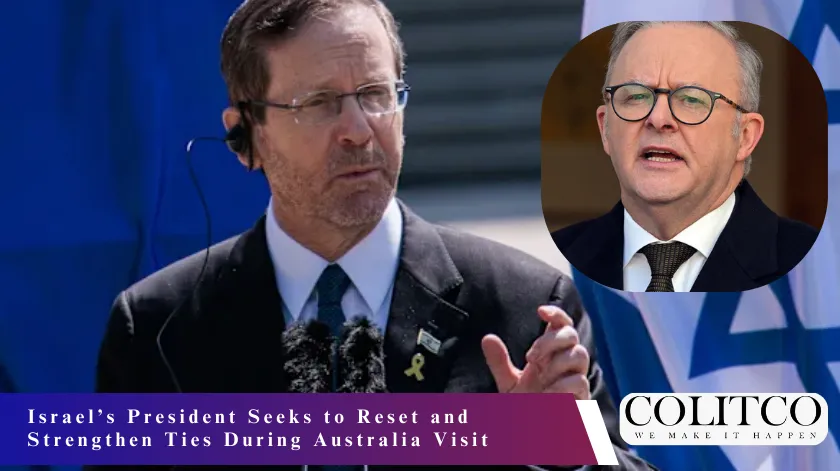
Israeli President Isaac Herzog has arrived in Australia for a high-profile visit aimed at strengthening bilateral relations and expressing solidarity with Jewish Australians following a deadly attack in Bondi. The trip comes amid heightened security and planned nationwide protests.
Visit Framed Around Bilateral Cooperation
President Herzog described Australia and Israel as close partners with shared democratic values and long-standing diplomatic ties. Ahead of his arrival, he said the visit would focus on reinforcing cooperation across trade, innovation, and community relations.
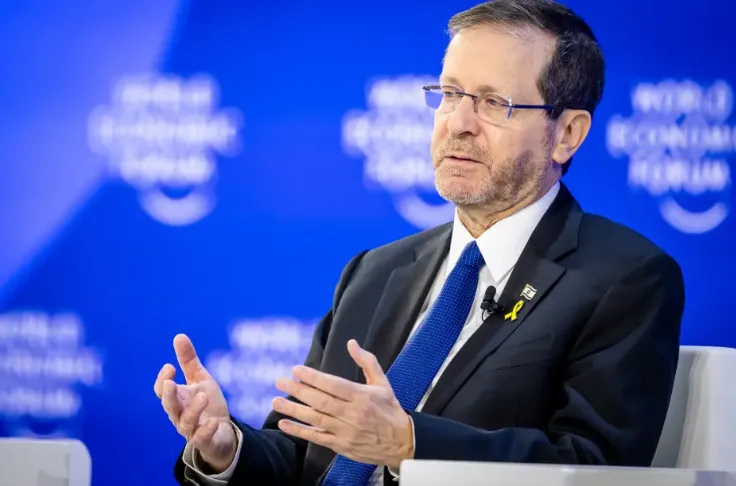
Israeli President Isaac Herzog arrives in Australia for an official diplomatic visit. [Human Rights Watch]
He is scheduled to meet senior federal leaders, state officials, and representatives from Jewish community organisations. The itinerary includes events in Sydney and Melbourne, alongside private meetings with community figures affected by recent violence.
The visit marks one of the most senior-level engagements between the two countries in recent years. Officials from both governments have presented it as an opportunity to reaffirm diplomatic engagement at a tense time internationally.
Bondi Attack Shapes Tone of Engagement
The president’s visit follows the Bondi stabbing attack that targeted members of the Jewish community. The incident left several people dead and injured, prompting national condemnation and renewed debate about community safety.
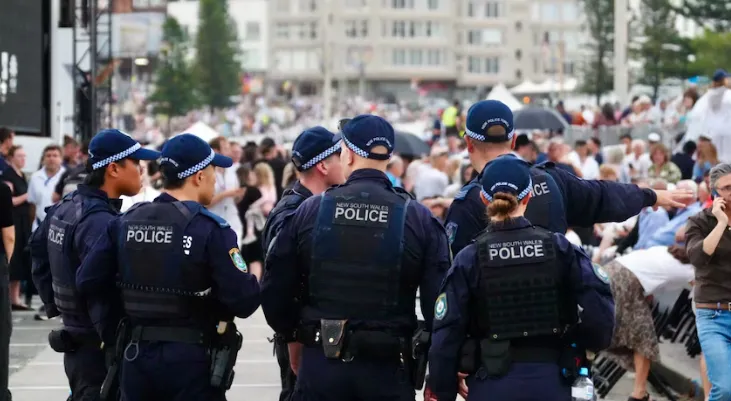
Police presence at Bondi Beach after antisemitic attack in Sydney. [ABC News]
Australian authorities described the attack as an act of terrorism. National leaders expressed solidarity with Jewish Australians and pledged stronger protections for vulnerable communities.
During his visit, Herzog is expected to meet families affected by the attack. Organisers said those meetings would remain private. Community leaders have described the president’s presence as a gesture of support during a period of grief and uncertainty.
Security Measures and Protest Laws Tested
The New South Wales government declared the visit a major event. That designation granted police temporary expanded powers to manage crowds and maintain public order.
Authorities outlined plans to separate demonstrators from official venues. Police said they would enforce protest conditions under existing public safety laws.
Pro-Palestinian groups announced rallies in several cities, including Sydney, Melbourne, and Canberra. Organisers said demonstrations would be peaceful and focused on foreign policy concerns.
A post shared on X by a protest coalition called for large turnouts during the president’s Sydney engagements. The message stated that participants intended to voice opposition to Israel’s military actions abroad.
Police said they had worked with organisers to agree on protest routes. They urged demonstrators to comply with directions and warned that breaches could lead to fines or arrests.
Political Responses Across the Spectrum
Prime Minister Anthony Albanese welcomed the Israeli president’s visit. He said Australia maintained diplomatic engagement with many nations, including Israel.
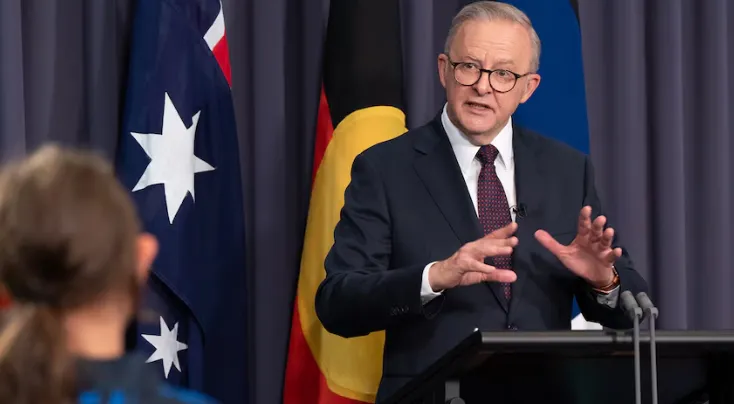
Prime Minister Anthony Albanese addresses the media regarding diplomatic engagement with Israel. [ABC News]
Government representatives reiterated Australia’s support for Israel’s right to exist within secure borders. At the same time, officials acknowledged the broader tensions surrounding Middle East policy debates.
Some federal MPs expressed discomfort about the timing of the visit. They pointed to domestic divisions and heightened emotions following the Bondi attack.
A Labour backbencher posted on X that community cohesion required careful leadership during international visits. The post attracted responses from both supporters and critics.
Opposition figures defended the invitation. They said Australia should continue dialogue with longstanding allies regardless of political disagreement.
Debate Over Legal and Diplomatic Status
Advocacy groups urged Australian authorities to consider legal avenues related to international law concerns. However, legal experts noted that sitting heads of state are generally entitled to diplomatic immunity during official visits.
The Australian Federal Police confirmed they would not take action against a visiting head of state. Officials cited established international conventions governing diplomatic protections.
Human rights advocates argued that public debate should remain open. Meanwhile, government representatives maintained that diplomatic channels remain the appropriate forum for international disputes.
The legal debate has unfolded alongside broader public discussion about protest rights. Civil liberties groups have monitored the application of temporary security powers during the visit.
Community Cohesion and Public Discourse
Jewish community organisations welcomed the president’s presence. Leaders said it provided reassurance following the Bondi attack and rising antisemitic incidents.
Community representatives stated that security concerns have increased in recent months. They called for ongoing cooperation between the government and local organisations.
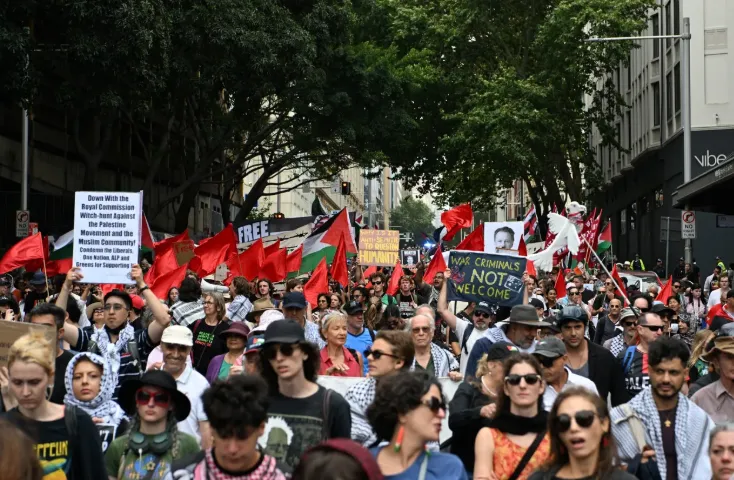
Protesters gather in Sydney during President Herzog’s official visit to Australia. [TRT World]
Conversely, Palestinian advocacy groups argued that public protest forms part of democratic expression. They said criticism of foreign policy should not be conflated with hostility toward local communities.
On X, several commentators called for peaceful dialogue during the visit. Posts from civic leaders urged Australians to avoid inflammatory rhetoric.
Religious leaders from different faith groups appealed for calm. They encouraged mutual respect during both official events and demonstrations.
Also Read: Suicide Bombing Kills 31 at Shiite Mosque in Pakistan’s Capital
Diplomatic Engagement Amid Tension
Despite protests and political disagreement, official meetings proceeded as scheduled. Government sources described discussions as focused on trade, research collaboration, and security cooperation.
Israel and Australia share links in technology, defence research, and academic exchange programs. Officials from both sides have referenced these ties during public remarks.
Herzog stated before departure that strengthening bilateral understanding remained a central aim of the trip. He said dialogue between democratic nations remains important during periods of disagreement.
Australian leaders echoed that view in formal statements. They noted that diplomatic relations continue across multiple sectors despite domestic debate.
The visit concludes with planned engagements in Melbourne before the president’s departure. Authorities have indicated that security arrangements will remain in place until the final event ends.
As the trip unfolds, public attention remains divided between official diplomacy and street demonstrations. The coming days are expected to test both security planning and Australia’s commitment to peaceful civic expression.
FAQs
- Why is Israel’s President Isaac Herzog visiting Australia?
President Herzog is visiting Australia following a deadly antisemitic attack at Bondi Beach. The visit aims to express solidarity with Jewish Australians and reinforce diplomatic ties between Australia and Israel.
- Who invited President Isaac Herzog to Australia?
The invitation was extended by Australia’s Governor-General at the request of Prime Minister Anthony Albanese, with engagement from Australian Jewish community representatives.
- What is included in Herzog’s official itinerary?
The president is scheduled to meet senior federal leaders, including the Prime Minister and Governor-General. He is also expected to meet Jewish community leaders and families affected by the Bondi attack.
- Why has the visit attracted controversy?
Some advocacy and civil society groups have criticised the visit, citing concerns related to Middle East policy and international legal debates. Planned protests have been announced in several Australian cities.
- Does President Herzog have diplomatic immunity in Australia?
Yes. As a sitting head of state on an official visit, President Herzog is entitled to diplomatic immunity under international conventions, meaning he cannot be arrested by Australian authorities during the visit.
- Are protests expected during the visit?
Yes. Pro-Palestinian advocacy groups have organised demonstrations in major cities. Authorities have implemented security measures to manage public gatherings.
- How has the Australian Jewish community responded?
Many Jewish community organisations have welcomed the visit as a gesture of support following the Bondi attack. However, some voices within the broader community have expressed differing views regarding the political context of the visit.