Spring hasn’t officially arrived yet, but the western United States isn’t waiting. An extreme heat watch now blankets millions of Americans across Southern California and Arizona. Forecasters warn that temperatures could reach levels rarely seen this early in the year, possibly for the first time ever.
Meteorologists are calling it one of the most significant early-season heat events in American recorded history.
What Is Happening Across the American West?
A “Double-Barrelled” Heat Event
The National Weather Service (NWS) describes what’s unfolding as a “large, long-lasting and dangerous heat wave, quite possibly one of the top heat wave events for the month of March, ever.” A powerful ridge of high pressure has locked itself over the western United States, driving temperatures to summerlike levels weeks ahead of schedule.
Weather scientist Daniel Swain of Weather West characterised the event as “double-barrelled,” with a first peak hitting Thursday through Saturday and a second, even more intense surge arriving the following week. The extreme heat watch covers this second, more dangerous phase.
Temperatures during the peak are forecast to run 20 to 35 degrees Fahrenheit above normal for mid-March, a deviation so large it stuns even veteran forecasters.
The Records Already Broken
Records began falling before the worst of the heat even arrived:
- Long Beach, California, tied an all-time March daily record of 92°F on Thursday, 12 March — matching a mark set in 2007
- Santa Ana, Orange County, hit 97°F, shattering its previous record of 92°F set that same year
- Camarillo recorded 93°F, breaking its previous daily high
- Phoenix, Arizona, reached 93°F on 13 March, eclipsing the prior record of 92°F set in 2017
These aren’t isolated blips. They represent a systematic overwriting of the historical record across an entire region.
Who Faces the Greatest Danger?
Vulnerable Communities in the Crosshairs
The NWS and public health officials place particular urgency on several groups who face the most serious risk during a prolonged extreme heat watch:
- Elderly residents, especially those without air conditioning
- Young children, who struggle to regulate body temperature effectively
- Outdoor workers, including construction crews and agricultural labourers
- Visitors and seasonal tourists, who aren’t yet acclimatised to intense heat
- Pets, who can die rapidly inside locked vehicles
Cal/OSHA issued specific guidance urging employers to protect workers as temperatures climb. Arizona’s spring timing adds another layer of danger, March draws thousands of visitors for spring training baseball, golf tournaments, and hiking holidays. Many of those visitors arrive entirely unprepared for life-threatening heat.
When Will Temperatures Peak and Where?
The Hottest Days Still Ahead
The extreme heat watch issued by NWS Los Angeles runs from Monday morning, 16 March, through Friday evening, 20 March. NWS Phoenix has issued its earliest extreme heat watch in recorded history, covering Thursday through Sunday of next week for the greater Phoenix metro area.
Tuesday, 17 March, shapes up as the likely peak for Southern California:
- Coastal areas: mid-80s to low-90s Fahrenheit
- Valley communities: 95°F to 102°F
- Desert communities: well above 100°F
Phoenix tells an even more alarming story. Forecasters expect the city to reach 100°F for the first time this calendar year by Tuesday, shattering the previous earliest-ever 100-degree day record of 26 March 1988. Temperatures could then climb as high as 105°F to 108°F by Thursday or Friday.
Palm Springs, California, faces a forecast peak of 107°F, a figure that would demolish its previous daily record of 97°F set in 1997.
The Reason Behind This Unusual Mid-March Heat
Climate Context and the Role of a Warming Baseline
Scientists point to a convergence of factors. An exceptionally strong ridge of high pressure continues to dominate the western United States, blocking cooler air from entering the region. That alone could produce a hot spell. But the heat is more extreme because it’s building on an already-warm baseline.
NOAA confirmed this week that winter 2025–26 ranked as the warmest on record across a large portion of the western and central United States. That record warmth has already decimated mountain snowpack and worsened the ongoing Colorado River water crisis. Now it’s setting the stage for a March heat event without precedent.
Just as Northeast winter storms have battered the eastern US and early-season snow warnings have disrupted holiday travel in previous months, extreme weather events continue pushing beyond historical norms across the country.
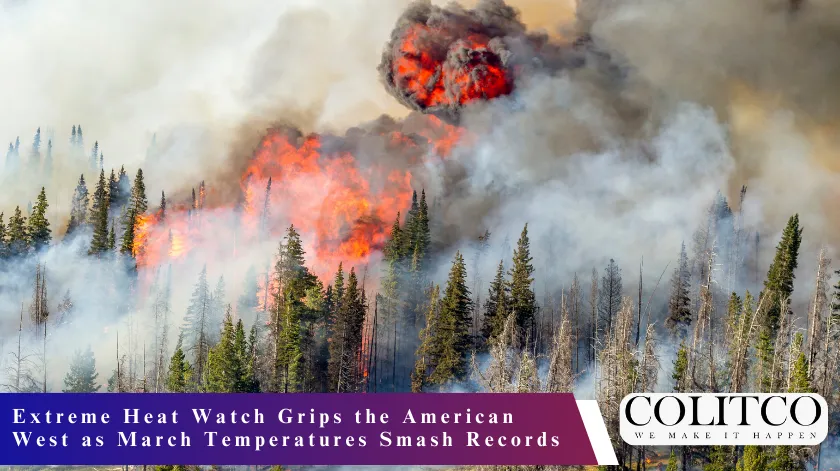
Weather West’s Swain noted the event could also trigger wildfire activity along the Rocky Mountain Front Range, where critically dry and windy conditions could create “particularly dangerous situation” fire weather risk.
How Should Residents and Visitors Respond?
Practical Steps During an Extreme Heat Watch
NWS, public health authorities, and emergency management agencies all urge the same core actions when an extreme heat watch is in effect:
- Hydrate constantly — drink 3 to 4 cups of water every hour when outdoors; don’t wait until you feel thirsty
- Avoid the peak hours — schedule any outdoor activity before 10 a.m. or after 6 p.m.
- Check on neighbours — visit or call elderly relatives and others who may lack adequate cooling at home
- Never leave children or pets in vehicles — interior car temperatures become fatal within minutes
- Find cooling centres — local councils across Southern California and Arizona have opened public cooling facilities
Similar community preparedness has proven critical during past weather emergencies. Panic buying and supply chain disruptions during extreme weather events highlight how quickly communities can feel overwhelmed when infrastructure faces extraordinary stress.
The Areas Likely to See the Most Extreme Conditions
A Region-Wide Emergency
The extreme heat watch and accompanying heat advisories cover an enormous swath of the American West:
- Los Angeles County — coastal communities that rarely exceed 70°F in March face potential 90°F+ readings
- Inland Empire (San Bernardino and Riverside Counties) — mid-90s to low-100s expected
- San Diego County — NWS warns some locations could challenge all-time March records
- Phoenix metro area — the entire Valley, including Mesa, Scottsdale, Tempe, Chandler, Glendale, and Peoria
- Southern Arizona — Tucson, Yuma, Casa Grande, and surrounding desert communities
- Las Vegas, Nevada — record daily highs forecast for multiple days
- Imperial Valley, California — extreme desert heat extending across state lines
NWS San Diego meteorologist Alex Tardy said some locations could experience temperatures 30 degrees above average — a margin that places the event in rarefied territory by any measure.
With the official start of spring still days away, the American West faces a stark and uncomfortable reality: summer arrived without waiting for permission.
Frequently Asked Questions (FAQs)
1. What is an extreme heat watch and what does it mean for residents?
Ans: An extreme heat watch is an official alert issued by the National Weather Service when dangerous heat conditions are likely within the next 24 to 48 hours. It signals that residents should take immediate steps to protect themselves, check on vulnerable neighbours, and avoid prolonged outdoor exposure during peak afternoon hours.
2. How can people stay safe during an extreme heat watch?
Ans: During an extreme heat watch, health officials recommend drinking water consistently throughout the day, avoiding outdoor activity between 10 a.m. and 6 p.m., visiting local cooling centres if home air conditioning is unavailable, never leaving children or pets in parked vehicles, and checking regularly on elderly or unwell neighbours who may not have adequate cooling at home.