China’s recent actions toward iron ore purchases from BHP Group have drawn strong attention from global mining investors. Negotiations between Chinese buyers and the Australian mining giant have changed trading patterns across the iron ore market. The developments also highlight China’s growing effort to reshape commodity trade terms.
China’s state-backed iron ore buyer, China Mineral Resources Group (CMRG), has taken a more active role in supply negotiations. The group was created in 2022 to centralise iron ore purchasing for Chinese steel mills. Through this structure, China aims to strengthen bargaining power with large global miners.
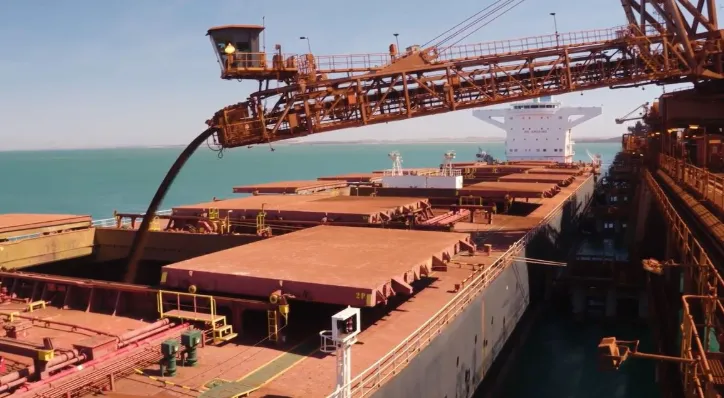
Iron ore shipments from Western Australia remain central to global steel supply as China negotiates new terms with major miners. [World Cargo News]
Reports from late 2025 indicate that Chinese mills stopped buying some BHP products during contract discussions for 2026 supply. Among the affected products were Jimblebar Blend fines, which represent a significant portion of BHP’s Pilbara production. The move created uncertainty for shipments and pushed BHP to review its sales strategy.
The negotiations remain ongoing. In the meantime, BHP has redirected some cargoes to other Asian buyers and adjusted its pricing structure to maintain supply flows.
Yuan Settlement Signals Shift Away From US Dollar Pricing
One notable change in the dispute involves the currency used in iron ore transactions. BHP has agreed to settle around 30 per cent of its spot iron ore sales to China in Chinese yuan from the fourth quarter of 2025.
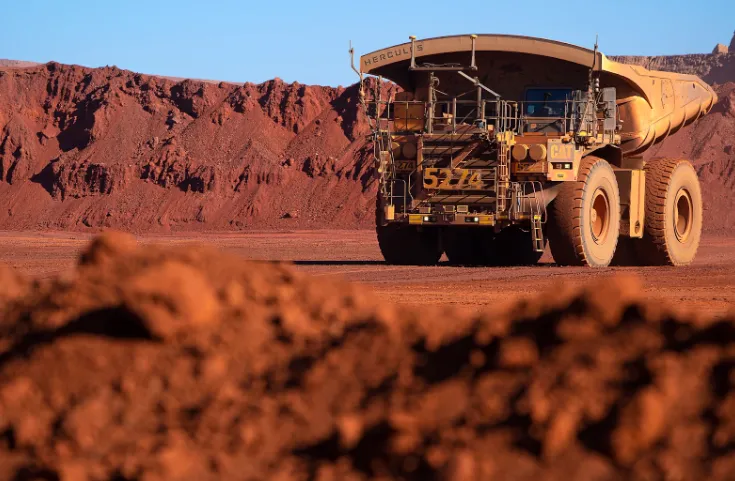
BHP’s Pilbara iron ore operations supply large volumes of ore to global steel producers. [BHP]
Historically, global iron ore contracts have used US dollar pricing. The move toward yuan settlement reflects China’s wider push to reduce reliance on the dollar in commodity trade. Chinese authorities have promoted local currency transactions across several resource sectors.
The agreement currently applies only to part of BHP’s spot market sales. Long-term contracts still reference US dollar benchmarks. However, discussions continue around the development of a Chinese iron ore pricing index.
Industry analysts note that broader adoption of yuan settlement could change trading dynamics. It may also create new financial instruments linked to Chinese commodity pricing.
Supply Diversions Reshape Iron Ore Trade Flows
The purchasing pause from Chinese mills forced BHP to shift some iron ore shipments to other markets. The company began offering cargoes to buyers across Southeast Asia. Countries such as Malaysia and Vietnam have received redirected shipments during the negotiation period.
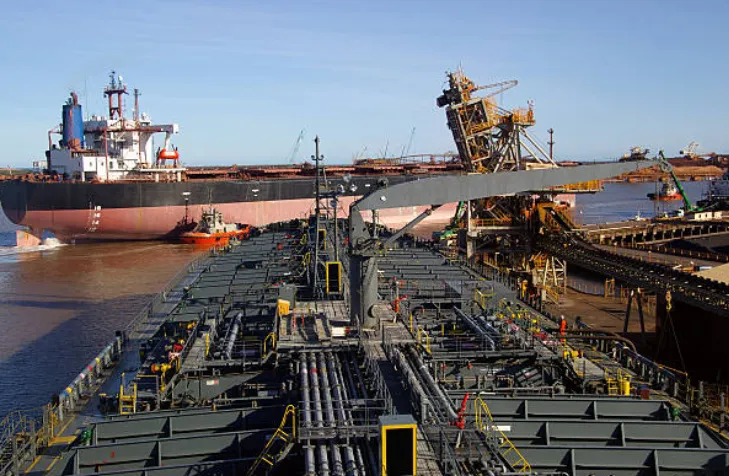
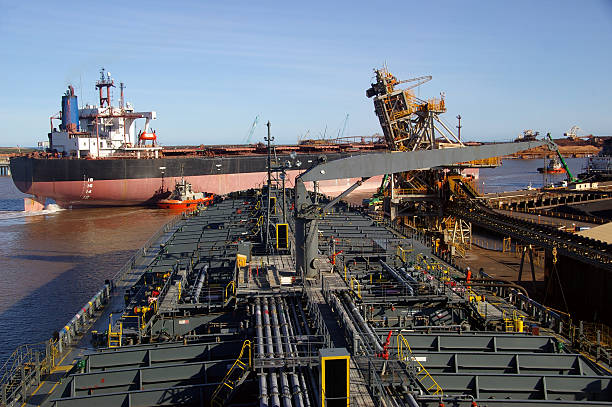
Bulk carriers transport iron ore cargoes from Australian ports to steelmaking markets across Asia. [IStock]
This redistribution helps BHP prevent large inventory buildups. At the same time, the company has adjusted pricing to attract new buyers. Reports indicate that some shipments have carried wider discounts to ensure sales continue.
Meanwhile, Chinese buyers have substituted other sources to replace the blocked supply. Steel mills increased purchases of Pilbara Blend fines produced by Rio Tinto. This substitution has reduced available inventories of that grade at Chinese ports.
Port data shows significant changes in stock levels. Inventories of BHP’s Jimblebar fines have surged, while stocks of Rio Tinto’s Pilbara Blend fines have declined sharply.
Iron Ore Prices Remain Resilient Despite Weak Steel Demand
Iron ore prices have shown unusual strength during the dispute. Market participants expected weaker prices due to declining steel production in China. Instead, supply disruptions helped keep prices elevated.
Iron ore futures reached levels around ¥790 to ¥800 per tonne in late 2025. These prices translate to roughly US$110 to US$115 per tonne. Futures in early 2026 continued to trade near US$100 per tonne.

Iron ore prices have remained near US$100 per tonne despite weaker steel demand in China. [Discovery]
Analysts attribute this resilience partly to supply constraints created by the purchasing restrictions. Reduced availability of certain ore grades tightened the market and supported prices.
At the same time, China has continued importing large volumes of iron ore. Port inventories climbed to roughly 144 million tonnes by December 2025. Some analysts believe mills are stockpiling ore in anticipation of future demand or policy stimulus.
However, steel production trends remain soft. China’s steel output in 2025 fell to its lowest level since 2019. This decline suggests long-term demand for iron ore may remain uncertain.
Geopolitical Factors Influence Iron Ore Negotiations
The BHP contract talks also reflect broader geopolitical factors. Australia supplies roughly half of the world’s seaborne iron ore. China relies heavily on these imports to support its steel industry.
Iron ore therefore carries significant political importance for both countries. Australian government officials have emphasised that changes in iron ore prices directly affect national revenue.
Australia’s resources minister has noted that a US$10 decline in iron ore prices could reduce federal budget revenue by about A$500 million. Such figures highlight how closely policymakers monitor the sector.
China has also pursued strategies to reduce reliance on Australian supply. The country has invested heavily in new mining projects abroad. One major example includes the Simandou iron ore development in Guinea, which Chinese companies largely control.
Despite these efforts, analysts expect Australian supply to remain dominant in the near term. Forecasts suggest Australia could produce around 934 million tonnes annually by 2027. Simandou may contribute only 40 to 50 million tonnes during early production phases.
Impact on Major Mining Companies and Market Competition
The shift in Chinese buying patterns affects several global mining companies. BHP has faced the most direct pressure because Chinese mills paused purchases of some of its products. The company has accumulated additional inventories and accepted lower realised prices on some shipments.
Rio Tinto has benefited from substitution demand during the dispute. Chinese mills increased purchases of its Pilbara Blend fines after limiting BHP imports. This shift has reduced Rio Tinto inventories and supported sales volumes.
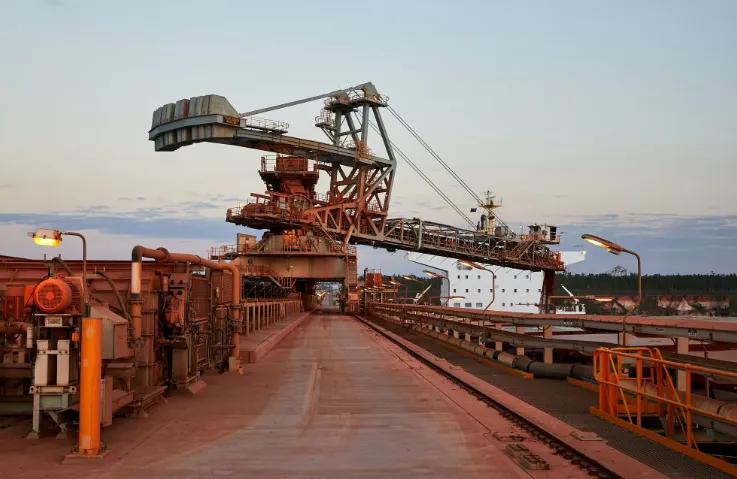
Major mining companies including Rio Tinto and Fortescue continue supplying iron ore to Asian steel producers. [International Mining]
Fortescue Metals Group has maintained relatively stable shipments to Chinese customers. The company has strengthened commercial relationships and increased local engagement to support continued trade.
Fortescue reported quarterly shipments of about 50.5 million tonnes in early 2026. However, rising costs and broader market uncertainty have still affected its share performance.
Global producers outside Australia also watch the negotiations closely. Vale S.A. in Brazil relies heavily on Chinese demand for iron ore. Analysts suggest China could apply similar bargaining strategies to other suppliers in future contract talks.
Also Read: Unlocking the Potential of Stablecoins in Modern Financial Systems – Colitco
Opportunities and Risks for Mining Investors
The China–BHP negotiations highlight several key issues for investors in mining companies. Price stability remains the most immediate factor. Iron ore prices have held near US$100 per tonne despite weaker steel demand.
Companies with diversified commodity portfolios may face lower risk from iron ore volatility. Several major miners have expanded into copper and other metals that support energy transition projects.
At the same time, policy intervention remains a major risk. State-directed purchasing decisions can quickly disrupt normal market dynamics. Sudden shifts in buying patterns may affect pricing and shipment volumes.
China’s steel demand also remains a critical variable. Falling steel production could reduce long-term iron ore consumption. While alternative markets exist, none currently match China’s scale.
Investors therefore continue monitoring negotiations between BHP and Chinese buyers. The outcome of future supply contracts may influence pricing trends and earnings across the global mining sector.