
Commonwealth Bank of Australia (ASX: CBA) shares are trading at $177.03 as of 18 March 2026, up 0.52% on the day. The stock has climbed 10.25% year-to-date and a remarkable 22.77% over the past 12 months, outperforming the broader ASX 200 by 12.58 percentage points.
With a market capitalisation sitting above $296 billion, CBA remains the largest company on the Australian Securities Exchange. But size and momentum don’t tell the full story. Behind those numbers sit a set of CBA growth drivers 2026 analysts are watching closely — along with real risks that could shake investor confidence.
So where exactly does CBA stand, and is the share price justified?
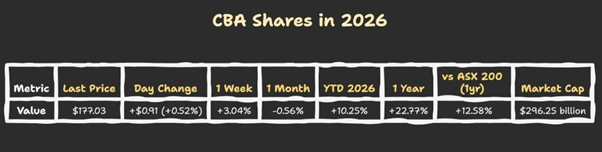
Figure 1: CBA share price performance in different timeframes
What’s Actually Happening With CBA Right Now
CBA kicked off 2026 on a strong note. The bank posted its half-year results in mid-February, revealing a 6% jump in cash net profit to $5,445 million, a result that beat market expectations by a wide margin.
The numbers reflected solid core banking performance. Business lending grew 10.4% year-on-year in the September 2025 quarter, while household deposits rose 9.5% and home lending ticked up 6.1%.
Importantly, CBA reported that proprietary home loans made up 68% of new business flows for the quarter. That’s a strong competitive indicator, it means the bank is winning new mortgage business directly rather than relying heavily on broker channels.
The bank also announced a fully franked interim dividend of $2.35 per share, continuing a payout track record stretching back to 2006.
The Investors and Analysts Shaping the Debate
Who Holds CBA and Why It Matters
CBA attracts a broad base of investors: superannuation funds, self-managed super funds, retail investors chasing franked income, and institutional portfolios seeking defensive exposure. Its sheer size makes it a fixture in most Australian equity strategies.
That popularity is both a strength and a risk. When sentiment turns, CBA’s ubiquity in investor portfolios can accelerate any sell-off.
What the Analysts Are Saying
Analyst sentiment on CBA remains cautious despite the recent rally. According to TradingView data, 14 out of 16 analysts currently hold a sell or strong sell rating on the stock. The average 12-month price target sits around $131, implying the share price may carry significant downside from current levels.
Some forecasters have flagged the possibility of a correction of close to 49% if macro conditions deteriorate sharply.
Why CBA Has Rallied — The Bull Case
Three Key CBA Growth Drivers for 2026
Understanding the CBA growth drivers 2026 bulls are pointing to helps explain why the stock has climbed despite stretched valuations.
- Defensive earnings power: CBA operates in an essential services category. Australians need banking regardless of the economic cycle — from home loans to everyday accounts. This shields CBA’s earnings from the volatility that hits more discretionary businesses.
- Consistent profitability: The half-year results confirmed the bank’s profit engine is still running. Revenue exceeded $27 billion in FY25, up 5.5% year-on-year, and returns on equity remain well above most international peers.
- Reliable dividends: CBA’s dividend track record is one of the strongest on the ASX. With fully franked payouts and a current yield around 2.88%, income-focused investors continue to find the stock attractive — even at a premium price.
The bank is also investing heavily in technology and artificial intelligence. CBA recently appointed its first Chief AI Officer, and the institution has been building an AI-upskilled workforce to improve efficiency and customer outcomes. If that investment translates into measurable productivity gains, it adds another layer to the CBA growth drivers 2026 story.
Which Risks Could Stall the Rally
The Bear Case Deserves Attention
The risks facing CBA shareholders in 2026 are not trivial. Investors tracking CBA growth drivers 2026 also need to keep these headwinds in clear view.
Valuation remains stretched. CBA’s current price-to-earnings ratio sits at approximately 27.62x — well above its big four peers. That premium makes the stock vulnerable to any earnings disappointment or macro shock. Simply put, the share price already prices in a lot of good news.
Interest rate uncertainty cuts both ways. The RBA held its cash rate at 3.60% through much of late 2025 and into 2026. Tracking RBA interest rate predictions and CBA’s own forecast is important here. Higher rates can expand net interest margins in theory, but they also lift credit risk. Mortgage holders under pressure can tip into arrears, and consumer sentiment data from Westpac-Melbourne Institute already flagged a sharp drop in confidence late last year.
Regulatory pressure is building. APRA introduced lending restrictions from February 2026, capping high debt-to-income loans at 20% of new lending. As the country’s biggest home lender, CBA feels this more acutely than its peers. Any further tightening could directly constrain loan growth.
Fraud and compliance risks are live. The bank has dealt with headline risk on this front — from regulatory penalties to allegations of broker loan fraud that led to police referrals. While individual incidents are contained, repeated compliance issues can erode the premium investors pay for CBA’s brand.
- Elevated P/E ratio leaves little margin for error
- APRA lending restrictions may cap mortgage growth
- Rate uncertainty affects both margins and credit quality
- Analyst consensus remains heavily skewed to “sell”
How CBA Fits Into a Portfolio Strategy
The Bigger Picture for 2026 Investors
The case for holding CBA in 2026 comes down to what kind of investor you are.
For income-focused portfolios, CBA offers a dependable franked dividend, strong brand, and a defensive earnings base that weathers economic slowdowns better than most. That combination continues to justify a place in conservative super and income portfolios.
For growth-oriented investors, the picture is more complicated. The share price reflects an already-expensive stock. The CBA growth drivers 2026 — AI investment, mortgage market share, and business lending growth — are real, but they need to translate into earnings acceleration to justify the current multiple.
The broader macro environment matters too. CBA’s own economists have flagged that global growth may lift to 2.7% in 2026, helped by rate cuts and US fiscal policy. A healthier global economy supports Australian exports and business confidence, which flows back into demand for banking services.
But geopolitical tensions, energy costs from the AI infrastructure boom, and domestic household debt levels all add complexity to any rosy outlook.
Share Price Snapshot — 18 March 2026
CBA shares are currently trading at $177.03, having nudged up 91 cents (0.52%) on the day, a modest but positive session.
Zoom out slightly, and the picture becomes more interesting. Over the past week alone, the stock has climbed 3.04%, suggesting some decent buying momentum in the short term. The one-month figure is slightly in the red at -0.56%, which just means the share price pulled back a touch over the last 30 days before recovering.
The bigger story is the longer-term performance. CBA has gained 10.25% since the start of 2026, and over the past full year, it’s up a very strong 22.77%. To put that in context, the broader ASX 200 index returned about 10.19% over the same period. CBA beat it by 12.58 percentage points, which is a significant outperformance for a stock of this size.
Speaking of size, CBA’s market capitalisation sits at $296.25 billion, making it the largest company on the ASX by a considerable margin. That means it carries enormous weight in index funds and super portfolios across the country.
The Bottom Line
CBA continues to deliver on its fundamentals. Profit growth, dividend reliability, and mortgage market leadership make it one of the most defensible businesses on the ASX.
But at a P/E above 27x, with 14 of 16 analysts recommending a sell, the stock demands respect. The CBA growth drivers 2026 are genuine, but so are the headwinds.
Whether the share price can hold its gains — let alone push higher — will depend on how the RBA navigates interest rates, how quickly AI investments pay off operationally, and whether Australia’s housing market holds its footing through the rest of the year.
Investors would do well to watch all three closely.
Frequently Asked Questions (FAQs)
Q1: Is CBA a good buy in 2026?
Ans: CBA offers reliable dividends and strong earnings, but its P/E ratio above 27x makes it expensive. Most analysts currently rate it a sell, suggesting better value may exist elsewhere in the big four.
Q2: What is driving CBA’s share price growth in 2026?
Ans: A 6% rise in half-year cash profit, consistent mortgage market leadership, AI investment, and its defensive earnings base are the key factors pushing CBA’s share price higher through 2026.
Q3: What are the biggest risks for CBA shareholders?
Ans: Stretched valuation, APRA lending restrictions, interest rate uncertainty, and a heavily bearish analyst consensus are the main risks. Any earnings disappointment at current price levels could trigger a sharp correction.