BHP Group (ASX: BHP) has struck a strategic US$2 billion agreement with Global Infrastructure Partners (GIP), a division of BlackRock, for its Western Australia Iron Ore inland power network. The deal represents one of Australia’s most significant infrastructure monetisation transactions in recent years.
The mining giant will retain 51% ownership and full operational control while securing substantial capital through the arrangement.
Deal Structure Maintains Operational Control
The agreement establishes a new trust entity. BHP will control 51% while GIP injects US$2 billion for the remaining 49% stake.
Over a 25-year period, BHP will pay a tariff linked to its share of WAIO’s inland power usage. The structure does not affect existing joint venture agreements or state obligations.
BHP CEO Mike Henry stated the deal enables the company to “access capital while maintaining operational and strategic control of a critical part of WAIO’s infrastructure.”
The Western Australia Iron Ore operations comprise four main joint ventures in the Pilbara region. BHP holds an 85% interest in these operations.
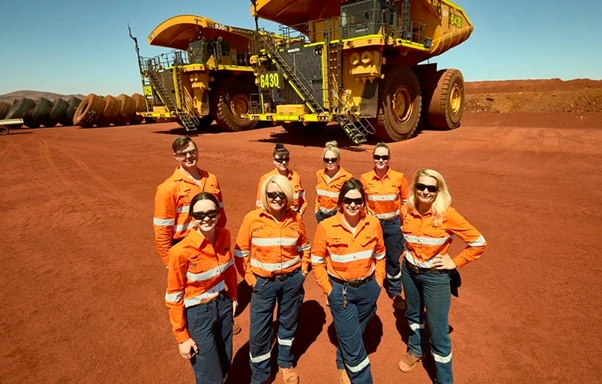
BHP’s Western Australia Iron Ore operations in the Pilbara region
BlackRock’s Infrastructure Push
Global Infrastructure Partners, acquired by BlackRock in October 2024, manages approximately US$189 billion across energy, transport, digital infrastructure, and water sectors.
The acquisition cost BlackRock US$12.5 billion, marking the firm’s largest deal in over a decade. The move reflects growing institutional appetite for stable infrastructure assets.
BHP Chief Financial Officer Vandita Pant described the arrangement as “an example of BHP’s disciplined approach to capital portfolio management.” The deal strengthens balance sheet flexibility and supports long-term value creation.
WAIO’s Record Production Performance
Western Australia Iron Ore operations delivered record production in fiscal 2025. Output reached 290 million tonnes on a 100% basis.
The South Flank operation exceeded nameplate capacity in its first full year. The mine produces 80 million tonnes per annum of high-grade ore.
Rail, port and technology investments continue delivering production gains. BHP expects fiscal 2026 iron ore output between 284-296 million tonnes.
Despite Tropical Cyclone Zelia disruptions, the division maintained momentum throughout the year.
Strategic Context in Mining Sector
The transaction fits a broader trend of infrastructure monetisation across mining. Companies are recycling capital while retaining strategic control of critical assets.
Infrastructure deals have accelerated as operators seek to strengthen balance sheets and fund growth without ceding operational control.
The mining sector has seen US$47 billion in deals over CA$1 billion announced between January 2024 and mid-2025. This surpasses the post-super-cycle peak of 2011-12.
BHP previously secured joint ventures with Lundin Mining on copper projects, demonstrating its strategy of selective partnerships.
Financial Impact and Timeline
The deal completion is expected by the end of financial year 2026. Regulatory approvals include clearance from the Foreign Investment Review Board.
WAIO continues targeting iron ore production of 305 million tonnes per year. The strategy includes targeted investments while maintaining flexibility for future growth.
BHP’s disciplined capital allocation approach balances growth investments with shareholder returns. The company maintained a 50% minimum dividend payout ratio.
The power network agreement provides certainty for infrastructure funding without impacting production targets.
Market Reaction
BHP shares traded at AUD 44.36 in Sydney on Tuesday afternoon, down 0.3%. BlackRock shares closed down 1.0% at USD 1,062.02 in New York on Monday.
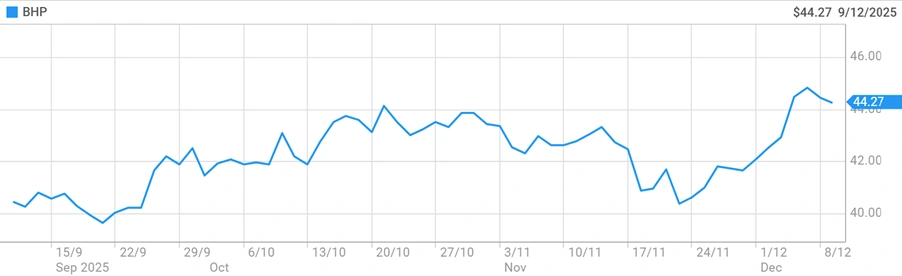
The modest market reaction suggests investors view the deal as administratively positive rather than transformational. Analysts note the structure preserves operational control while improving capital efficiency.
GIP’s involvement brings deep infrastructure expertise. The firm has completed over 300 active investments globally with operational improvements as a core focus.
Long-Term Implications
The 25-year tariff arrangement provides predictable power costs for WAIO operations. This stability supports long-term production planning and capital allocation decisions.
Infrastructure partnerships are becoming standard practice for major miners. The model allows companies to monetise non-core assets while maintaining operational excellence.
BHP’s copper expansion and potash development programmes benefit from improved balance sheet flexibility. The company is advancing projects including the Jansen Stage 1 potash mine in Canada.
The arrangement demonstrates how mining companies can access institutional capital for infrastructure while preserving strategic control of operations essential to production.
Also Read: Three Decades of Allegations Finally Catch Up With Newcastle’s Top-Selling Agent
FAQ
Q: What is the deal between BHP and Global Infrastructure Partners?
A: BHP entered a binding agreement where GIP will provide US$2 billion for a 49% stake in a trust entity owning WAIO’s inland power network, while BHP retains 51% ownership and full operational control.
Q: How long will the agreement last?
A: The arrangement spans 25 years, during which BHP will pay the trust entity a tariff linked to its share of WAIO’s inland power usage.
Q: Does this affect BHP’s iron ore production?
A: No, the agreement does not impact existing joint venture arrangements, state obligations, or ownership of WAIO assets. Production guidance remains unchanged.
Q: When will the deal be completed?
A: Completion is expected by the end of financial year 2026, subject to regulatory approvals including Foreign Investment Review Board clearance.
Q: Who is Global Infrastructure Partners?
A: GIP is a leading infrastructure investor and part of BlackRock since October 2024, managing approximately US$189 billion in assets across energy, transport, digital infrastructure, and water sectors.