

NASA’s Artemis II Launches Four Astronauts on Historic Lunar Flyby Mission
NASA’s Artemis II lifted off at 6:35 pm EDT from Kennedy Space Centre’s Launch Complex 39B in Florida. It is carrying four astronauts on a 10-day journey that no crew has attempted since the Apollo program ended in 1972.
The Crew Carrying Humanity Back to the Moon
The mission carries NASA astronauts Reid Wiseman, Victor Glover, and Christina Koch, along with Canadian Space Agency astronaut Jeremy Hansen, on a free-return trajectory around the Moon and back to Earth.
Each crew member is making history in their own right. Glover became the first person of colour, Koch the first woman, and Hansen the first non-US citizen to travel beyond low Earth orbit. All three will also be the first of their kind to reach the vicinity of the Moon.
The four signed their names on the wall of the “white room” before boarding the Orion capsule, continuing a tradition that dates back to the Gemini program.

A view over the shoulders of NASA astronauts Victor Glover (left) and Reid Wiseman (right), pilot and commander, respectively, inside the Orion spacecraft. [NASA]
What the Artemis 2 Moon Mission Launch Actually Involves
This is not a landing. The crew will loop around the Moon, getting an unprecedented view of the far side, and is expected to travel farther from Earth than anyone before them: 252,000 miles.
The Orion spacecraft, named Integrity, is completing two Earth orbits before a translunar injection burn sends it toward the Moon. Day 2 will see the translunar injection burn carried out, which increases Orion’s velocity and allows it to leave a circular Earth orbit and transfer to an oval-shaped trajectory toward the Moon.
All four solar array wings on the European Service Module have fully deployed, giving Orion a wingspan of roughly 63 feet when extended. Power generation is confirmed, and the spacecraft is operating as planned.
A Last-Minute Scare That Nearly Grounded the Mission
The mission team had to troubleshoot a critical technical issue with the Flight Termination System, a safety mechanism that allows engineers to destroy the rocket if it veers off course. Without a cleared system, the rocket could not fly.
Engineers solved it using hardware from the old Space Shuttle program. NASA confirmed the mission was back on track just over an hour before the scheduled launch time.
There was also a brief issue with the toilet on board the Orion capsule. That was fixed before the crew went to sleep on their first night in space.
Why This NASA Launch Matters After 50 Years
Humans last travelled to the Moon’s vicinity in December 1972 aboard Apollo 17. The commander of that mission, Gene Cernan, was the last person to walk on the Moon and left with the words: “We leave as we came, and, God willing, we shall return.” Over half a century later, that return is now underway.
Artemis II builds on the success of the uncrewed Artemis I in 2022 and will demonstrate a range of capabilities needed for deep-space missions. The mission tests life support, navigation, communication, and crew operations in real deep-space conditions. Everything it proves or flags directly shapes the path to landing astronauts on the Moon in 2028.
President Donald Trump opened a separate public address by congratulating NASA, noting that the spacecraft will travel farther into space than any crewed mission in decades. Senator Mark Kelly, a retired astronaut himself, called it “the start of a new era of Moon missions.”
More than three million people watched the launch across NASA’s YouTube channels alone. That number does not count the …

St Barbara Secures Lingbao Investment to Advance Simberi Gold Project
St Barbara confirms A$389 million deal completion
St Barbara Ltd has completed a major transaction with Lingbao Gold Group, securing A$389 million in funding for the New Simberi Gold Project in Papua New Guinea.
The payment includes A$370 million agreed earlier and an additional A$19 million adjustment linked to working capital and cash balances.
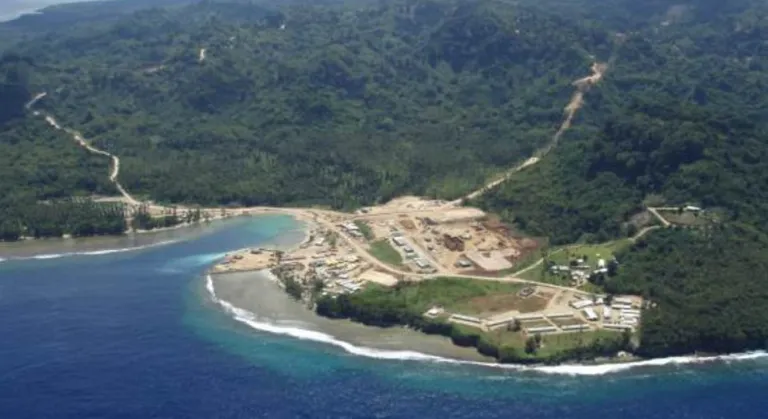
Simberi Gold Project in Papua New Guinea enters development phase after funding deal. [Mining Weekly]
The Company reported a total cash position of A$504 million following the deal, excluding A$26 million retained within the joint venture entity. This strengthened balance sheet provides liquidity for development and future operational needs.
The transaction also marks a key financial milestone for the Company’s expansion strategy in the Pacific region.
Final investment decision unlocks project development
Both partners approved the final investment decision (FID) for the project alongside the transaction completion.
The total construction cost stands at approximately US$333 million, equivalent to about A$500 million. This figure includes around US$13 million already spent as of March 2026.
St Barbara confirmed it has secured full funding for its 50% share of the development costs. Construction activities are expected to begin immediately. The approval of the FID removes a major uncertainty and allows the project to move into its next phase without delay.
Production expansion targets higher gold output
The New Simberi Gold Project aims to expand existing mining and processing operations to handle sulphide ore. The project plans to double mining capacity from 10 million tonnes per annum to about 20 million tonnes per annum.
Production is expected to exceed 200,000 ounces of gold annually once operations reach full capacity.
This increase reflects the transition from oxide to sulphide processing, which typically offers higher recovery rates and improved long-term output. The project positions itself among mid-tier gold producers in the region.
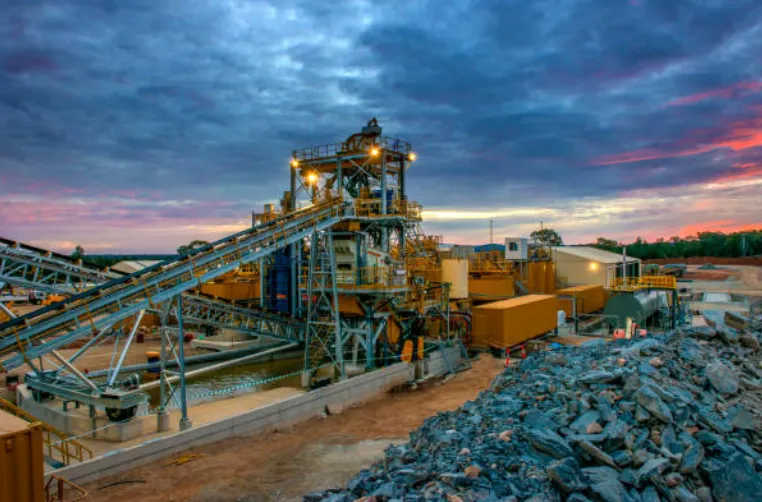
Processing capacity at Simberi is expected to double to 20 million tonnes per annum. [IStock]
Cost structure supports long-term viability
The Company expects all-in sustaining costs to range between $1,100 and $1,400 per ounce. This cost range aligns with current industry benchmarks for similar operations in the Pacific region. The cost profile indicates a balance between higher processing expenses and improved recovery rates.
The projected mine life stands at approximately 13 years based on existing ore reserves.
This estimate excludes potential upside from further exploration or resource upgrades. The long mine life provides stable production visibility and supports long-term planning.
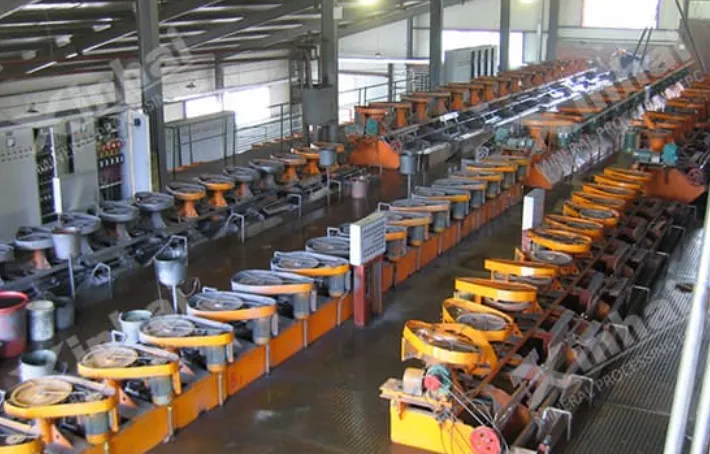
Shift to sulphide ore processing aims to improve gold recovery and extend mine life. [xinhai mining]
Joint venture structure balances risk and control
The project operates under a 50-50 joint venture between St Barbara and Lingbao Gold Group. This structure allows both companies to share financial exposure while maintaining equal operational influence.
The partnership combines St Barbara’s regional experience with Lingbao’s financial capacity and technical resources.
This arrangement spreads risk across both parties and improves access to capital. It also supports efficient decision-making during development and production phases.
Financial impact includes a significant accounting gain
St Barbara expects to record an unaudited accounting gain of approximately A$500 million from the transaction in its FY26 financial results. The Company stated that it does not anticipate any tax liability associated with this gain.
The transaction structure enables the Company to unlock value while maintaining partial ownership of the asset.
This approach improves the balance sheet and allows continued participation in future project revenues. The outcome reflects careful financial planning within the deal framework.
Regulatory approvals remain for the related transaction
A separate transaction involving Kumul Mineral Holdings Limited remains subject to regulatory approvals. Authorities in Papua …
Glencore Seeks Federal Funding to Keep Quebec Copper Smelter Running
Glencore is seeking Canadian government support to modernise its Horne Smelter in Rouyn-Noranda, Quebec, amid shutdown threats and tightening arsenic emission rules that have stalled nearly C$1 billion in planned investments.
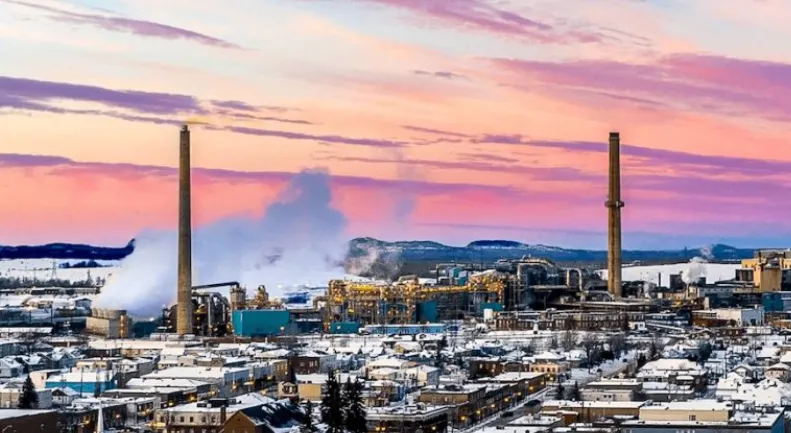
The Horne Smelter in Rouyn-Noranda, Quebec, processes approximately 215,000 metric tons of copper annually. [northernminer]
Canada Weighs C$150 Million Aid Package for Horne Smelter
The Canadian federal government is considering a support package worth roughly C$150 million for the Horne Smelter. The funding would help cover the cost of pollution-control systems at the facility. Officials at both the federal and Quebec provincial levels have been in active discussions to prevent a potential closure.
Glencore suspended its planned C$1 billion investment in Quebec copper operations after talks broke down over stricter arsenic emission requirements. The company has warned that without regulatory concessions and financial support, shutting the facility remains a real possibility.
Horne Smelter’s Role in North American Copper Supply
The Horne facility handles approximately 215,000 metric tons of copper concentrate and scrap each year. That volume accounts for about 16% of North America’s total annual copper processing capacity.
The smelter also processes electronic waste, making it one of the few North American sites with that capability.
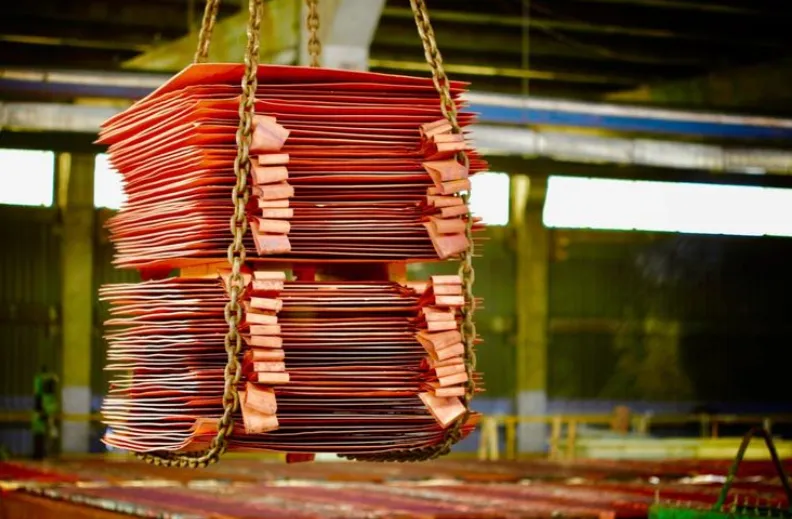
The Horne Smelter handles both copper concentrate and electronic waste, making it one of the few such facilities in North America. [Montraim]
Beyond copper, the Rouyn-Noranda site produces gold, silver, platinum, palladium, and sulfuric acid used in fertiliser manufacturing. These byproducts reinforce how difficult it would be to replace this facility’s output across the region’s metals supply chain.
Downstream Operations at Risk if Smelter Closes
Glencore’s Montreal-based CCR refinery depends on the Horne Smelter as its primary source of copper feedstock. A shutdown would likely force the refinery to halt operations as well, eliminating Canada’s only fully integrated copper smelting and refining chain.
Nexans, a major wire and cable manufacturer, has historically sourced a substantial portion of its copper cathode supply from the Montreal refinery. A disruption at Horne would therefore ripple well beyond Quebec, affecting downstream manufacturers across the continent.
Arsenic Emissions at the Heart of Regulatory Dispute
The core of the dispute centres on arsenic emission standards that Quebec has been tightening. The province has proposed delaying a new limit of 15 nanograms per cubic meter until 2029, maintaining it through at least 2033. The current emissions level at the smelter stands at 45 nanograms per cubic meter, which is three times the proposed limit.
Quebec’s proposed amendment gives Glencore more time to install the necessary upgrades. However, community residents have raised concerns, as the delayed target still exceeds the province’s own defined safe threshold.
A certified class-action lawsuit tied to local health concerns is also pending against Glencore and the provincial government.
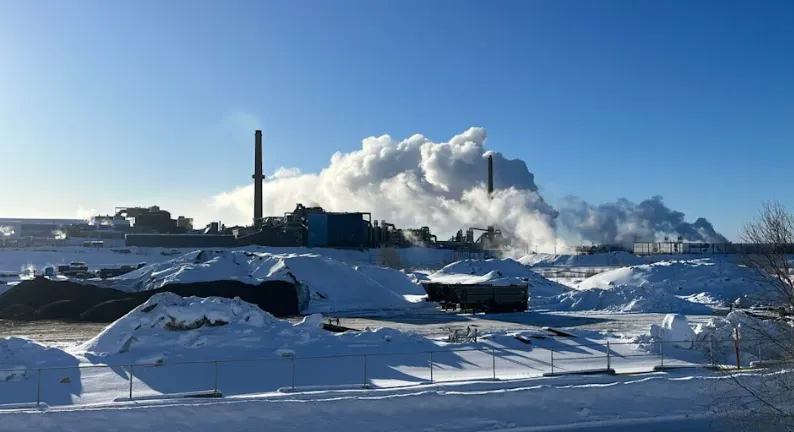
Arsenic emissions from the Horne Smelter have prompted a certified class-action lawsuit from Rouyn-Noranda residents. (Photo: Yahoo Finance)
Jobs and Prior Investments Raise the Stakes
Around 3,200 direct and indirect jobs are connected to the Horne Smelter’s continued operation. The potential loss of those positions has placed added political pressure on both Quebec City and Ottawa to find a workable solution. Employment protection is a key qualifying criterion under Canada’s Strategic Response Fund.
Glencore has already spent approximately C$180 million on emission reductions and resident relocation efforts at the site. That prior investment demonstrates some level of commitment, though the company maintains that further upgrades require co-funding from the government to remain financially viable.
Canada’s Strategic Response Fund as a Potential Vehicle
Canada’s Strategic Response Fund, established in September 2025 under Prime Minister Mark Carney, provides up to C$5 billion for strengthening domestic …

Four Astronauts Are About to Go Where No One Has Gone in 54 Years
Humanity’s return to the Moon starts today. Decades of setbacks, billions of dollars, and one very long wait have led to this moment.
NASA is targeting a launch window opening at 6:24 pm EDT today, Wednesday, April 1, with a two-hour window to get off the ground. If all goes to plan, this will be the first time humans have travelled beyond low Earth orbit since the Apollo 17 mission in December 1972.
Action. Wonder. Adventure. Artemis II has got it all. Don’t miss the moment. Our crewed Moon mission will launch as early as April 1.
Learn how to watch: https://t.co/fAg0bGAqEc pic.twitter.com/2uhg8EhwTv
— NASA (@NASA) March 30, 2026
Who Is Flying on the Artemis 2 Moon Mission
The ten-day mission will carry NASA astronauts Reid Wiseman, Victor Glover, and Christina Koch, along with Canadian Space Agency astronaut Jeremy Hansen.
The crew roster is historic in more ways than one.
Glover would become the first person of colour to leave low Earth orbit. Koch would be the first woman to travel beyond it. Hansen would become the first non-US citizen to venture to the Moon’s vicinity. Wiseman, at his age, would also set the record as the oldest person to travel beyond Earth’s orbit.
Each of them carries the weight of a milestone no astronaut has reached in over half a century.

Artemis 2 crew of four astronauts at Kennedy Space Centre launch pad [NASA]
What Artemis 2 Will Actually Do in Space
Artemis II will fly around the Moon on a free-return trajectory, like Apollo 13 in 1970, rather than entering lunar orbit. The mission is built to test critical systems before NASA attempts a surface landing.
It will send the crew on an approximately 10-day journey around the Moon, during which NASA will test the Orion spacecraft’s life support systems for the first time with humans aboard.
For a launch on April 1, the crew is expected to surpass the record for humanity’s farthest distance from Earth previously set by Apollo 13, at 248,655 miles.
That record has stood for 56 years. Today, it may finally fall.
How the Launch Countdown Is Tracking Right Now
As of 8:35 am Eastern time today, the Artemis II launch team initiated the slow fill of liquid hydrogen and liquid oxygen into the SLS rocket core stage.
Sunny skies and few clouds greeted NASA teams, spectators, and journalists who gathered at Kennedy Space Centre, with pop-up rain showers considered a common occurrence along Florida’s Space Coast.
The weather forecast shows an 80% chance of favourable conditions, with primary concerns around cumulus clouds, ground winds, and solar weather.
Conditions are shaping up to be the best of the entire April launch window, which runs through Monday, 6 April.
Why This Mission Matters Beyond the Headlines
Artemis II will be the first crewed mission of the Orion spacecraft and the first crewed mission beyond low Earth orbit since Apollo 17 in 1972.
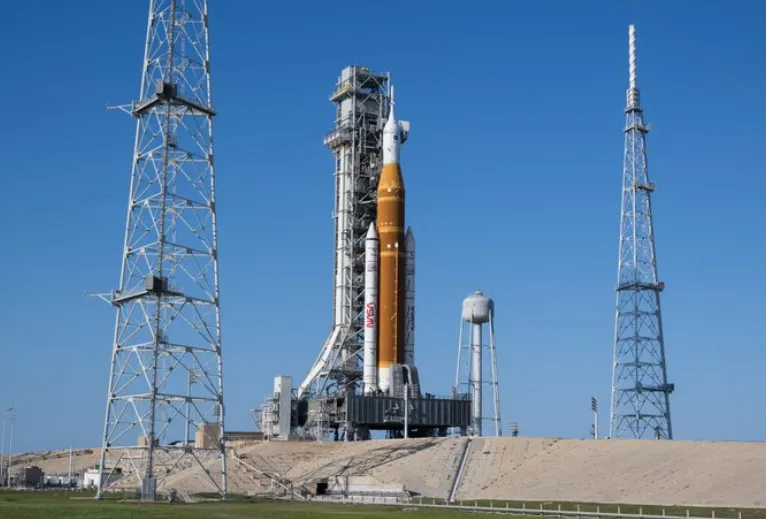
NASA’s Artemis II rocket with the core stage in orange and two white boosters on each side at the Kennedy Space Centre in Florida [NASA]
The road here has not been smooth. A liquid hydrogen leak during a February wet dress rehearsal pushed the mission back to March, then a helium flow issue triggered a rollback to the Vehicle Assembly Building, delaying everything again to April.
But those delays are behind NASA now.
The Artemis program has cost taxpayers roughly $100 billion since its inception, and it will take many billions more to realise the ambitious goals NASA has mapped out. That is a big number. But the …

Trump Set to Address the Nation on Iran War
Donald Trump will speak directly to the American people tonight about a war that has rattled global markets, fractured alliances, and sent fuel prices to their highest point in four years.
White House Press Secretary Karoline Leavitt confirmed the primetime address on X, saying Trump will deliver “an important update on Iran” at 9 PM Eastern Time on Wednesday.
TUNE IN: Tomorrow night at 9PM ET, President Trump will give an Address to the Nation to provide an important update on Iran.
— Karoline Leavitt (@PressSec) March 31, 2026
What Triggered Tonight’s Address
The announcement follows a string of escalating developments. Trump launched major combat operations against Iran on 28 February, with massive joint US-Israeli strikes targeting military and government sites.
Ayatollah Ali Khamenei was among those killed in Tehran on the first day of strikes, with his son Mojtaba later chosen to succeed him.
Now, one month in, Trump is signalling that the end may be close.
Speaking in the Oval Office on Tuesday, Trump told reporters US forces could leave the Middle East in “two or three weeks,” saying they are “finishing the job.”
He also said Iran does not need to make a formal deal with the US as a condition to stopping the operation. “When we feel that they are for a long period of time put into the stone ages and they won’t be able to come up with a nuclear weapon, then we’ll leave,” he said.
What’s Happening on the Ground Right Now
The situation on the ground remains volatile. Iranian state media confirmed the country’s Revolutionary Guards fired three waves of missiles at Israel within an hour on Wednesday morning, with at least 16 people wounded in Tel Aviv and Bnei Brak, including a 10-year-old girl now in critical condition.
The conflict has also spread into the Gulf. Iranian drones struck Kuwait International Airport’s fuel depots, causing a significant blaze, while a missile launched by Iran hit an oil tanker leased to QatarEnergies off the coast of Qatar.
Tehran has also threatened 17 American companies, including Apple, Microsoft, Google, Meta, and Tesla, warning they “should expect the destruction of their relevant units” in retaliation for assassinations of Iranian leaders.
The Economic Fallout in Australia
The conflict is hitting wallets hard. Average US gas prices have hit $4 a gallon for the first time since 2022. Trump insisted that once US forces leave, prices will “come tumbling down.”
Australia has not been insulated from the shock either. Prime Minister Anthony Albanese addressed the nation on Wednesday. Albanese announced his government would halve the fuel tax for three months to ease cost-of-living pressure, urged Australians to use public transport rather than hoard fuel, and warned that “the economic shocks caused by this war will be with us for months.”
My Address to the Nation. pic.twitter.com/Iaqts9Rd4X
— Anthony Albanese (@AlboMP) April 1, 2026
Regional fuel stations have already reported supply exhaustion, with reports emerging of outages affecting rural communities across Australia. Global oil market traders have been responding sharply to every statement out of Washington. For a detailed breakdown of how crude benchmarks are shifting in real time, see our article on Understanding Brent and WTI Movements.
Allies Pull Back, NATO Questions Resurface
Trump’s speech tonight also comes against a backdrop of deepening rifts with key allies. British Prime Minister Keir Starmer stated firmly that “this is not our war” and that he would not change his position despite pressure to join the conflict.
Trump hit back hard. He told The Telegraph he is “strongly considering pulling the US …
WA Iron Ore Miners Face Diesel Risk Amid Global Supply Shock
Fuel Shortage Forces Operational Adjustments
Western Australia’s mining sector faced mounting pressure after a diesel supply disruption pushed some operators close to running out of fuel. Fenix Resources, a junior iron ore miner, reduced non-essential activities after its reserves dropped to critical levels. At certain points, the company had only one to two days of diesel available.
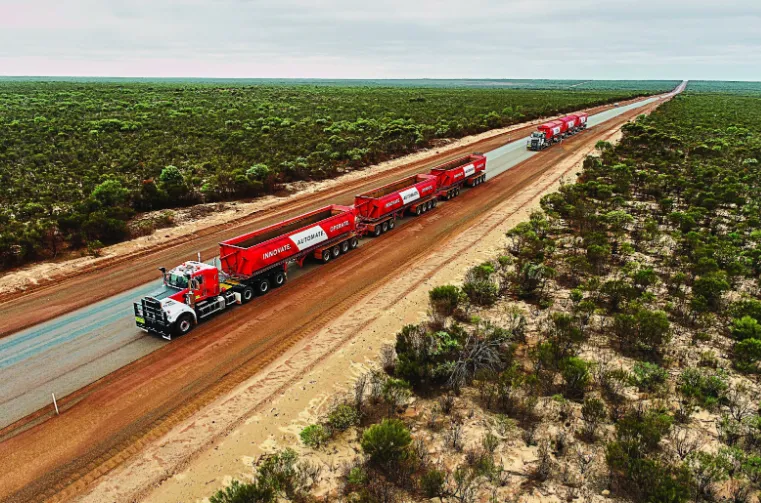
Road trains transport iron ore across long distances, increasing diesel demand for remote mining operations. [Australian Mining]
The Company typically maintains five to ten days of fuel on site. However, supply delays disrupted that buffer.
Management responded by prioritising core mining and haulage operations. This approach allowed the company to continue exporting iron ore while conserving fuel for essential tasks.
Heavy Diesel Reliance Exposes Supply Risk
Fenix Resources operates an integrated supply chain that includes mining, logistics, and port services. The company transports iron ore over long distances using road trains. This model depends heavily on a steady diesel supply.
The recent disruption exposed how quickly operations can come under strain. Without diesel, mining equipment cannot operate, and transport systems stop. This reliance makes fuel availability a critical factor in maintaining production continuity.
The issue extends beyond one company. Many smaller miners in remote areas rely on similar logistics systems. These operators often lack rail access and depend on trucking, which increases diesel consumption.
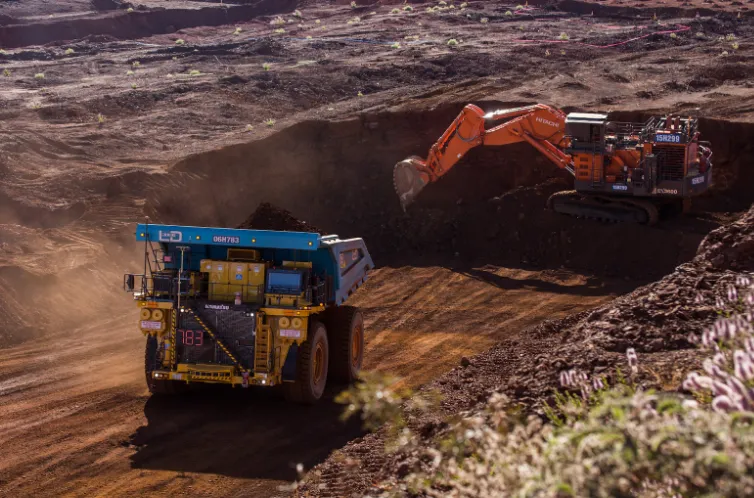
Iron ore mining operations in Western Australia rely heavily on diesel-powered equipment and transport systems. [International Mining]
Global Conflict Tightens Fuel Availability
The diesel shortage followed escalating tensions in the Middle East, which disrupted global energy markets. Damage to key infrastructure and the closure of major shipping routes reduced fuel supply flows. These developments affected countries that rely on imports, including Australia.
Australia imports a large share of its diesel. This dependency increases exposure to global disruptions. While contracted shipments continue to arrive, spot market supplies have tightened. These spot purchases usually act as a buffer during supply gaps.
As a result, suppliers have struggled to meet all delivery schedules. Some mining companies received notice of delays with little warning. This uncertainty has made fuel planning more difficult for operators.
Rising Costs Add Financial Pressure
Fuel price increases have added to the operational strain. At Fenix Resources, diesel costs rose from about 20 percent of total expenses to around 30 percent. This shift has reduced profit margins, even as production continues.
Higher fuel costs affect several aspects of mining operations. Transport expenses increase, and equipment operation becomes more expensive. These changes can reduce overall efficiency and financial performance.
Small and mid-sized miners face greater pressure from these cost increases. Larger companies often have stronger supply agreements and better access to reserves. In contrast, smaller firms operate with tighter margins and fewer alternatives.
Industry Faces Week-to-Week Supply Uncertainty
Industry groups have described the current fuel situation as unstable. Many smaller miners now operate on a week-to-week basis regarding diesel availability. This short-term outlook makes planning more difficult and increases operational risk.
Businesses that support the mining sector have also reported challenges. Contractors, transport providers, and regional service firms rely on diesel for daily operations. Limited supply affects their ability to maintain services, which in turn impacts mining activity.
The uncertainty has already forced some companies to adjust workflows. Operators have reduced non-essential work and delayed certain tasks. These measures aim to extend fuel reserves while awaiting new deliveries.
Government Moves to Stabilise Supply Chains
The Western Australian government has stepped in to address the situation. Authorities have requested detailed information from fuel distributors on supply allocation. The aim is to ensure that critical industries receive priority …

Alkane Locks In A$150M Credit Package as Cash Reserves Hit A$232M
What the Deal Actually Looks Like
The facility is split into two parts. The larger piece is a A$110 million revolving credit facility that Alkane can draw on for general corporate use. Working capital, operating costs, acquisitions, whatever comes up. The second piece is a A$40 million contingent instrument facility.
That one is less about borrowing new money and more about unlocking cash that is already sitting idle. Alkane currently has up to A$40 million tied up in performance guarantees across its operations. This facility releases that capital so it can actually be put to work.
Alkane Resources strengthens liquidity through a A$150 million syndicated credit facility. [ABC]
The term runs three years with two one-year extension options, subject to lender sign-off and six months’ notice. There is no mandatory gold hedging requirement built into the agreement.
That matters because it means Alkane keeps full exposure to the gold price. If spot gold keeps running, the company benefits without having pre-sold its output at a lower price.
Four Major Banks Signed On
ANZ, Commonwealth Bank, Macquarie Bank, and Westpac all joined the syndicate. Getting four tier-one Australian lenders into the same deal is not something a struggling miner manages.
Banks at this level run detailed credit assessments before committing. Their participation reflects the view that Alkane’s balance sheet is in solid shape and that its operations are generating reliable cash flow.
Major Australian banks backed Alkane’s syndicated credit facility, reflecting lender confidence. [Broker Daily]
Working with a syndicate also reduces the Company’s dependence on any single funding relationship. If one lender steps back during a future refinancing, the others provide continuity. That kind of structural resilience is worth having, particularly for a mining company with three producing assets across two countries.
The August 2025 Debt Repayment Set This Up
Last August, Alkane paid off a A$45 million project finance facility before it was due. Early repayment is not the norm. Most companies hold onto debt facilities even when they have cash, because the optionality is valuable.
Paying it off early suggests the company felt comfortable enough with its cash position to close out the liability and start fresh. It also cleared the path to negotiate the new syndicated package on cleaner terms, without the existing facility complicating the structure.
Three Mines, One Balance Sheet
Alkane’s cash generation comes from three producing operations. Tomingley is a gold mine in New South Wales. Costerfield, in Victoria, produces both gold and antimony. Björkdal is a gold mine in Sweden.
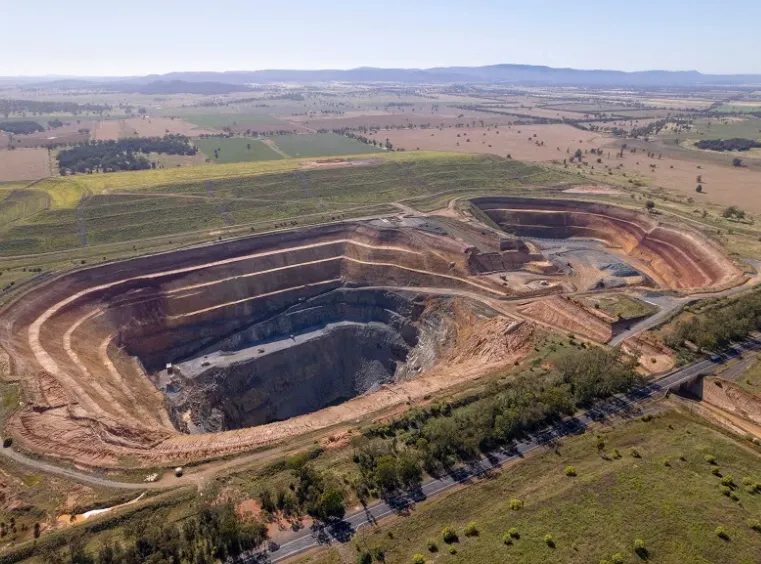
Tomingley gold mine in New South Wales remains a key contributor to Alkane’s production. [Mining Technology]
Running three mines across two continents introduces operational complexity, but it also means the company is not entirely exposed to problems at any one site. A geotechnical issue at Tomingley or a maintenance shutdown at Björkdal does not stop the cash flowing from the others.
The antimony exposure at Costerfield is worth noting separately. Antimony is a critical mineral used in flame retardants and increasingly in energy storage applications.
Prices have moved significantly in recent years as supply chains tighten. That gives Costerfield a revenue profile that gold-only mines do not have, and it adds a layer of diversification that investors in the pure-play gold space do not usually get.
What the Facility Means in Practice
A revolving credit facility is not a loan in the traditional sense. Alkane does not have to draw the full A$110 million. It can draw part of it, repay it, and draw again. The interest accrues only on what is actually drawn.
That makes it a …
Top Australian Shares To Buy With $2,500 Amid 2026 Market Volatility
Investors are reviewing their strategies with the markets showing increased volatility in 2026. A few quality companies are expanding at a low price. This is something that could be of concern to the current shareholders, but gives a chance to new investors.
It is important in such conditions to identify the best Australian shares to purchase. Analysts will point to those firms with good fundamentals and prospective growth.
Such businesses tend to rebound very easily after corrections in the market. Investors who have 2,500 dollars can start constructing the positions of resilient companies.
In a volatile environment, discipline is a necessary factor. It should be emphasised on quality as opposed to the short-term price changes. This is a strategic way for investors to trade in the short term on weaknesses in the market.

Investors tracking ASX volatility to identify top Australian shares to buy. [Courtesy: IG Group]
Why Does Market Weakness Create Buying Opportunities?
Recessions in the market usually provide enticing entry rates to long-term investors. Valuations are attractive when the prices of shares start to drop. This will enable investors to purchase good stocks at low prices. The volatility in 2026 is caused by uncertainty in the global economy and policy changes.
Nonetheless, good companies are still providing stable performance. Investors who have invested in the downturns are likely to experience recoveries in the future. It is important to find the businesses that have sustainable competitive advantages.
Firms that have high earnings visibility are better performers in the long-run. This renders them the best choices of leading Australian shares to purchase. Investing in weak markets can be very strategic and result in high returns.
Which Companies Stand Out As Top Australian Shares To Buy?
Several high-quality ASX companies are emerging as strong contenders for investors seeking long-term value in 2026. Here are three standout picks:
- Pro Medicus Ltd (ASX: PME): A leader in healthcare imaging software, known for speed and efficiency, securing major global contracts and delivering strong margins with sticky, long-term revenue.
- REA Group Ltd (ASX: REA): Dominates online property listings while expanding into data-driven services, advertising, and financial solutions to boost revenue per transaction.
- TechnologyOne Ltd (ASX: TNE): Transitioning successfully to a cloud-based model, offering predictable recurring revenue and steady growth across government, education, and corporate sectors.

Leading ASX companies like Pro Medicus, REA Group, and TechnologyOne. [Courtesy: Trading View]
How Can A $2,500 Investment Be Allocated Smartly?
The investors who have a capital of 2 500 should consider diversifying their capital to have more than one share. Diversification makes a portfolio better, and it risks less.
Investments in three companies can be used to achieve a balance in growth and resilience. The stocks have various exposures to sectors and drivers of growth. Long-term holding strategies should also be taken into consideration by the investors.
The returns could be reinvested to improve the performance of the portfolio. The allocation decisions should include the brokerage costs. It is imperative to have discipline in the face of market uncertainties.
Periodical review of the portfolio is aimed at keeping it on track. Developed a strategy to maximise the potential of lesser investments.
What Growth Drivers Support These ASX Companies?
The growth drivers of each of the highlighted companies are strong with regard to industry specificity. The rising need for effective healthcare systems is in favour of Pro Medicus. Its imaging platform enhances productivity and workflow results. REA Group enjoys the advantages of digital transformation in the property markets.
Its data and services monetisation capacity reinforces revenue streams. TechnologyOne is leveraging the transition to cloud computing. The digital …

Dow Jones Confirms Correction as Middle East War Hammers US Stocks
US stocks tumbled on 27 Mar 2026, with each of the three major US indices closing at their lowest levels in over seven months. The Dow Jones correction 2026 was confirmed as the index fell more than 10% from its 10 Feb 2026 record close, joining the Nasdaq and the Russell 2000 in correction territory. The month-long Middle East war continued to suppress risk appetite across financial markets.
Figure 1: Bull and bear market illustration with stock chart background [Courtesy: Freepik]
The Dow Jones Industrial Average fell 793.47 points, or 1.73%, to close at 45,166.64. The S&P 500 lost 108.31 points, or 1.67%, to 6,368.85, and the Nasdaq Composite dropped 459.72 points, or 2.15%, to 20,948.36. All three indices recorded their fifth consecutive weekly decline, the longest such losing streak in nearly four years.
Middle East War Keeps Markets on Edge
The ongoing conflict has now become the dominant force shaping investor sentiment, with no near-term resolution in sight and oil prices rising sharply in response.
Trump Ultimatum Fails to Reassure Investors
US President Donald Trump announced on 27 Mar 2026 that he had given Iran 10 days to reopen the Strait of Hormuz or face the destruction of its energy plants. The ultimatum followed Iran’s rejection of proposals to end the war, which began with US-Israeli air strikes on Iran. Markets took little solace from the announcement, with Middle East war stocks continuing to sell off.
Secretary of State Marco Rubio said the US could achieve its objectives in Iran without ground troops and expected operations to conclude within weeks. Despite that assurance, recent deployments of additional forces to the region kept investor anxiety elevated.
Oil Surges as Strait of Hormuz Fears Mount
Energy markets bore the most visible impact of the escalating Middle East war, with crude oil prices surging sharply and adding to inflation concerns already weighing on risk assets.
US crude settled up 5.46% at US$99.64 per barrel on 27 Mar 2026, while Brent rose 4.22% to settle at US$112.57 per barrel. The surge in oil prices, along with rises in other commodities including fertiliser, has fanned inflation fears and reduced expectations that the US Federal Reserve has room to cut interest rates.
Dow Jones Correction 2026: How Each Index Closed
The table below summarises where each major US index closed on 27 Mar 2026, capturing the scale of the Dow Jones correction 2026 across the board.
| Index | Close | Points Change | % Change | 52-Week Status |
| Dow Jones Industrial Average | 45,166.64 | -793.47 | -1.73% | Correction confirmed |
| S&P 500 | 6,368.85 | -108.31 | -1.67% | Seven-month low |
| Nasdaq Composite | 20,948.36 | -459.72 | -2.15% | Correction territory |
| Russell 2000 | — | — | -1.75% | Correction confirmed |
| CBOE VIX | 31.05 | +3.61 | +13.16% | Highest since 21 Apr |
Major Indices Hit Lowest Levels in Seven Months
The Dow Jones correction 2026 was confirmed on 27 Mar 2026 after the index closed more than 10% below its 10 Feb 2026 record high. The Dow followed the Nasdaq, which had already crossed the correction threshold, while the Russell 2000 confirmed its own correction the previous Friday.
Ken Polcari, partner and chief market strategist at SlateStone Wealth, described the market environment as having turned very negative and said he would not be surprised to see a total drawdown of between 15% and 20% before the selling is over. He added, however, that he viewed the selloff as a significant buying opportunity.
Megacaps and Consumer Stocks Lead Declines
The composition of the sell-off reflected broad-based risk aversion rather than sector-specific weakness, with Middle East war stocks spanning technology, consumer discretionary, and software all falling sharply.
Nvidia fell 2.2% and was the biggest drag …