Mining stocks remain central to Australia’s economic performance, reflecting the scale of the resources sector and its reach across exports, public revenue and financial markets. Recent data show the industry accounts for nearly one-tenth of output and more than half of export earnings.
Mining’s Expanding Share of National Output
The mining sector represents 9.9% of Australia’s gross domestic product, according to the Reserve Bank of Australia. That share has climbed sharply since the early 2000s. In the mid-2000s, mining accounted for roughly 4.5%t of GDP.
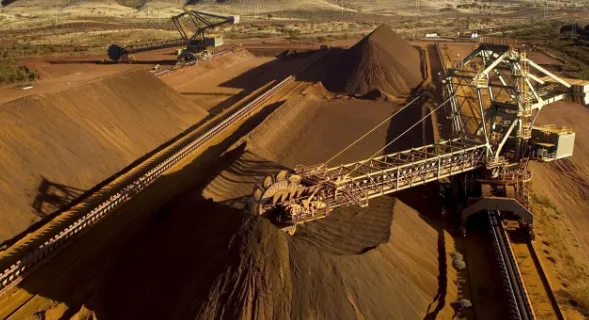
Australia’s mining sector drives nearly 10% of national GDP and dominates export revenue [The Australian]
The expansion followed a prolonged commodity upswing. Investment surged during the 2005–11 boom. Mining investment averaged about 1.5% of GDP over five decades. It later peaked at 9% of GDP in 2012. That rise reshaped national income patterns and business investment trends.
Export Earnings Driven by Resources
Australia’s export profile is dominated by commodities. Resources, including minerals, metals and energy, comprise 57.4 percent of total exports. The sector generated AU$405 billion in export earnings in 2023-24.
Data from the Minerals Council of Australia show mining contributed 62 percent of national export revenue in that period. Iron ore, coal and liquefied natural gas remain the largest contributors. Lithium and other critical minerals have expanded their share in recent years.
As commodity prices rise, export receipts increase. That flow strengthens national income and trade balances. When prices ease, export values fall and revenue contracts. The cycle feeds directly into corporate earnings and market valuations.
Currency Movements and Terms of Trade
Commodity prices influence the terms of trade and the Australian dollar. Higher export prices increase demand for the local currency. During the last resources boom, the Australian dollar climbed to US$1.10 in 2011.
The appreciation coincided with strong foreign capital inflows. Investors funded large mining expansions and acquired shares in major producers. As profits rose, mining stocks attracted global portfolio investment. When commodity prices retreated, the currency weakened and capital flows moderated.
The central bank has noted on social media that commodity cycles shape exchange rate trends. Posts from the Reserve Bank reference the close link between export prices and currency strength. Those observations reflect long-standing patterns in Australia’s external accounts.
Fiscal Revenue and Public Finances
Mining remains the largest corporate taxpayer in Australia. In 2023-24, the industry paid AU$32.5 billion in company tax. It also delivered AU$26.9 billion in royalties to federal and state governments.
Over the past decade, total tax and royalty payments reached AU$394.6 billion. Government budgets therefore track commodity prices closely. When profits rise, tax receipts expand. When prices fall, fiscal collections ease and budget balances tighten.
Public statements from industry representatives often cite these figures. Tweets from the Minerals Council regularly outline annual tax contributions. Those posts coincide with budget discussions and revenue forecasts. They provide context for fiscal planning during commodity cycles.
Employment, Wages and Supply Chains
Mining employs fewer workers than service industries. However, it offers some of the highest wages in the economy. Direct employment reached 303,300 jobs in 2023-24. Average full-time annual pay stood at AU$158,800.
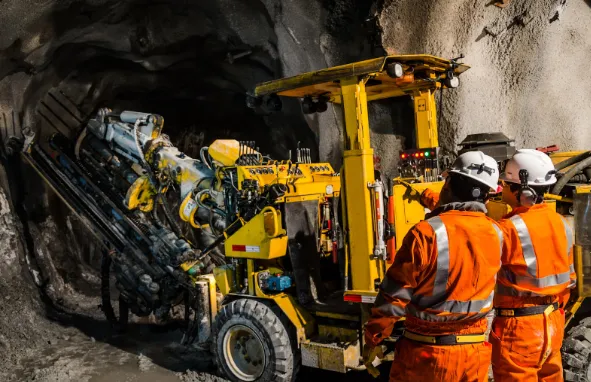
Mining supports over 1.25 million jobs, including direct and indirect employment. [Tool Sense]
When indirect roles are included, mining supported 1.25 million jobs. The sector paid AU$35.4 billion in wages during the year. It also procured more than AU$161 billion in goods and services. Over 63,700 suppliers participated in those supply chains.
As investment rises, labour demand strengthens. Construction, engineering and transport firms experience higher activity. When investment slows, employment growth moderates. These shifts align with commodity price movements and company expansion plans.
Stock Market Weight and Investor Wealth
Mining companies hold a large presence on the Australian Securities Exchange. The Materials sector accounted for 19.1 percent of the S&P/ASX 200 index weight in August 2025. Major producers rank among the exchange’s largest listings.
Because of that weighting, share price movements shape broader index performance. When commodity prices climb, profits increase and dividends expand. Superannuation funds, which hold mining equities, record valuation gains. Household wealth therefore moves with the resources cycle.
During downturns, falling share prices reduce portfolio values. Institutional investors adjust exposure in response to earnings forecasts. Foreign investors also revise allocations based on commodity demand. These portfolio shifts can influence capital flows and the currency.
Monetary Policy and Economic Cycles
Mining cycles interact with monetary policy settings. During the last boom, rising demand lifted wages and inflation pressures. The Reserve Bank responded by raising the cash rate. At the same time, a stronger currency helped moderate import prices.
When commodity prices fell after 2012, mining investment contracted. Growth slowed and wage pressures eased. The central bank then reduced interest rates to support activity. These adjustments illustrate how resource cycles filter through to policy decisions.
Exchange rate movements also affect sector balance. A stronger currency during booms can weigh on manufacturing and tourism. When the dollar weakens, non-mining exports regain competitiveness. This pattern has recurred across successive commodity cycles.
Long-Term Shifts in Commodity Demand
Global decarbonisation trends are reshaping demand patterns. Coal faces structural pressure in several markets. At the same time, lithium and other battery minerals are drawing increased investment. Australia holds large reserves of these materials.

Critical minerals like lithium are becoming central to Australia’s mining future [CBC]
Mining companies have expanded exploration and processing capacity for critical minerals. Investment decisions reflect expectations about energy transitions. However, revenues remain sensitive to global demand conditions, especially from major trading partners.
Governments continue to rely on resource revenue for budget planning. Some policy discussions reference saving windfall income during high-price periods. That approach aims to reduce exposure to commodity downturns. The debate continues as price cycles persist.
Mining stocks, therefore, mirror the broader resources cycle. The sector accounts for nearly 10 percent of GDP and more than half of export income. Investment peaks have reached 9 percent of GDP during booms. At the same time, tax, wage and royalty flows link corporate earnings to public finances. As commodity prices fluctuate, share valuations, capital flows and the currency adjust accordingly.
FAQs
- What role do mining stocks play in Australia’s economy?
Ans. Mining stocks reflect the performance of large resource companies that contribute nearly 10 % of Australia’s GDP and generate more than half of its export earnings, making them a key economic barometer. Mining investment also influences employment, public revenue and the value of the Australian dollar by driving corporate profits and investor inflows.
- Why do mining exports matter for Australia’s trade balance?
Ans. Australia’s export earnings are heavily weighted toward minerals and energy. Resources made up about 57 % of total exports in recent data, with commodities like iron ore, coal and gas leading. High export values support the trade balance and increase foreign currency inflows that strengthen the national accounts.
- How do mining profits affect government revenue?
Ans. Mining companies pay substantial corporate taxes and royalties. In 2023‑24, the industry contributed tens of billions of Australian dollars in company tax and royalty payments, which fund public services and government budgets. Lower commodity prices can reduce these revenues and tighten fiscal space.
- Do mining stocks influence the Australian dollar?
Ans. Yes, commodity price shifts tied to mining company profits tend to affect the terms of trade and demand for Australian dollars. Higher export prices often lead to currency appreciation, while weaker prices can contribute to depreciation, affecting broader economic conditions.
- How do mining companies impact employment in Australia?
Ans. While direct mining employment is smaller than in some service sectors, it offers high wages and supports many indirect jobs. The sector also procures large amounts of goods and services from suppliers, extending income and payroll beyond mine sites.
- Why are mining companies heavily weighted in the ASX 200?
Ans. Mining and materials firms comprise a large portion of Australia’s stock market due to their size and export focus. This means share price movements in leading miners can sway the performance of broad market indices and influence investor wealth.
- Are mining stocks volatile and risky?
Ans. Mining stocks are sensitive to global commodity prices, which fluctuate with supply and demand. This volatility can affect profits, investment decisions and stock valuations, which in turn can influence economic growth and investor confidence.