
Alibaba Group and Amazon are accelerating AI investments in 2026, with both companies earning Strong Buy ratings from Wall Street. While Amazon shows stronger operational momentum, Alibaba stands out for its higher upside potential based on analyst forecasts.
Alibaba and Amazon are intensifying competition in AI and cloud computing in 2026. [LinkedIn]
What Is Driving Alibaba and Amazon’s AI Push in 2026?
Both companies are aggressively investing in artificial intelligence and cloud infrastructure, prioritizing long term growth over short term profits. This reflects a broader shift across the tech sector, where AI capabilities are becoming the primary driver of valuation and competitive advantage.
Amazon entered 2026 with strong momentum, reporting $213.4 billion in Q4 2025 revenue, up 14% year over year. Growth was driven by its cloud division and global e-commerce operations. Alibaba, meanwhile, reported a sharp decline in net income in its latest 2026 earnings, largely due to increased investment in AI and commerce initiatives.
How Strong Is Amazon’s AWS Growth Right Now?
Amazon’s cloud unit remains central to its AI strategy. AWS delivered 24% revenue growth, reaching $35.6 billion for the quarter, with an annualized run rate of approximately $142 billion.
The company has secured major partnerships with firms like OpenAI, Visa, and BlackRock, alongside government contracts. These agreements reinforce AWS’s leadership in enterprise AI infrastructure and provide strong revenue visibility.
Amazon expects Q1 2026 revenue between $173.5 billion and $178.5 billion and guided operating income between $16.5 billion and $21.5 billion. The company plans to spend around $200 billion in 2026, largely on AI and cloud infrastructure.

Amazon Web Services continues to drive the company’s AI growth with expanding global infrastructure. [Reuters]
How Fast Is Alibaba Growing in Cloud and AI?
Alibaba’s Cloud Intelligence Group remains one of its fastest-growing segments, with revenue rising over 30% year over year. This reflects increasing demand for AI-driven services across its ecosystem.
The company’s AI-related product revenue has now recorded ten consecutive quarters of triple-digit growth. Despite this strong momentum, Alibaba’s stock declined following earnings due to investor concerns around short-term profitability.
This highlights a key theme: Alibaba is sacrificing near term earnings to build long term AI capabilities.
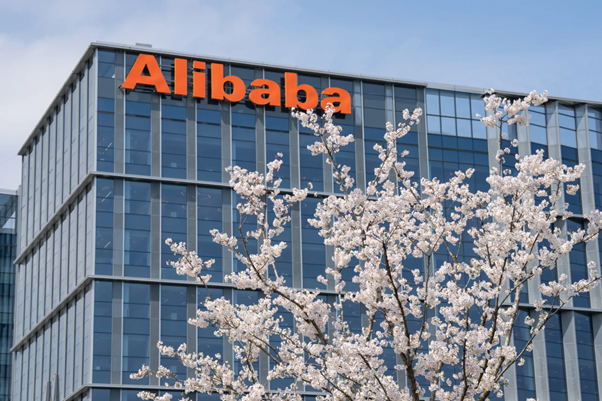
Alibaba Cloud is rapidly expanding, fueled by strong demand for AI-driven services. [Technode]
Which Stock Has More Upside According to Analysts?
Wall Street projections show a clear gap in upside potential.
Alibaba offers roughly 51% upside based on average analyst price targets, reflecting its discounted valuation and strong AI growth outlook. In contrast, Amazon offers about 35% upside, supported by its consistent performance and market leadership.
Both companies hold Strong Buy ratings, but Alibaba’s higher upside comes with greater risk.
Why Does Amazon Score Higher on Quality Metrics?
Amazon outperforms Alibaba on key composite metrics, including analyst confidence and earnings consistency. It maintains a Strong Buy rating supported by a larger analyst base and more stable financial performance.
Its diversified revenue streams, including e-commerce, cloud, and advertising, generate predictable cash flow. This positions Amazon as a more stable option for investors seeking lower risk exposure to AI growth.
What Risks Should Investors Consider?
Risk remains a major differentiator between the two companies.
Alibaba faces ongoing geopolitical challenges, including US-China tensions and export restrictions on advanced AI chips. These factors can trigger sudden volatility and impact long-term growth.
Amazon, while not risk-free, benefits from global diversification and a more stable regulatory environment. However, its heavy AI spending could pressure margins in the near term.
How Do Valuation and Shareholder Returns Compare?
Alibaba trades at a lower valuation, with a price to sales ratio of around 2.29x compared to Amazon’s 2.61x. This discount reflects both its growth potential and higher risk profile.
Unlike Amazon, Alibaba returns capital to shareholders through dividends and share buybacks. Amazon continues to reinvest profits into expansion, particularly in AI and cloud infrastructure.
Alibaba has also entered an investment phase, warning that profitability may fluctuate as it continues to fund long term AI growth.
Also Read: ASX Dividend Shares to Buy for Passive Income Now
Final Verdict: Alibaba or Amazon in 2026?
Alibaba offers greater upside potential, making it appealing for investors with higher risk tolerance and a longer investment horizon. Its strong AI and cloud growth, combined with a discounted valuation, create a high reward opportunity.
Amazon, however, remains the more stable investment. Its leadership in cloud computing, strong partnerships, and diversified revenue streams provide consistent growth with lower risk.
Ultimately, the decision depends on investor priorities: higher potential returns with Alibaba or stability and reliability with Amazon.
FAQs
Q1: Which stock has higher upside in 2026?
A1: Alibaba, with about 53% upside based on analyst estimates.
Q2: Which company leads in AI today?
A2: Amazon, due to AWS dominance and enterprise adoption.
Q3: Why is Alibaba considered riskier?
A3: Because of geopolitical tensions and regulatory uncertainty.
Q4: Does Amazon pay dividends?
A4: No, Amazon reinvests profits into growth.
Q5: Is Alibaba still growing despite lower profits?
A5: Yes, especially in cloud and AI, which are expanding rapidly.
Disclaimer
This article is published by Colitco and is for informational and educational purposes only. It does not constitute financial, investment, or professional advice. Any references to Alibaba Group and Amazon are based on publicly available information at the time of publication and may be subject to change. Colitco and its contributors do not guarantee the accuracy or completeness of the information provided and accept no liability for any losses or damages arising from its use. Readers should conduct their own independent research and consult a qualified financial advisor before making any investment decisions.
Sources
https://www.alibabagroup.com/document-1930116148192346112
https://www.tipranks.com/stocks/baba/forecast
Last modified: April 4, 2026