
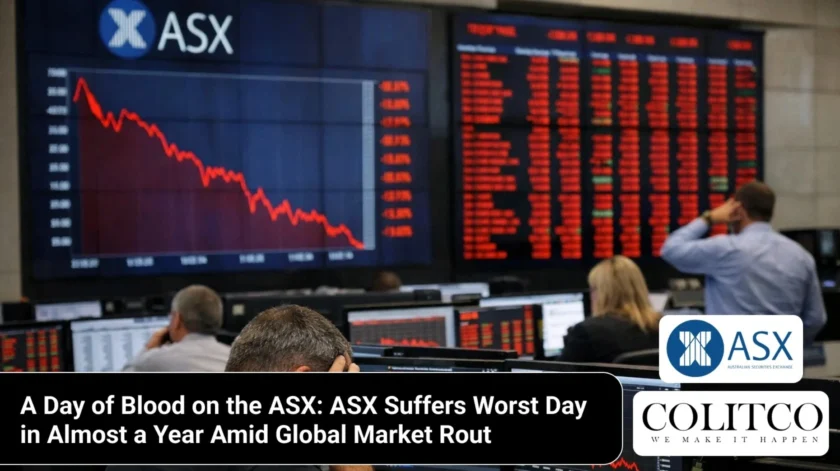
Friday started like any other trading day in Australia, until by midday, and especially by afternoon, screens turned blood-red amid a heavy sell-off. On February 6, a wave of global financial fear, triggered by collapsing commodities, plunging cryptocurrency markets, and rising interest rates, slammed into the ASX. It dragged every sector into the red. A$55-70 billion got wiped off from the market in a single day.
ASX 200 slumped 2.03 per cent, falling 180.4 points. It became the biggest one-day plunge since the “Liberation Day” tariff shock in April 2025.
But the Australian market wasn’t alone in this freefall. Markets across Asia, Europe, and the United States were also under heavy pressure, reflecting a synchronised global retreat from riskier assets.
For the first time in months, all 11 ASX sectors finished in negative territory. It showed the scale and breadth of the sell-off.
The hardest-hit sectors were:
- Real Estate: -3.78%
- Information Technology: -3.36%
- Telecommunications: -2.76%
- Energy: -2.71%
- Materials: -2.62%
Even traditionally defensive areas such as Healthcare (-1.16%) and Financials (-1.22%) were unable to escape the downturn.
IG market analyst Tony Sycamore described the day as part of a broader “contagious” market collapse that began in global commodity markets.
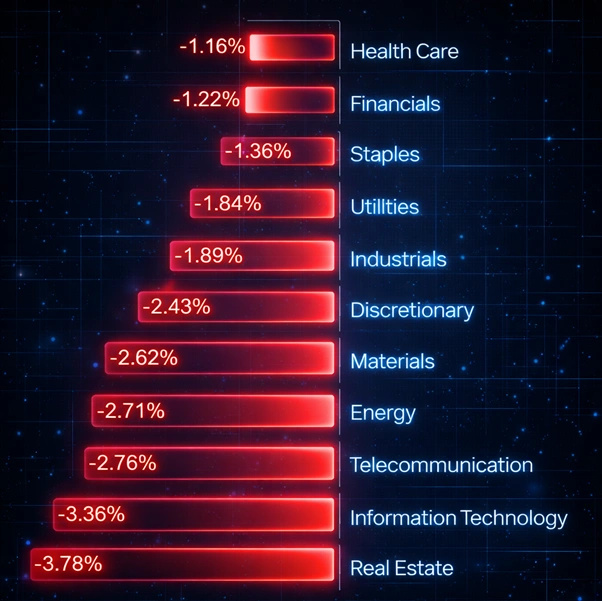
Figure 1: All sectors turned red on Friday, February 6, 2026
Commodities collapse hits Australia hard
One of the major reasons for the sell-off was a sharp plunge in precious and industrial metals over the previous weekend. More than US$15 trillion (A$21 trillion) was wiped from gold and silver markets in just 24 hours. This was an unprecedented shock that rattled investors worldwide.
Iron ore prices also fell below US$100 per tonne for the first time in six months, landing at US$99.50, putting pressure on Australia’s major miners.
- BHP fell 3.12% to $48.79
- Fortescue Metals slipped 1.16% to $21.23
- Rio Tinto was flat at $157.08 after walking away from a proposed $300 billion merger with Glencore
Uranium producers were among the worst performers amid fears that demand for nuclear energy may not grow as rapidly as expected:
- Paladin Energy: -10.92% to $11.01
- Deep Yellow: -12% to $2.20
- NextGen Energy: -5.63% to $15.60
Banks and healthcare dip, but hold up relatively better
Australia’s major banks fell, though less sharply than the broader market:
- Commonwealth Bank: -0.23% to $158.91
- Westpac: -1.20% to $39.43
- NAB: -1.57% to $43.36
- ANZ: -1.52% to $37.01
In healthcare, results were mixed:
- CSL: -0.41% to $180.50
- Sigma Healthcare: -0.95% to $3.13
- ResMed: +1.23% to $37.92 (one of the few bright spots on the day)
Bitcoin crash was another reason
The sell-off was amplified by the turbulence in cryptocurrency markets. Bitcoin plunged more than 20 per cent this week, losing nearly half its value from its October 2025 peak.
Although crypto is separate from traditional markets, its collapse has heightened fears about broader financial instability and reduced investor appetite for risk.
RBA interest rate rise adds pressure
Adding to market stress was the Reserve Bank of Australia’s decision to lift interest rates earlier in the week. Higher borrowing costs tend to dampen corporate investment, slow consumer spending, and weigh on share prices.
RBA Governor Michele Bullock defended the move before a parliamentary economics committee, arguing that tighter policy was necessary to contain inflation, but markets clearly reacted negatively.
Also Read: Atlassian Shares Fall Despite Q2 Earnings Beat and Cloud Revenue Growth
Australian dollar bucks the trend
In a surprising twist, the Australian dollar rose 1.26 per cent to 70.14 US cents, even as local equities tumbled. Analysts suggest this may reflect weakness in the US dollar rather than outright strength in the Australian economy.


