
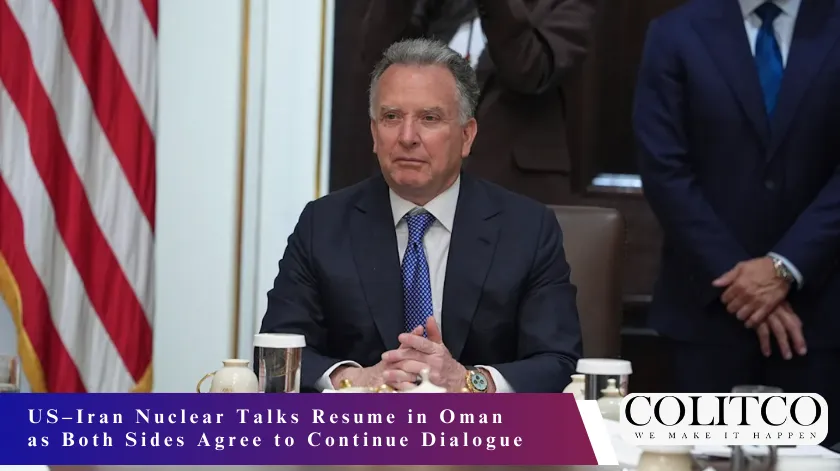
Iran and the United States held indirect nuclear talks in Muscat on February 6, 2026, marking a renewed diplomatic contact after months of heightened tension. Both sides agreed to continue discussions following consultations in their respective capitals, according to officials familiar with the meeting.
Indirect Negotiations Held Under Omani Mediation
The talks took place in Oman’s capital with Omani officials acting as intermediaries between the two delegations. Iran’s Foreign Minister Abbas Araghchi led Tehran’s team, while the United States delegation included senior representatives from Washington.
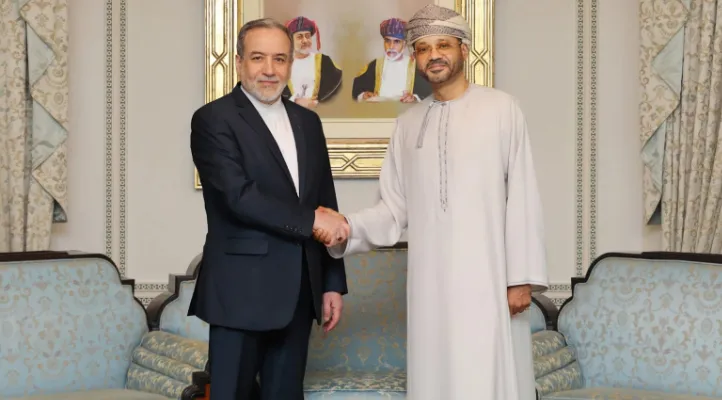
Iran’s Foreign Minister Abbas Araghchi led his country’s delegation during the indirect talks in Oman. [Middle East Eye]
The discussions were conducted indirectly, meaning Iranian and American officials did not sit in the same room. Instead, messages were exchanged through Oman’s foreign minister, who facilitated communication throughout the session.
Oman confirmed its role as mediator and stated that the objective was to create appropriate conditions for further diplomatic engagement. The Sultanate has historically hosted backchannel talks between the two countries during periods of strained relations.
Focus Limited to Iran’s Nuclear Programme
According to Iranian officials, the Muscat meeting concentrated solely on Iran’s nuclear programme. Other regional or military matters were not included in the agenda during this round of negotiations.
Tehran has maintained that discussions should remain confined to nuclear-related issues. This position was reiterated during the Oman talks, where the scope was clearly defined from the outset.
U.S. representatives participated in discussions aimed at exploring pathways for structured negotiations. However, no detailed framework or binding commitments were announced following the session.
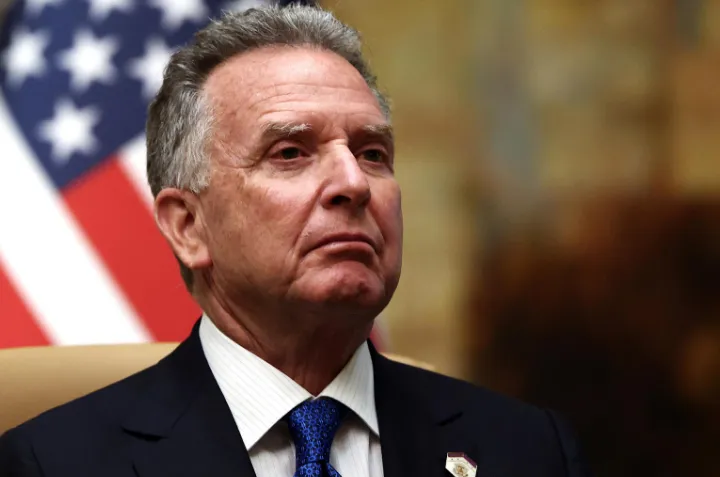
The United States delegation, including Special Envoy Steve Witkoff, participated in indirect negotiations with Iran. [CNN]
The absence of broader agenda items reflected the cautious approach adopted by both sides at this stage. As a result, the meeting centered on restarting diplomatic communication rather than finalizing technical agreements.
Iranian Officials Describe Talks as Constructive
After the meeting, Abbas Araghchi addressed Iranian media and described the talks as a constructive beginning. He stated that further engagement would depend on consultations with leadership in Tehran.
He also noted that overcoming longstanding distrust remains essential for progress in future negotiations. However, he did not outline specific timelines for the next round of talks.
During the negotiations, Araghchi shared updates on social media regarding Iran’s participation. In one post, he wrote that Iran had entered discussions with caution while protecting its national interests.
The tweet circulated widely across regional media platforms and was referenced during live coverage of the talks. The message reinforced Tehran’s stated commitment to indirect diplomatic engagement.
Background of Escalation Before Talks
The Oman talks followed months of strained relations between Washington and Tehran. Tensions escalated in mid-2025 after military actions targeted Iranian nuclear facilities, disrupting earlier diplomatic efforts.
Subsequently, both countries reduced formal communication channels. The Muscat meeting therefore marked the first structured diplomatic exchange since that escalation.
Regional security concerns have continued to shape the broader environment surrounding US–Iran relations. Military deployments and political rhetoric in the region have contributed to ongoing uncertainty.
Against this backdrop, both sides returned to indirect talks under Omani facilitation. The meeting was framed as an initial effort to reopen dialogue rather than resolve outstanding disputes.
Oman Reaffirms Role in Diplomatic Facilitation
Oman’s foreign ministry confirmed that it hosted separate meetings with each delegation. Officials stated that the goal was to support continued diplomatic engagement between the two countries.
The Sultanate emphasized its longstanding position as a neutral facilitator in regional disputes. Muscat has previously served as a venue for discussions involving nuclear negotiations.
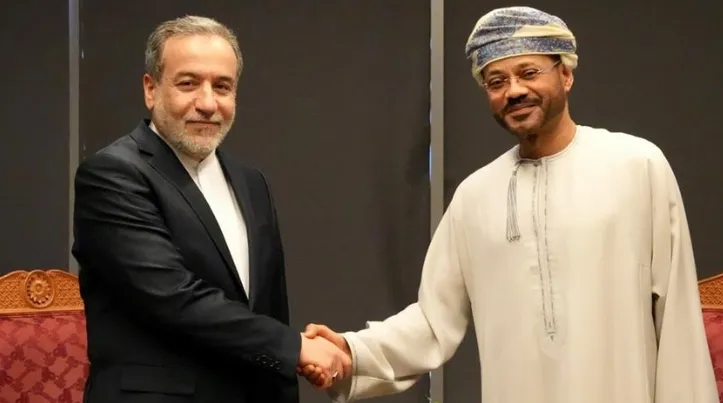
Oman facilitated the talks, with its foreign minister acting as intermediary between the two sides. [Anadolu]
Omani representatives indicated that further discussions could take place once both capitals complete internal consultations. No official date was announced for a subsequent meeting.
The mediation process involved relaying positions and proposals between delegations throughout the day. This structure mirrored previous indirect exchanges held in Oman during earlier diplomatic phases.
Next Steps Dependent on Capital Consultations
Following the conclusion of talks, both delegations returned to their respective capitals for consultations. Iranian officials stated that leadership would review the discussions before confirming future engagement.
U.S. officials similarly indicated that internal evaluations would determine the timeline for further talks. No public statements outlined specific proposals agreed upon during the session.
Diplomatic observers noted that the Muscat meeting established a channel for continued communication. However, substantive decisions remain pending as both governments assess the outcomes.
Future negotiations are expected to build on the initial exchanges held in Oman. For now, both sides have limited their comments to confirming the continuation of dialogue.
Also Read: Bill Gates Apologises for Time Spent with Jeffrey Epstein, Denies Claims in Newly Released DOJ Files
Continued International Attention on Nuclear Talks
The resumption of US–Iran nuclear talks in Oman has drawn attention from regional and international stakeholders. Governments across the Middle East are closely monitoring developments.
Although the meeting did not produce immediate agreements, it reopened a diplomatic track that had been inactive for months. This step provides a framework for potential future engagement.
As discussions move back to Washington and Tehran, the focus remains on whether subsequent talks will address specific nuclear measures. Until then, officials have confirmed only that dialogue will continue.
The Muscat session therefore marks a renewed phase in US–Iran nuclear diplomacy. Further developments are expected once both governments conclude internal consultations and confirm the next round of talks.
FAQs
- What are the US–Iran talks in Oman about?
These discussions focus on renewing diplomatic engagement concerning Iran’s nuclear programme, with emphasis on indirect dialogue mediated by Oman after tensions escalated in 2025.
- Why are the talks held indirectly instead of face‑to‑face?
Iran and the United States chose an indirect format in which messages are passed through Omani mediators, reflecting ongoing mistrust and the sensitivity of issues being discussed.
- Who is mediating the negotiations between Iran and the US?
Oman is acting as the mediator for the discussions in Muscat, with its foreign minister facilitating communication between the two parties.
- Who are the key figures participating in the talks?
Iran’s Foreign Minister Abbas Araghchi leads Tehran’s delegation, while the U.S. side is represented by Special Envoy Steve Witkoff and other senior advisers.
- What issues are being discussed in the Oman talks?
The negotiators are concentrating specifically on Iran’s nuclear programme. Tehran insists that broader issues such as missiles or regional policy not be included at this stage.
- What has been agreed so far in these negotiations?
After the recent discussions, both sides agreed to continue negotiations and return to their capitals for consultations before determining the next steps.
- Have previous rounds of nuclear talks taken place?
Yes. Iran and the United States have held multiple rounds of indirect nuclear negotiations in Oman and elsewhere since 2025 under Omani mediation.


