
Just a year ago, the crypto industry was practically throwing a coronation ball in Washington. Executives who once wore hoodies to conferences were dressed in tuxedos and gowns, celebrating what they believed was the arrival of America’s first true “crypto president.” Donald Trump had embraced digital assets on the campaign trail, promising regulatory clarity and an end to what many in the sector saw as years of hostility from Washington.
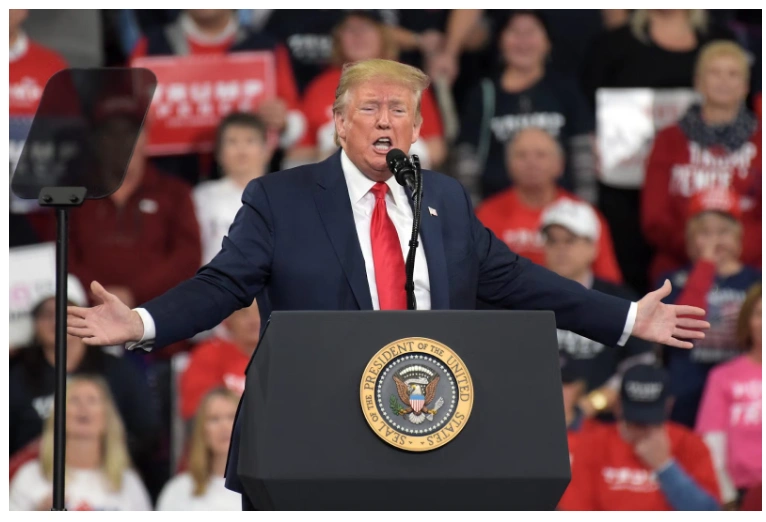 President Donald Trump’s expanding crypto ventures are drawing fresh scrutiny over ethics and regulation. [Source: WHYY]
Then, halfway through the celebration, phones started lighting up. Trump had launched his own memecoin.
By the end of the night, the token had reportedly crossed a $1 billion valuation. Some people cheered. Others quietly stared at their screens, already sensing this might not end well.
From Branding Move to Political Risk
At first, it looked like classic Trump branding. He has put his name on everything from skyscrapers to steaks. Why not crypto? But blockchain is not just another product line. It is a financial ecosystem that claims to value transparency, decentralization, and independence from centralized power. When a president launches a token tied directly to his name and financial interests, it creates uncomfortable questions.
The memecoin was only the beginning. The Trump family’s involvement with World Liberty Financial, a crypto platform tied to his broader digital asset push, raised eyebrows across Washington. Critics argued that crypto created a new pathway for influence that is far more fluid than traditional lobbying or campaign donations. With a digital wallet and internet access, anyone in the world can move large sums of money in seconds.
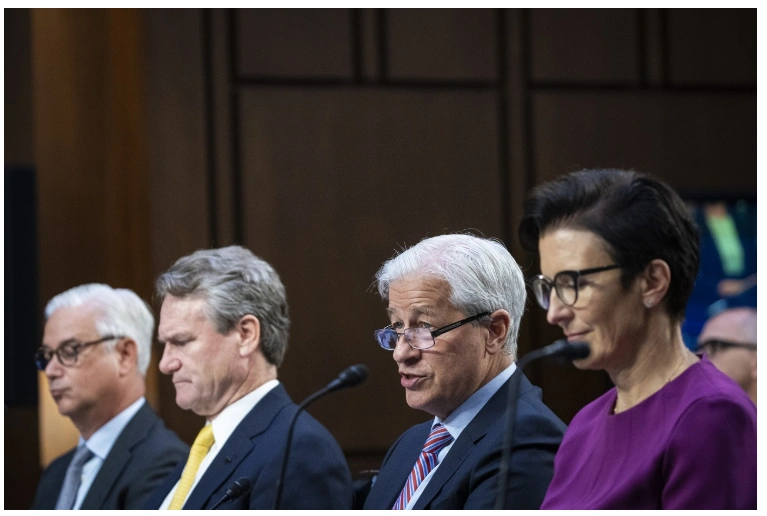 Crypto executives celebrated regulatory optimism in Washington before controversy reshaped the narrative. [Source: Fox Business]
Selling Access in the Digital Age
Reports later revealed that top holders of Trump’s memecoin were granted access to a private audience with the president. Even if technically legal, the optics were explosive. It fed into a narrative that crypto was being used not just as an innovation tool but as a mechanism for proximity to power.
The transparency of blockchain does not automatically solve the problem. Wallet addresses do not always reveal real world identities. That gray area is enough to worry ethics experts who see digital assets as a potential workaround to traditional disclosure systems.
The $500 Million Deal That Changed the Conversation
Then came the bigger shock.
Major financial reporting revealed that individuals connected to a member of the Abu Dhabi royal family agreed to funnel $500 million into World Liberty Financial in exchange for a 49 percent ownership stake. The agreement was reportedly signed just days before Trump’s inauguration.
If accurate, it marked an extraordinary moment in American politics. A foreign government linked investor taking a massive stake in a company associated with an incoming president is not business as usual. It is geopolitical dynamite.
Months later, the administration approved access to advanced US semiconductor technology for the United Arab Emirates, a move that had previously drawn security concerns. Representatives of World Liberty Financial denied any connection between the investment and policy decisions. Still, the timing left critics unconvinced.
Is Trump Becoming a Liability for Crypto?
For the blockchain industry, the damage may not be immediate but it is real. Crypto has spent years trying to clean up its image after exchange collapses, fraud scandals, and wild speculative bubbles. Institutional investors were finally beginning to treat digital assets as serious infrastructure rather than a casino. Now the sector risks being tied to political controversy at the highest level.
The uncomfortable question hanging in the air is whether Trump is becoming a liability for crypto.
The industry poured enormous sums of money into the 2024 election cycle. The payoff was supposed to be regulatory clarity and a friendlier environment for innovation. Instead, the Clarity Act has reportedly stalled in the Senate as lawmakers push for ethics provisions that would bar presidents from profiting off crypto holdings while in office.
Opposition is growing louder. Democrats are demanding stricter guardrails. Even some neutral observers are questioning whether the industry moved too quickly into political alignment without considering long term reputational risk.
Market Pressure and Public Perception
Meanwhile, the markets are not offering much reassurance. Bitcoin has struggled compared to previous highs. Retail enthusiasm appears softer than in prior cycles. While macroeconomic forces play a major role, politics adds another layer of uncertainty.
For everyday Americans, crypto is increasingly associated with Trump himself. That may energize part of the market, but it also alienates others. Financial technologies thrive on broad trust. When they become partisan symbols, that trust narrows.
There is also a deeper irony. Crypto was born out of distrust in centralized authority. Its early evangelists championed independence from governments and financial elites. Now the industry finds itself closely intertwined with presidential branding and global power politics.
Also Read: Australia Attends Washington Summit as Floor Pricing Debate Intensifies
A Defining Moment for Blockchain
This is not necessarily the end of crypto’s growth story. Institutional adoption continues. Tokenization projects are expanding. Central banks are experimenting with digital currencies. The underlying technology is not disappearing.
But perception shapes policy. Policy shapes capital flows. And capital flows determine which projects survive.
If the public begins to see blockchain not as neutral infrastructure but as a vehicle for political self enrichment or foreign entanglement, regulators may feel justified in tightening oversight. That could slow innovation just as the sector is attempting to mature.
The crypto industry wanted legitimacy. It got proximity to power instead. Those are not the same thing.
Whether Trump ultimately helps or harms blockchain will depend on how these controversies unfold and how industry leaders respond. They can double down on political alignment, or they can refocus on governance, transparency, and distance from personality driven branding.
For now, one fact is hard to ignore. Crypto and Trump are linked in the public mind more than ever before. And if this scandal deepens, the fallout will not stop at one memecoin.
FAQs
- What is Trump’s crypto scandal about?
The controversy centers on Donald Trump’s involvement in crypto ventures, including a memecoin and a platform called World Liberty Financial. Reports claim a $500 million investment linked to foreign interests was made shortly before his inauguration, raising ethical and political concerns.
- What is World Liberty Financial?
World Liberty Financial is a crypto-focused platform associated with the Trump family. It reportedly attracted significant foreign investment and is part of Trump’s broader involvement in digital assets.
- Did Trump launch a memecoin?
Yes, Trump launched a memecoin that quickly surged in market value. Reports suggest top holders of the token were later granted access to a private event with the president, fueling criticism about potential conflicts of interest.
- Why is the $500 million deal controversial?
The reported $500 million investment involved individuals connected to a member of the Abu Dhabi royal family. Critics argue that a foreign-linked entity taking a large ownership stake in a company tied to an incoming president raises serious ethical questions.
- How could this impact the blockchain industry?
The controversy may increase regulatory scrutiny on crypto markets. Lawmakers are pushing for stricter ethics provisions, and political backlash could slow progress on digital asset legislation.
- What is the Clarity Act?
The Clarity Act is proposed legislation aimed at defining regulatory rules for digital assets in the United States. It has reportedly stalled amid debate over ethics provisions tied to presidential crypto holdings.
- Has the scandal affected Bitcoin prices?
While crypto markets are influenced by many factors, political uncertainty and regulatory risk can impact investor sentiment. Bitcoin has recently traded below previous highs amid broader market pressures.
- Could this lead to stricter crypto regulation?
Yes, lawmakers may use the controversy to justify tighter oversight, particularly around conflicts of interest, foreign investment transparency, and political figures holding digital assets.


