
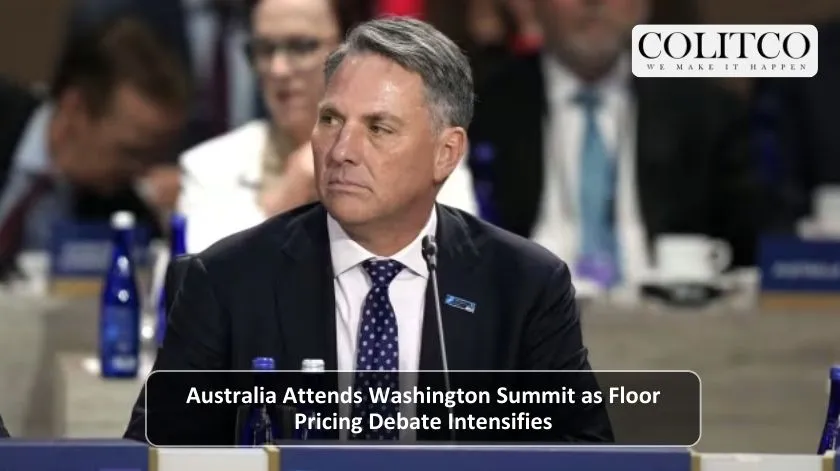
Australia will join nearly 20 nations in Washington this week for a critical minerals summit focused on securing supply chains for Western economies. Federal Resources Minister Madeleine King will attend discussions centred on rare earths, pricing mechanisms, and coordinated action.
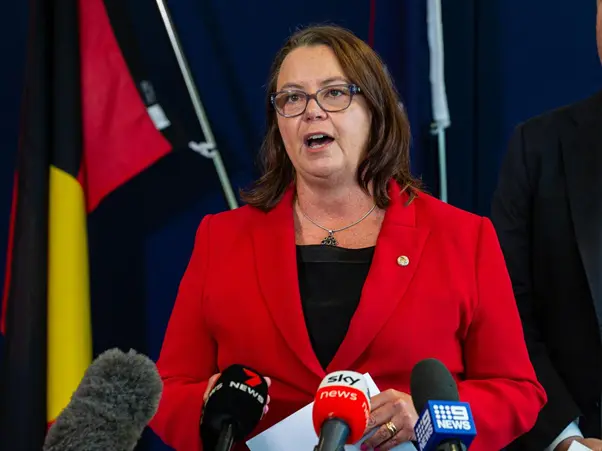
Federal Resources Minister Madeleine King will represent Australia at the Washington critical minerals summit. (Source: The West Australian)
Washington Summit to Address Supply Chain Security
The summit will be hosted in Washington DC by US Secretary of State Marco Rubio. It will bring together G7 members and several Indo-Pacific and European partners.

US Secretary of State Marco Rubio is hosting the multi-nation critical minerals summit in Washington, DC. (Source: The New York Times)
Participating nations are expected to include the United States, United Kingdom, Japan, France, Germany, Italy, and Canada. Other countries likely attending include India, South Korea, Mexico, Australia, New Zealand, and potentially Argentina.
The meeting follows recent G7 talks on reducing dependency in critical minerals supply chains. Officials are expected to discuss coordination measures and possible pricing frameworks.
The focus remains on strengthening Western access to rare earths and other strategic materials. These materials are used in advanced technologies and defence systems.
Floor Pricing Debate Gains Attention
A key issue expected at the summit is the discussion of floor pricing mechanisms. Floor pricing would set minimum price thresholds for certain rare earths and minerals.

Rare earth minerals and battery materials are central to discussions on pricing safeguards and supply chain security. (Source: Mining and Minerals Today)
Reports indicate the United States Government may not support floor pricing schemes. Reuters previously reported that congressional constraints could limit such measures.
However, Australia has indicated it will continue pursuing its own policy approach. Minister King said domestic settings would not depend on decisions made elsewhere.
In a post shared on X, coverage of the summit referenced floor pricing as part of the wider policy debate. The post linked to discussions around strategic mineral reserves and pricing safeguards.
The debate comes as governments seek tools to counter market volatility and supply concentration.
Australia’s Critical Minerals Strategic Reserve
Earlier this month, the Federal Government confirmed implementation of its Critical Minerals Strategic Reserve. The program is expected to be operational by the end of the year.
The reserve aims to secure supply of key minerals essential to Australia’s economy and national security. It will also support partner nations, including the United States.
Under the proposed structure, the reserve will secure rights to minerals produced domestically. Those rights can then be on-sold to meet domestic and international demand.
Funding arrangements have already been outlined. Of the total commitment, $1 billion will be allocated through the expanded $5 billion Critical Minerals Facility.
A further $185 million has been set aside for selective stockpiling and operational costs. The facility provides government-backed loans and equity support to eligible projects.
China’s Dominance in Processing Markets
China currently controls a large share of global rare earth processing capacity. It also dominates the processing and sale of several other critical minerals.
Beijing has previously imposed export bans on certain rare earth materials. These actions have prompted Western governments to review supply security.
Gallium has received particular attention in recent months. According to the Centre for Strategic and International Studies, China produces around 98 percent of global gallium.
China banned gallium exports to the United States after chip and equipment restrictions were introduced. Gallium is used in semiconductors, electronics, and medical applications.
Industry analysis suggests Australia could expand gallium recovery through alumina refining operations in Western Australia.
US Reliance and Policy Measures
The United States remains heavily reliant on foreign mineral imports. As of 2024, it was fully dependent on imports for 12 critical minerals.
It also relied on foreign sources for more than half of another 29 minerals. These figures have informed policy discussions in Washington.
President Donald Trump has stated that critical minerals imports may threaten US national security. In a recent proclamation, he said he was considering a floor price model.
He had previously suggested increased supply could lower prices substantially. However, more recent discussions indicate consideration of minimum pricing thresholds.
US officials have also promoted diversification efforts through initiatives such as Pax Silica. These programs aim to reduce single points of failure in supply chains.
International Coordination and Expanding Participation
The Washington gathering represents one of the broadest critical minerals meetings to date. Unlike previous formats, it may include nations from Central Asia and Africa.
European Union representation will include Commissioner Stéphane Séjourné, and India’s Foreign Minister Subrahmanyam Jaishankar is also expected to attend.
Secretary Scott Bessent reaffirmed allied cooperation on critical minerals supply chains in a post on X, reinforcing shared commitment among attending nations.
At today’s Finance Ministerial hosted by the @USTreasury, I was pleased to hear a strong, shared desire to quickly address key vulnerabilities in critical minerals supply chains.
I am optimistic that nations will pursue prudent derisking over decoupling and understand well the… pic.twitter.com/vh23ljcDRI
— Treasury Secretary Scott Bessent (@SecScottBessent) January 12, 2026
The summit comes amid trade tensions between the United States and several partners. However, critical minerals cooperation remains an area of shared interest.
Also Read: Resolution Minerals Ltd Quarterly Activities Report December 2025 | Golden Gate Gold Discovery
Priority Minerals and Market Strategy
Australia has identified antimony, gallium, and rare earths as early priorities under its reserve program. These minerals are considered essential for technology and defence supply chains.
Gallium has a limited shelf life of about one year. This characteristic affects stockpiling strategies and supply planning.
The reserve model combines financing support with selective stockpiling. It also allows resale to domestic and international buyers.
Officials have indicated that Australia’s approach will proceed regardless of US decisions on floor pricing. Minister King said domestic policy would remain focused on national supply security.
As the summit approaches, governments are expected to refine policy coordination. Pricing mechanisms and reserve strategies remain central topics on the agenda.
The Washington meeting signals continued Western efforts to stabilise access to critical minerals. Further announcements may follow after ministerial discussions conclude.
FAQs
- What is the Washington critical minerals summit about?
The Washington critical minerals summit brings together around 20 nations to discuss securing supply chains for rare earths and strategic minerals. The meeting focuses on cooperation among Western economies to reduce supply vulnerabilities and improve access to key materials.
- Why is Australia attending the critical minerals summit?
Australia is attending to strengthen partnerships and promote its Critical Minerals Strategic Reserve program. The government aims to position Australia as a reliable supplier of rare earths and other strategic minerals to allied nations.
- What is floor pricing in critical minerals?
Floor pricing refers to setting a minimum price for certain minerals. This approach is intended to prevent prices from falling below sustainable production levels and to support domestic mining and processing industries.
- Does the United States support floor pricing for rare earths?
Reports indicate the United States may not support formal floor pricing mechanisms due to congressional constraints. However, discussions are ongoing regarding alternative pricing or reserve strategies.
- What is Australia’s Critical Minerals Strategic Reserve?
Australia’s Critical Minerals Strategic Reserve is a government program designed to secure rights to domestically produced minerals. The reserve will support domestic supply and international demand through resale mechanisms.
- How much funding has Australia committed to its minerals reserve?
Australia has committed $1 billion through the expanded $5 billion Critical Minerals Facility. An additional $185 million has been allocated for selective stockpiling and implementation costs.
- Why is gallium important in critical minerals discussions?
Gallium is used in semiconductors, electronics, and medical technologies. China produces around 98 percent of global gallium, making supply diversification a priority for Western governments.


