
Provaris Energy Ltd (ASX: PV1) (“Provaris” or “the Company”) has delivered substantial progress on its hydrogen and liquid carbon dioxide storage programs during the December 2025 quarter. The Company strengthens its partnership with “K” Line for compressed hydrogen shipping while advancing FEED work with Yinson for large-scale LCO2 tanks.
Provaris resumes fabrication of its H2 prototype tank at the newly commissioned Robotics Innovation Centre in Norway. This marks an essential step for the Company to demonstrate its proprietary tank designs for both hydrogen and carbon dioxide uses while moving toward final marine classification approvals before 2026.
“K” Line Partnership Strengthens Hydrogen Shipping Plans
Provaris and “K” Line continued working on shipping economics and financing structures for compressed hydrogen carriers during the quarter. A team of “K” Line executives from Japan and the United Kingdom visited Norway, holding meetings in Oslo and touring Provaris’ robotics facility in Fiskå.
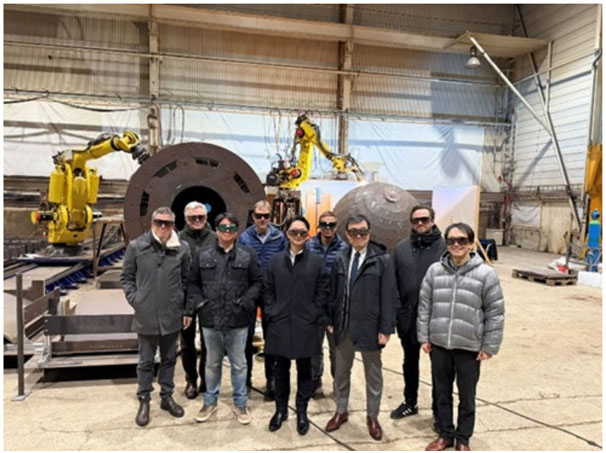
Figure 1: “K” Line delegation visit to Provaris’ Robotics Innovation Centre in Fiskå, Norway, during inspection of the H₂ prototype tank fabrication facility [Provaris Energy Ltd]
Talks began with tank-building yards to assess locations, manufacturing costs, and timing. This work runs alongside the final Class Approvals of the H2Neo™ carrier expected during 2026.
Robotics Innovation Centre Finishes Setup, Resumes Tank Building
Provaris finished setting up its robotic fabrication facility in Fiskå. Fabrication activities resumed on the H2 prototype tank during the quarter. This shift from planning to demonstration of Provaris’ tank design is essential.
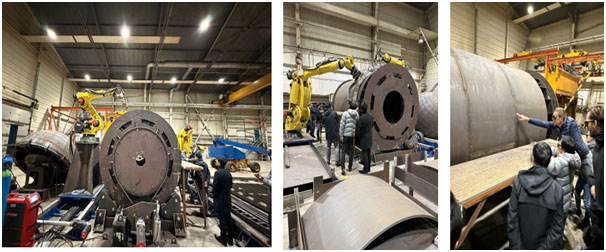
Figure 2: Innovation Centre located in Fiskå, Norway, and an installed robotic cell for the production of the H₂ prototype tank [Provaris Energy Ltd]
Fabrication will continue through the March 2026 quarter, followed by testing procedures aligned with marine classification requirements. Successful testing supports final Class Approval to construct the H2Neo™ carrier.
Site visits from key stakeholders, including DNV and ABS, will continue over the next two quarters. These visits allow classification societies to observe fabrication stages and testing of the prototype tank.
Nordic Hydrogen Export Agreements Extended Through 2026
Provaris and Norwegian Hydrogen AS extended their 2026 working agreement to support the FjordH2 Export Hydrogen Project. Provaris will focus on terminal design, shipping integration, and hydrogen sales structuring.
Progress depends on grid power allocation from the federal regulator Statnett. A decision is expected soon. Work continues while waiting.
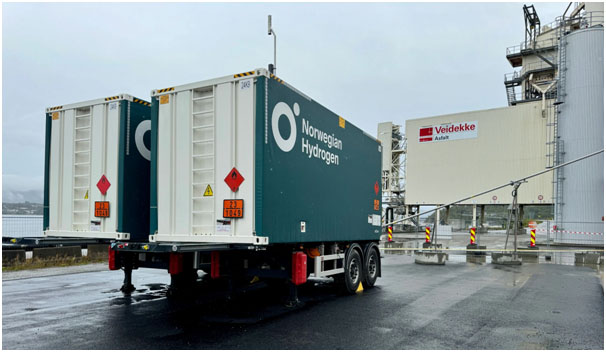
Figure 3: Norwegian Hydrogen AS hydrogen transport containers positioned at an industrial facility, supporting compressed hydrogen logistics and distribution operations [Norwegian Hydrogen AS]
The Term Sheet with Uniper Global Commodities was also extended, giving time to work on sales agreements before 30 June 2026. The “K” Line shipping team is now more involved in FjordH2 talks and other hydrogen export projects.
Uniper’s extension shows continued focus on building cost-effective supply options. This aligns with their recent deal for up to 500,000 tonnes per year of renewable ammonia from India.
German Market Talks Continue with Port and Pipeline Operators
Provaris and Tepsa have continued to review and advance the preliminary Concept Design Study for an initial 40,000 tonnes per annum compressed hydrogen import Project proposed for the site. Workshops were held during the quarter, with follow-up meetings scheduled for the March quarter.
Provaris remains in talks with port and pipeline operators in Germany and the Netherlands about other import points. These discussions focus on connecting to the German core hydrogen pipeline network, planned to be operational by 2030.
LCO2 Tank FEED Stage 1 Delivered to Yinson, Stage 2 Set to Launch
Substantial progress was made during the quarter on the work agreed for FEED Stage 1. This package was delivered to Yinson and DNV in December 2025, with Stage 1 scheduled for completion in January 2026.
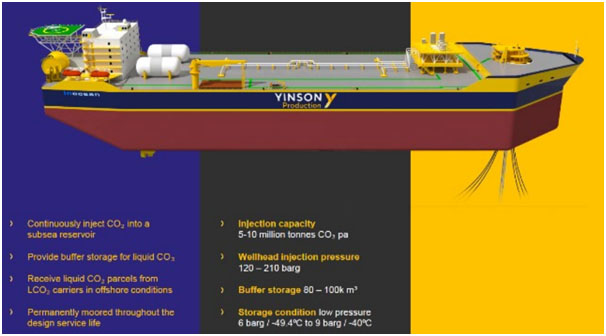
Figure 4: Concept illustration of Yinson Production’s Floating Storage and Injection Unit (FSIU). [Provaris Energy Ltd]
FEED Stage 2 will start in the March quarter, with a completion target for mid-2026. This includes ongoing consultation with DNV on testing procedures and marine classification approvals that align with Yinson’s final investment decision timeline in 2026.
The FEED work covers detailed engineering for a 25,000 cubic metres low-pressure LCO2 tank. The tank is designed for maritime applications. It will connect with Yinson’s planned 100,000 cubic metres offshore FSIU to work at their 10 million tonnes per year Havstjerne CCS Project being developed in Norway.
Fabrication Planning with Asian Yards Underway
Talks began with selected building yards to focus on the early design of a detailed robotic production facility. This includes cost estimates to build Provaris/Yinson LCO2 tanks suitable for Yinson’s FSIU.
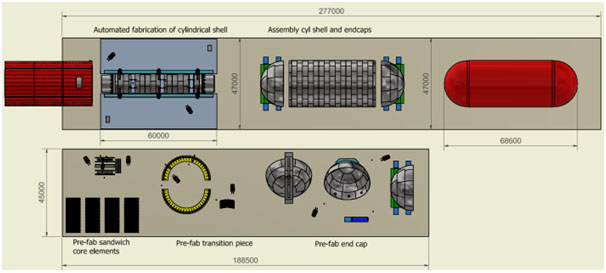
Figure 5: Concept layout of Provaris’ robotic production line for large-scale cylindrical LCO₂ tank fabrication and assembly [Provaris Energy Ltd]
Engaging early with fabricators translates advanced FEED-level tank design into scalable, industrialised fabrication. This allows Provaris and Yinson to assess technical feasibility, manufacturability, cost, and delivery timelines.
Joint Venture Planning Continues for Design Rights and Commercialisation
Work continued during the quarter on setting up a Norwegian Joint Venture Company and related agreements. Provaris will retain 50 per cent ownership in the Joint Venture Company. Yinson’s funding commitment demonstrates strong strategic alignment between both companies and enables Provaris to leverage prior hydrogen tank design work to accelerate the development program.
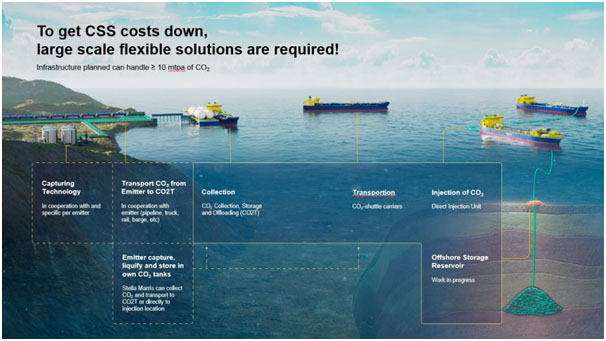
Figure 6: Havstjerne CCS integrated carbon capture, transport, storage, and injection supply chain concept highlighting offshore CO₂ transportation and injection infrastructure [Provaris Energy Ltd]
Yinson remains committed to developing the entire supply chain through its 40 per cent ownership of the 10 million tonnes per year Havstjerne CCS Project, being developed in Norway.
Hydrogen Market Shows Strong Long-Term Growth
The global hydrogen generation market was estimated at US$204.86 billion in 2025 and is projected to reach US$401.28 billion by 2033. This represents a compound annual growth rate of 8.6 per cent from 2026 to 2033.
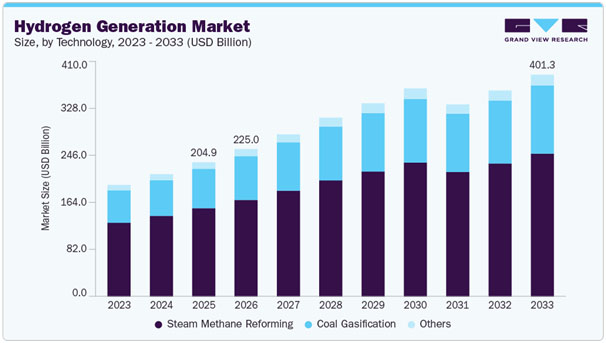
Figure 7: Global hydrogen generation market growth forecast (2023-2033), illustrating rising adoption across industrial and energy sectors [Grand View Research]
Growth is primarily driven by the rising adoption of hydrogen as a clean, sustainable energy source across the industrial, transportation, and power generation sectors. Asia Pacific dominated the global hydrogen generation market, accounting for the largest revenue share of 35.6 per cent in 2025.
Money and Financial Position
Provaris reported cash of $733,000 as at 31 December 2025. The Company raised $500,000 during the quarter, which included $125,000 from the Board.
A convertible bond facility stays in place as a backup funding source with $2.5 million still available. A first tranche of $500,000 Convertible Bonds was drawn under facility agreements with a two-year term to maturity. As of the date of the quarterly report, the face value of bonds still outstanding is $200,000, maturing in May 2026.
Managing Director Comments on Quarter
Martin Carolan, Managing Director and CEO of Provaris, commented on the quarter’s progress: “The December 2025 quarter marked further progress across both our Hydrogen and LCO2 programs, reinforcing and de-risking our technical readiness and commercial partnerships ahead of 2026 milestones, which will create value for shareholders.”

Figure 8: Provaris Energy Managing Director and CEO Martin Carolan [Provaris Energy Ltd]
He added: “The establishment of our own robotic fabrication facility in Norway and resumption of H2 prototype tank fabrication enables the demonstration of our proprietary designs for large, layered steel tanks for H2 and LCO2, whilst also supporting final marine classification approvals. Our work with our H2 shipping partner “K” Line and with Yinson for LCO2 continues to deepen, validating Provaris’ strategic role as an enabler of next-generation shipping and storage solutions. As we move into 2026, our focus remains on converting this technical leadership into commercial execution and long-term shareholder value.”
What’s Next for Provaris Energy
The Company will complete fabrication and testing of its H2 prototype tank by March 2026. Final marine classification approval to construct the H2Neo™ carrier is expected to follow successful testing.
FEED Stage 2 for the LCO2 tank is scheduled to commence in March, with completion targeted for mid-2026. This includes ongoing consultation with DNV on testing procedures and Class Approval aligned with Yinson’s investment decision timeline.
Provaris will continue joint work with “K” Line on shipping economics and financing structures for hydrogen carriers. Discussions with German and Northern European stakeholders will also advance commercial frameworks for hydrogen export and import using Provaris’ H2Neo™ carriers.
Investor’s Outlook
Provaris Energy continues to advance its dual-track strategy for compressed hydrogen and liquid carbon dioxide storage and transport solutions. The Company’s partnerships with “K” Line and Yinson provide strategic validation of Provaris’ tank technology and commercial readiness.
Share price activity (as of 30 January 2026):
- Last Price: $0.012 per share
- 52-Week Range: $0.008 to $0.027 per share
- Market Capitalisation: $11.67 million
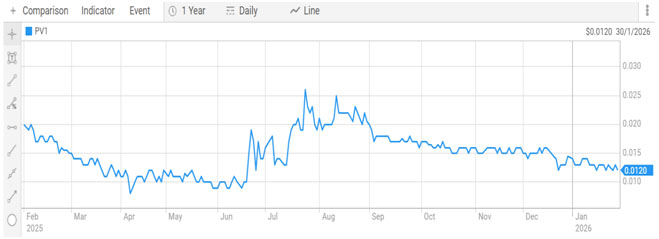
Figure 9: Provaris Energy Ltd (ASX: PV1) share price performance over the past 12 months, as at 30 January 2026 [ASX]
The Company’s next catalysts include completion of H2 prototype tank testing in the March 2026 quarter, commencement of FEED Stage 2 for the LCO2 tank, final Class Approval for the H2Neo™ carrier, and continued engagement with hydrogen export and import stakeholders.
With compressed hydrogen shipping on track for 2026, Provaris is positioned to advance from technical delivery to commercial execution, supported by its robotic fabrication capabilities and strategic partnerships.