
Southeastern Australia experienced unprecedented temperatures on January 27, 2026, with Victoria reaching an all-time high of 48.9°C. Walpeup and Hopetoun recorded the highest readings, surpassing the previous state record of 48.8°C set in 2009.

Satellite view over Walpeup, Victoria, on January 27, 2026, showing record temperatures amid a severe heatwave. (Source: Mothership.SG)
Heatwave Extends Across Multiple States
The Bureau of Meteorology (BoM) confirmed that the heatwave affected Victoria, South Australia, and inland New South Wales. Maximum temperatures exceeded 45°C across the Mallee and Wimmera districts. Many towns experienced their highest readings in over a decade.
South Australia reported extreme values, with Ceduna reaching 49.5°C and Renmark 49.6°C. Inland New South Wales and southwestern Queensland also saw temperatures between 45 and 48°C. Overnight temperatures remained unusually high, offering little relief.
BoM meteorologists linked the heatwave to a stationary high-pressure ridge over central Australia. This system maintained clear skies and light northerly winds, drawing hot continental air southward.
Regional Forecasts and Safety Warnings
Prior BoM forecasts had indicated near-record maximums approaching 49°C in northern Victorian districts, later confirmed by observations. Heatwave warnings classified the event as “severe to extreme” across southeastern Australia.

Authorities monitor a bushfire in Otway Ranges National Park as extreme heat continues in Victoria. (Source: ABC News)
Authorities advised residents to follow health and safety guidance, highlighting risks of heat stress and fire. Fire danger ratings remained elevated, particularly in Victoria and South Australia, where conditions peaked in several districts.
Meteorologist Jonathan How noted concerns over an ongoing bushfire in Otway Ranges National Park. Strong temperatures and gusty winds could worsen the fire, threatening surrounding communities.
Cooling Change Along Southern Coast
Temperatures along Victoria’s southern coast were expected to moderate on January 28, with Melbourne forecast to reach 23°C. Adelaide was predicted to experience slightly warmer conditions, ranging between 31–33°C.
Northern regions, where the cool change would not extend, remained under extreme heat. Parts of outback Queensland could see temperatures approaching 50°C, maintaining hazardous conditions for residents.
Northern Queensland Floods
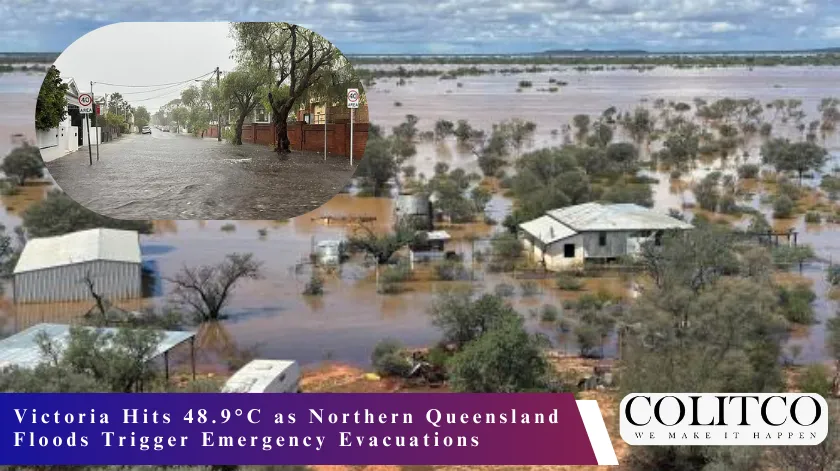
While southern Queensland sweltered, northern areas contended with heavy rainfall caused by a tropical low. The system triggered flash flooding and evacuations along the Gilbert River and Copperfield Dam areas.
The Bureau of Meteorology issued major and moderate flood warnings for multiple river systems. The Lower Flinders and Murray Rivers were under major warnings, while the Upper Flinders, Herbert, Cooper Creek, and Eyre Creek were under moderate alerts.
Emergency services evacuated residents from several properties, including three individuals trapped in vehicles near Greenvale. Helicopters were deployed to airlift affected property owners from flooded areas.
Impact on Small Towns
Einasleigh, a town with fewer than 100 residents, experienced severe inundation after nearby dams and rivers overflowed. Residents were advised to seek higher ground, and a “Leave Immediately” warning was issued for some areas.

Flooding in Einasleigh, northern Queensland, after heavy rainfall and overflowing dams. (Source: 9News)
Local publican Tayla Wellby reported her property was inundated shortly after acquisition. She remained optimistic about reopening once floodwaters receded. Council officials emphasized ongoing support for affected residents due to disrupted road and air access.
Record Temperatures Across Queensland
Southwestern Queensland also faced extreme heat, with towns like Thargomindah and St George reporting their hottest January days in over a decade. Thargomindah reached 46.6°C, with forecasts predicting further increases to 48.9°C.
Meteorologists confirmed that stagnant air masses contributed to these high temperatures. The extreme heat persisted alongside flood events in the north, creating simultaneous challenges across Queensland.
Coordinated Emergency Response
State and local authorities focused on public safety in both flooding and heatwave zones. Helicopters, emergency services, and community coordination ensured residents were evacuated and assisted efficiently.
The BoM continued to monitor both events closely, issuing daily updates on maximum temperatures and flood risks. Residents were advised to adhere strictly to official warnings and avoid affected areas whenever possible.
Also Read: How AI and Data Are Transforming Star Athlete Performance in Professional Tennis
Final Observations
The dual extreme weather events in Queensland illustrate the diverse challenges posed by temperature extremes and heavy rainfall. Northern Queensland floods forced rapid evacuations, while southern and southwestern regions endured near-record heat. Continuous monitoring and public advisories remain active.
Authorities urge residents to remain vigilant during both heat and flood conditions. BoM forecasts indicate a gradual easing in some coastal areas, but central and northern regions are expected to face ongoing extreme weather.
FAQs
1. What is the new highest temperature recorded in Victoria?
On January 27, 2026, Victoria reached a record temperature of 48.9°C. Both Walpeup and Hopetoun in the state’s northwest recorded this value, surpassing the previous state record of 48.8°C set in 2009.
- How does this heat compare to previous heat records?
The January 2026 readings exceeded the previous Victorian record and marked the hottest day in more than a decade for many towns. Mildura, for example, recorded 48.6°C, its highest ever, while other regional areas experienced maximums above 45°C.
- Are other areas breaking temperature records in Australia?
Yes. South Australia recorded extreme temperatures, with Ceduna reaching 49.5°C and Renmark 49.6°C. Southwestern Queensland also saw record-breaking heat, with Thargomindah reaching 46.6°C and forecasts predicting even higher temperatures.
- What are Queensland weather conditions like during this extreme event?
Queensland experienced contrasting conditions. While the southwest sweltered under a severe heatwave, northern Queensland faced heavy rainfall caused by a tropical low. This led to flash flooding and rapid river rises across several regions.
- Are flood warnings currently active for northern Queensland?
Yes. Authorities issued major flood warnings for the Lower Flinders and Murray Rivers. Moderate warnings were issued for the Upper Flinders, Herbert, Cooper Creek, and Eyre Creek, with flooding expected to persist for several days.
- Are evacuations underway due to flooding?
Evacuations have been conducted in several areas. Residents were airlifted from properties along the Gilbert River, and three individuals were rescued from flooded vehicles near Greenvale. Authorities advised residents in low-lying areas to move to higher ground.
- What are forecasts for extreme temperatures and rainfall over the coming days?
Temperatures are expected to moderate along the southern coast, with Melbourne forecast near 23°C and Adelaide between 31–33°C. Northern Queensland floods are expected to continue for several days, while heat remains extreme in central and southwestern regions.


