
Australia’s housing market is set for another year of price growth in 2026, driven by limited new supply and steady demand. New forecasts from KPMG point to gains across every capital city, even as interest rate uncertainty and affordability pressures continue.
KPMG Forecasts Point to Broad-Based Growth
KPMG’s Residential Property Outlook projects house prices will rise across all major capitals during 2026. Sydney house prices are forecast to grow by 5.8 per cent. Melbourne prices are expected to increase by 6.8 per cent.
Units are forecast to follow a similar pattern. Sydney unit prices are projected to rise 5.3 per cent. Melbourne unit prices are expected to grow 7.3 per cent. The figures reflect ongoing demand pressures at the lower end of the market.
Nationally, KPMG expects house prices to rise about 7.7 per cent this year. Growth is forecast across every capital city, despite borrowing constraints and affordability pressures. Forecasters say late 2025 demand surprised many market participants.
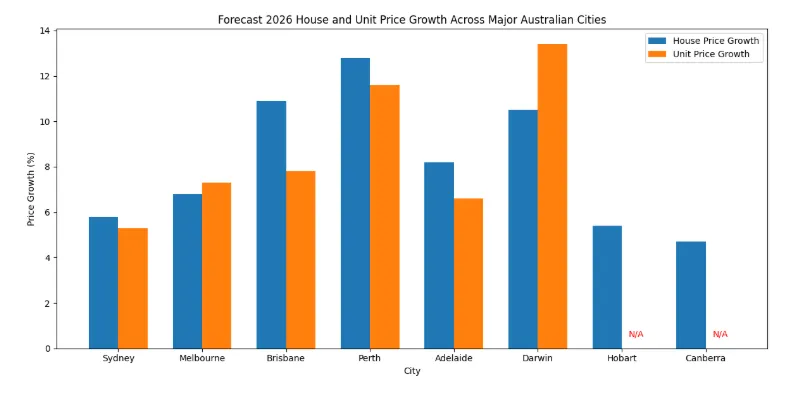
Projected house and unit price growth across major Australian cities in 2026
Smaller Capitals Set to Lead Price Rises
The strongest growth is forecast in smaller capitals that have seen strong demand in recent years. Perth house prices are expected to rise another 12.8 per cent in 2026. Brisbane house prices are forecast to increase by 10.9 per cent.
Darwin is also expected to post strong gains, with house prices forecast to rise 10.5 per cent. Adelaide is tipped to record growth of 8.2 per cent. These cities continue to attract buyers seeking more affordable housing options.
Hobart and Canberra are expected to see more moderate increases. Hobart house prices are forecast to rise 5.4 per cent. Canberra prices are expected to grow 4.7 per cent. Supply constraints remain a common factor across these markets.
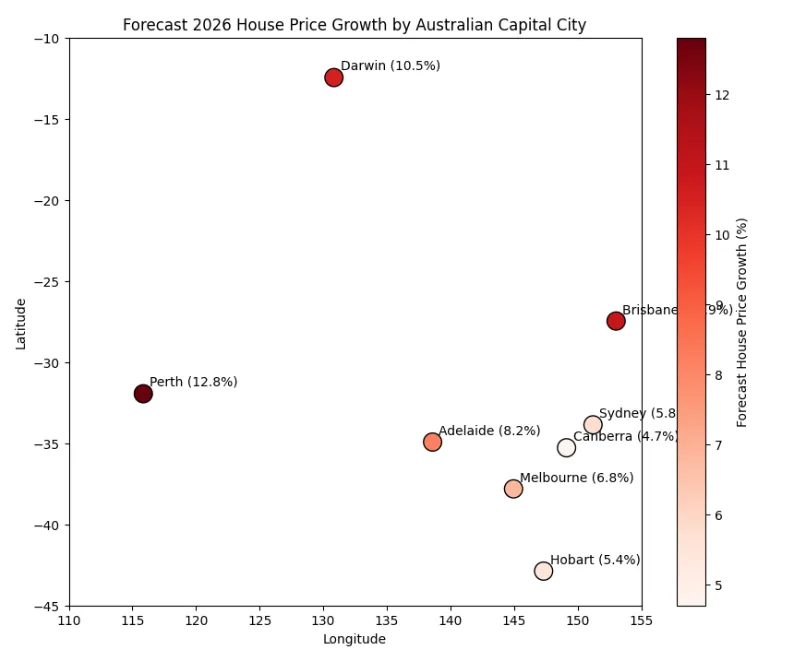
Forecast house price growth in Australian capital cities for 2026
First Home Buyer Support Boosts Demand
The expansion of the federal five per cent deposit scheme has increased buyer activity. The scheme has assisted more than 21,000 people into home ownership. It now offers low deposit loans without mortgage insurance to unlimited buyers.

Government schemes supporting first-home buyers are contributing to rising property prices. Source:(istock)
Eligible property price caps were also raised under the expanded program. In Sydney and Melbourne, the scheme is already pushing up prices at the lower end. Buyers are competing more intensely for affordable homes.
Recent research from Cotality found homes under the scheme’s price caps rose 3.6 per cent in the December quarter. Homes above the price cap rose 2.4 per cent during the same period. Some investors are also competing in lower price brackets.
Treasury modelling suggests the policy may lift property prices by about 0.5 per cent over six years. Forecasters say supply constraints mean additional demand flows directly into higher prices.
Housing Supply Remains the Key Constraint
KPMG chief economist Dr Brendan Rynne said demand continues to exceed housing supply. He said Australia remains short on housing. Governments are being urged to facilitate faster housing construction.
Rynne said the housing imbalance is structural rather than cyclical. Decades of underbuilding, especially in apartments, have created long term shortages. Construction costs surged during the pandemic and did not return to earlier levels.
Labour shortages continue to limit new housing supply. Construction wages remain under pressure from competition with infrastructure projects. Skilled trades shortages are slowing project delivery and raising costs.
Build prices have stabilised but remain elevated. Many projects are now marginal or unviable. Supply chains have improved, yet new housing starts remain subdued across major cities.
Interest Rate Uncertainty Clouds the Outlook
Rynne assumes the cash rate will remain on hold in the short term. He expects inflation to continue easing. Even if rates rise, he said modest increases would not halt price growth.
A 25 basis point rise would slow momentum but not reverse it. Rynne said interest rates act as a short term driver. Other market factors continue to influence prices more strongly.
AMP chief economist Dr Shane Oliver expects prices to continue rising. He cited earlier rate cuts and ongoing housing shortages. However, he expects slower growth through 2026.
Oliver said national prices could rise between five and seven per cent. That compares with last year’s 8.5 per cent increase. Economists remain split between rates on hold or further hikes.
Units May Outperform Houses in Several Cities
Affordability pressures are pushing buyers toward apartments. Oliver said units may rise faster than houses in 2026. He projects unit price growth of about seven per cent nationally.
House prices are projected to grow closer to five per cent. Demand is strongest in more affordable segments. Buyers are increasingly seeking smaller and lower priced dwellings.
Darwin unit prices are forecast to rise 13.4 per cent. Perth unit prices are projected to increase 11.6 per cent. Brisbane units are expected to rise 7.8 per cent.
Melbourne unit prices are forecast to grow 7.3 per cent. Adelaide units are tipped to rise 6.6 per cent. Sydney units are expected to increase 5.3 per cent.
Investor Activity and Lifestyle Shifts
Investor interest is rising, particularly in lifestyle markets. Mortgage Choice broker Rhys Elmi said investors are targeting coastal areas. Working from home has reshaped buyer preferences.
Elmi said buyers value flexibility and long term lifestyle benefits. He said the demand pattern may persist. Investors continue to focus on long term trends.
Interest rates now have a stronger psychological effect on buyers. Elmi said rate rises create hesitation. Borrowing capacity concerns influence buyer confidence.
Industry groups warn taxes and charges are choking housing supply. The Housing Industry Association said policy instability discourages new investment. New housing delivery remains constrained.
Also Read: Osisko Development Raises $125M for Cariboo Gold Project
Rental Growth and Ongoing Affordability Pressures
Rents are forecast to rise about 3.5 per cent annually through 2026 and 2027. Rental conditions are expected to remain tight. Population growth continues to outpace housing construction.
KPMG said rental growth will stay elevated without a sustained supply lift. Apartment construction remains especially weak. Vacancy rates are well below long run averages.
HIA estimates about $570,000 in taxes and charges are embedded in new homes. Investors commence over 40 per cent of new housing nationally. Apartment supply relies heavily on investor participation.
Industry leaders warn reduced investor activity will tighten rental markets further. They say renters will face higher costs. Supply reforms remain central to easing market pressures.
Australia’s housing market is entering 2026 with strong momentum, constrained supply, and persistent demand. Forecasts point to continued price growth across all capitals, with smaller cities leading gains. Affordability challenges and housing shortages remain unresolved.


