
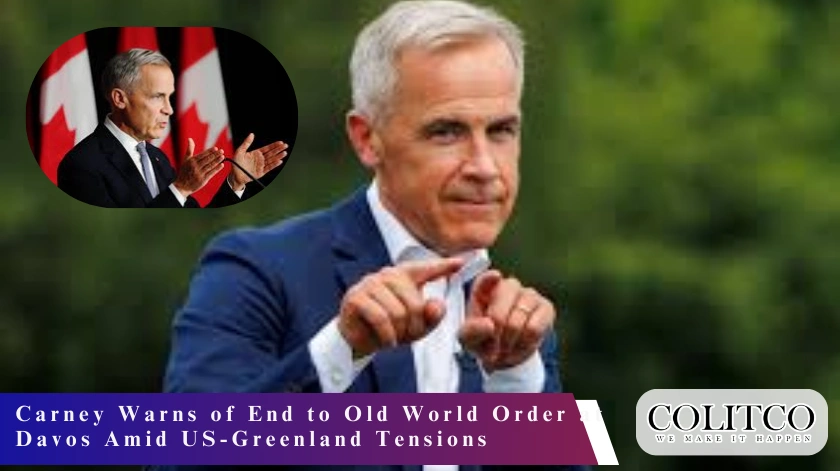
Canadian Prime Minister Mark Carney addressed the World Economic Forum in Davos, Switzerland, warning that the “old order is not coming back.” He urged middle powers to unite and act collectively against coercion from larger nations.
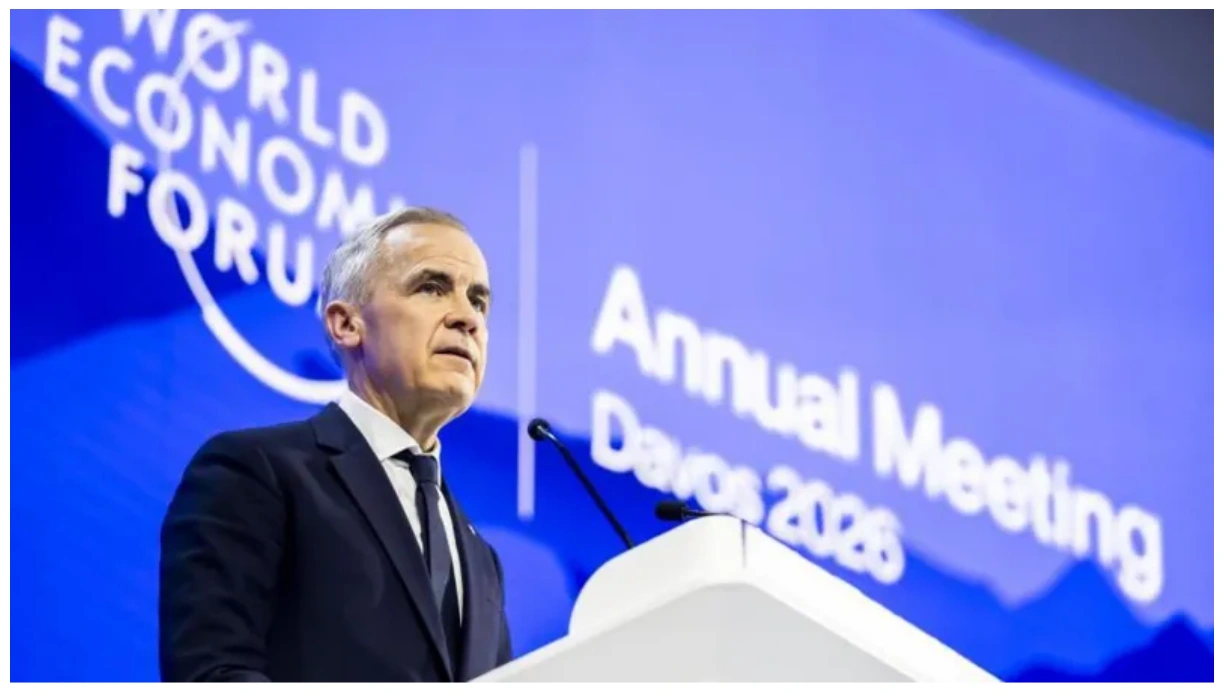
Canadian Prime Minister Mark Carney delivers his speech at the World Economic Forum, Davos, January 20, 2026. (Source: BBC)
Carney described the current international system as experiencing a “rupture, not a transition,” emphasising that traditional rules-based alliances no longer guarantee security or prosperity. His speech came a day before US President Donald Trump was scheduled to address the forum.
Middle Powers Must Act Together
Carney stressed that middle powers like Canada, Australia, South Korea, and Brazil must cooperate to preserve influence. He said, “If we’re not at the table, we’re on the menu,” signalling the risks of unilateral great power actions.
He noted that great powers, including those with permanent UN Security Council seats, increasingly use economic integration as leverage. Carney argued that compliance with larger nations will not ensure safety, urging middle powers to explore ambitious strategies.
Canada Stands with Greenland and Denmark
The Canadian leader reaffirmed support for Greenland, Denmark, and NATO, highlighting their right to determine Greenland’s future. Carney said, “Our commitment to Article Five is unwavering,” referencing the NATO clause treating attacks on one member as attacks on all.
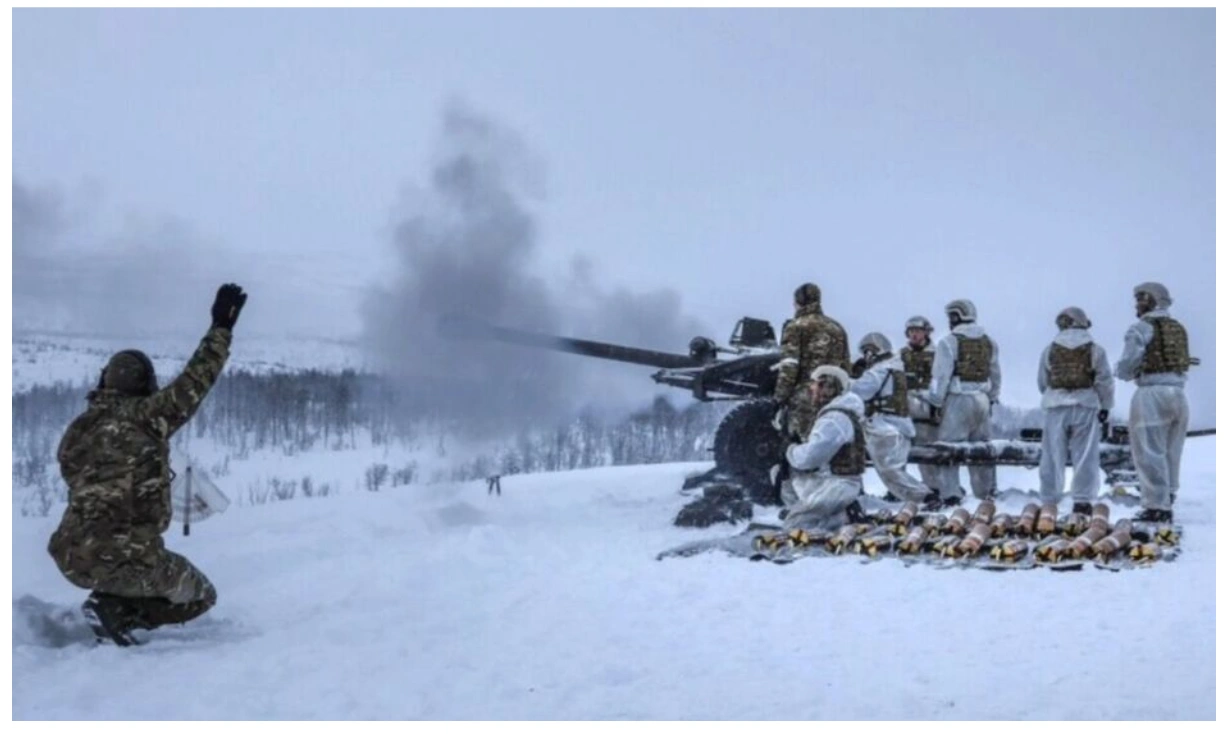
Canadian and NATO troops conduct military exercises in the Arctic to strengthen regional security. (Source: The Daily Express)
Recent tensions have escalated after Trump publicly suggested Greenland should come under US control. He also threatened tariffs on European countries opposing his plan, drawing criticism from global leaders. Canadian media reported potential troop deployments to Greenland for NATO exercises.
Global System Facing a Rupture
Carney described the US-led international system as a “fading” rules-based order. He said great powers are now using economic tools and supply chains to enforce influence, weakening traditional institutions like the UN and WTO.
He argued that decades of relying on American-led stability allowed countries to pursue values-based foreign policies. “We placed the sign in the window,” Carney said, referring to historical compliance with the old system that offered predictability.
Strategic Autonomy and Domestic Strength
Canada is focusing on strengthening domestic resilience to navigate the changing global order. Carney highlighted investments in energy, AI, critical minerals, and defence to support sovereignty and reduce vulnerabilities to coercion.
He also outlined reforms to boost the domestic economy, including cutting taxes, removing interprovincial trade barriers, and fast-tracking infrastructure investments. These measures aim to enhance Canada’s strategic capacity in an era of intensifying great power rivalry.
Building Coalitions Based on Shared Values
Carney explained that Canada is forming flexible international coalitions for different issues. Strategic partnerships were announced with the EU, China, and Qatar, while negotiations continue with India, ASEAN members, and Mercosur countries.
On security, Canada participates actively in NATO initiatives, Arctic defence, and coalition support for Ukraine. Carney stressed that acting collectively with like-minded nations preserves influence and mitigates risks posed by dominant powers.
Naming Reality and Promoting Honest Foreign Policy
Carney referenced Czech dissident Václav Havel, urging countries to “live in truth” by recognising global power dynamics and avoiding symbolic compliance. Middle powers are encouraged to apply consistent standards to all nations and create functioning agreements.
He said diversification abroad, including in trade and critical minerals, allows countries to reduce dependency on coercive powers. A strong domestic economy underpins Canada’s ability to pursue principled and pragmatic foreign policy simultaneously.
Also Read: Trump Close to Naming Next Federal Reserve Chair
Canada’s Path Forward
Carney positioned Canada as a reliable and principled partner, emphasising the country’s energy resources, critical minerals, educated workforce, and financial capacity. He argued that middle powers can shape a stronger, fairer international order by acting openly and collaboratively.
“Our old comfortable assumptions no longer apply,” Carney said. He called on countries to take decisive action, build strength at home, and cooperate to create new systems that reflect shared values and resilience in global affairs.
FAQs
- What did Mark Carney say about the world order?
Mark Carney declared that the “old world order is not coming back,” arguing that the global system is undergoing a fundamental rupture rather than a simple transition. He described the traditional rules‑based international order as fading and being replaced by intensifying great power competition.
- What does Carney mean by the world being in a “rupture”?
According to Carney, the global order is being reshaped by major powers using economic tools like tariffs, supply chains, and financial infrastructure as leverage or coercion. This marks a break from the assumptions of stable cooperation that existed under the old system.
- Why did he emphasise “middle powers”?
Carney urged middle powers, such as Canada, Australia, South Korea, Argentina, and Brazil, to act together and build coalitions based on shared values. He warned that without collective action, these nations risk being sidelined by larger powers.
- Did Carney mention NATO or Greenland?
Yes. Carney reaffirmed Canada’s support for Greenland and Denmark’s sovereignty and reiterated Canada’s commitment to NATO, including Article Five obligations. He expressed firm opposition to any tariffs tied to Greenland’s fate.
- Was his speech aimed at any specific leader?
Carney did not name U.S. President Donald Trump directly, but many observers interpreted parts of his speech as responding to Trump’s aggressive stance toward allies, including threats of tariffs and territorial pressure related to Greenland.
- How have other leaders reacted at Davos?
European leaders, including French President Emmanuel Macron and the EU’s Ursula von der Leyen, openly criticised unilateral pressure tactics. Several expressed solidarity with Canada and Denmark on Greenland and urged stronger cooperation among like‑minded nations.
- What is at stake with the Greenland controversy?
President Trump’s efforts to acquire Greenland or exert pressure on Denmark and NATO allies have strained transatlantic relationships and triggered threats of tariffs. This controversy highlighted divisions in the alliance and raised broader questions about sovereignty and international norms.
- What was the broader theme of Carney’s message?
Carney’s central message was that nostalgia for past international arrangements is not sufficient; instead, countries must adapt by building resilient economies, forming new strategic partnerships, and cooperating to address shared challenges.