
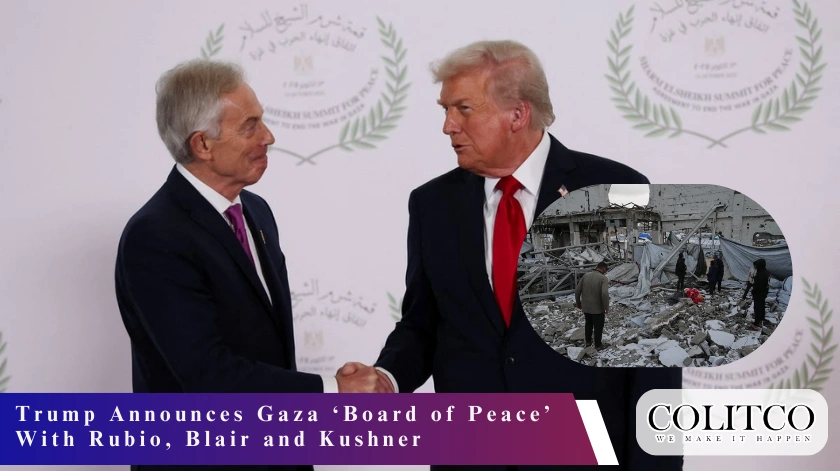
US President Donald Trump has announced the creation of a new international body, known as the Gaza Board of Peace, outlining a central pillar of his administration’s plan to oversee Gaza’s post-war governance, reconstruction, and security following months of devastating conflict.
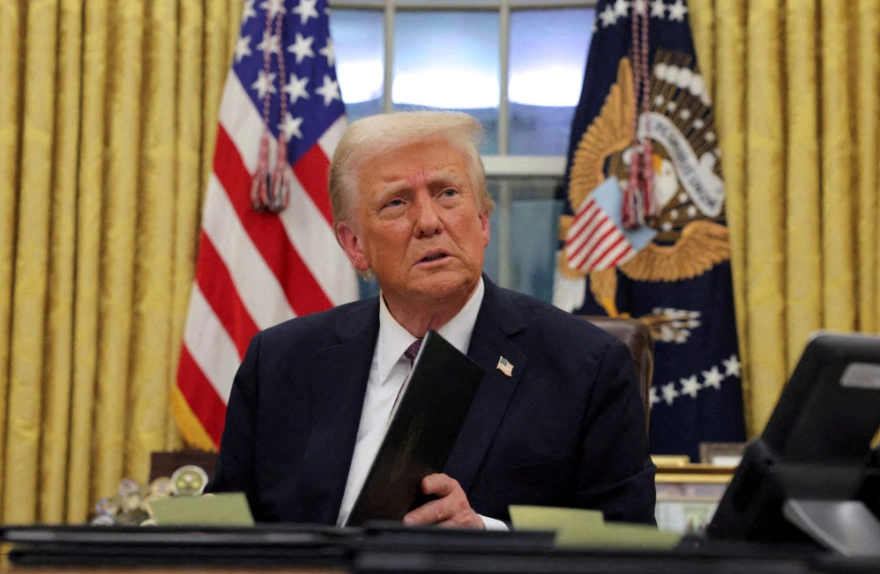
US President Donald Trump has announced the creation of a Gaza “Board of Peace” as part of a post-war governance and reconstruction plan. (Source: PBS)
The announcement, confirmed by the White House on Friday, introduces a high-profile group of political and diplomatic figures tasked with guiding Gaza through a transitional period once large-scale hostilities subside. The move represents one of the most direct attempts by the United States to shape the territory’s future and has sparked significant debate among allies, regional powers, and human rights groups.
A new framework for post-war Gaza
According to US officials, the Gaza Board of Peace will function as a supervisory authority rather than a direct governing body. Its role will be to provide strategic oversight of reconstruction, economic development, security coordination, and political stabilisation during a transitional phase intended to prevent a power vacuum in the territory.
The initiative follows a fragile ceasefire that has slowed, but not entirely halted, violence in Gaza. Large areas of the enclave remain in ruins after prolonged fighting, with international agencies warning that recovery will take years and require tens of billions of dollars in aid and investment.
The Trump administration has described the board as a necessary intervention to avoid a return to militant rule and to establish conditions for long-term stability. Officials argue that previous international efforts failed due to fragmented leadership and a lack of accountability.
Senior political figures named
The board’s confirmed members include US Secretary of State Marco Rubio, former British prime minister Tony Blair, and Jared Kushner, Trump’s son-in-law and a key architect of previous Middle East initiatives during Trump’s earlier presidency.
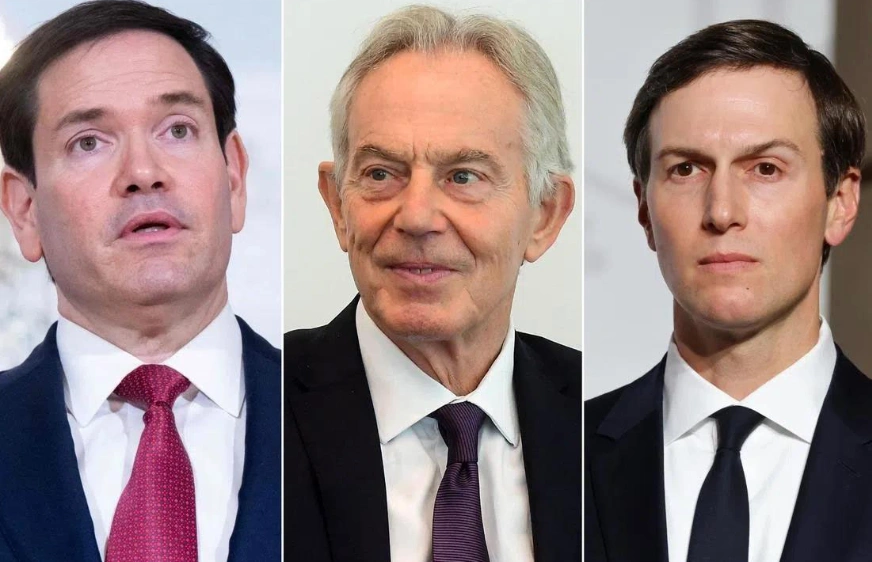
Marco Rubio, Tony Blair and Jared Kushner are among the high-profile figures named to the newly announced Gaza Board of Peace. (Source: stabroeknews)
The White House said the group brings together diplomatic experience, political authority, and economic expertise, positioning it as capable of navigating both regional sensitivities and large-scale reconstruction challenges.
Trump is expected to retain overarching authority over the initiative, with senior US envoys and advisers supporting its operations. Additional figures from international finance and development institutions are also expected to contribute to specific areas such as investment, infrastructure, and aid coordination.
Technocratic governance model
Under the proposed structure, the Board of Peace will oversee a technocratic local administration responsible for managing day-to-day governance in Gaza. This administration is intended to focus on restoring essential services, including electricity, water, healthcare, and education, while coordinating humanitarian aid and reconstruction projects.
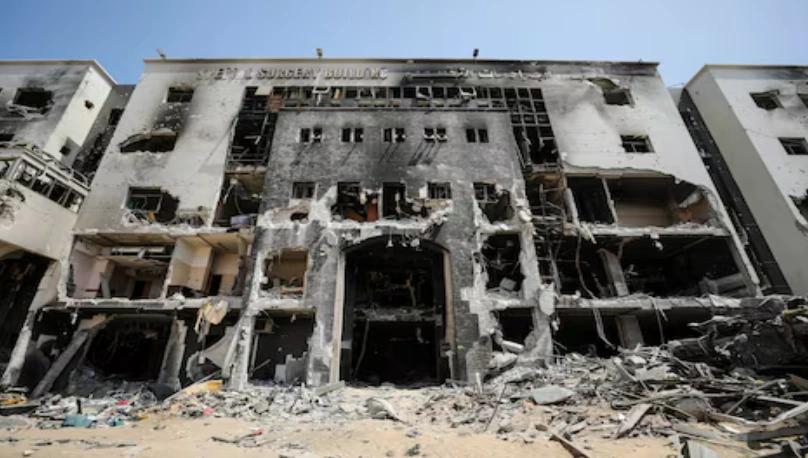
Large parts of Gaza’s infrastructure have been destroyed, with reconstruction expected to take years. (Source: reuters)
US officials have said the governance model aims to be temporary, operating under international supervision until a more permanent political arrangement can be established. Regional partners, including Egypt and Gulf states, are expected to play a role in supporting the transition, particularly in areas such as border management and security cooperation.
The plan does not currently outline a clear timeline for transferring authority to a Palestinian-led government, a point that has drawn criticism from observers who argue that political uncertainty could undermine the project’s legitimacy.
International reactions and mixed responses
Reaction to the announcement has been swift and divided. Supporters argue that a structured international framework may be the only viable option to stabilise Gaza after years of political division, repeated wars, and economic collapse.
Some diplomats have welcomed the emphasis on coordination and accountability, noting that uncontrolled aid flows and weak governance have long hampered reconstruction efforts in the territory.
However, critics have questioned whether a board dominated by Western and US-aligned figures can gain acceptance among Palestinians. The absence of confirmed Palestinian political representatives has been cited as a major weakness of the plan.
The inclusion of Tony Blair has proven particularly contentious. While Blair has extensive experience in international diplomacy and has previously worked on Middle East development initiatives, his role in the 2003 Iraq war continues to draw strong opposition across much of the region.
Sovereignty and legitimacy concerns
Human rights organisations and regional analysts have raised concerns that the proposal risks undermining Palestinian self-determination. Some have described the Board of Peace as resembling an international trusteeship, arguing that governance imposed from outside could deepen resentment and instability.
Critics warn that without meaningful political inclusion and local consent, the initiative could struggle to operate effectively on the ground. There are also concerns that focusing primarily on economic reconstruction without addressing broader political issues may fail to produce lasting peace.
Questions remain over how the board would interact with existing Palestinian institutions, including the Palestinian Authority, and whether it would have enforcement powers if local cooperation breaks down.
Ongoing humanitarian crisis
The announcement comes against the backdrop of a severe humanitarian situation in Gaza. Large sections of housing, roads and public infrastructure have been destroyed, while shortages of food, clean water and medical supplies continue to affect millions of civilians.
International aid agencies have repeatedly warned that rebuilding Gaza will require sustained access, stable security conditions and long-term political planning. Even with a ceasefire in place, sporadic clashes and security incidents continue to disrupt relief efforts.
Public health officials have also raised concerns about disease outbreaks and long-term trauma among Gaza’s population, particularly children, as displacement and overcrowding persist.
Security and regional implications
A central challenge facing the Board of Peace will be maintaining security without prolonged foreign military involvement. While the plan envisions international coordination to support stability, it remains unclear how armed groups within Gaza will be neutralised or integrated into a broader political framework.
Regional powers, including Egypt, Qatar and Turkey, are expected to be involved diplomatically, reflecting their influence in previous ceasefire negotiations. Israel’s role in the process has not been fully detailed, though security coordination is expected to be a key component.
Analysts note that the board’s success will depend heavily on regional cooperation and the willingness of multiple actors to align behind a shared strategy, a difficult task in a region marked by competing interests.
A test for US foreign policy
The creation of the Gaza Board of Peace reflects Trump’s broader foreign policy style, which emphasises centralised leadership, high-profile appointments and deal-oriented diplomacy. The administration has argued that bold intervention is necessary to break cycles of conflict that incremental diplomacy has failed to resolve.
At the same time, critics argue that the approach risks oversimplifying deeply rooted political and social divisions. They caution that durable peace will require more than reconstruction and security oversight, pointing instead to unresolved questions around borders, statehood, refugees and political representation.
Also Read: Fletcher Jones to Close All Stores After Nearly 100 Years in Australian Retail
Looking ahead
As the Gaza Board of Peace prepares to take shape, uncertainty remains over its authority, legitimacy and long-term impact. While the initiative represents a significant escalation of US involvement in Gaza’s future, its effectiveness will ultimately be judged by conditions on the ground.
For Gaza’s population, the immediate priorities remain safety, shelter and access to basic services. Whether the newly announced framework can move beyond diplomacy and deliver tangible improvements will be closely watched by the international community.
The coming months are likely to determine whether the board becomes a cornerstone of post-war recovery or another contested experiment in a region where peace initiatives have often struggled to take hold.


