
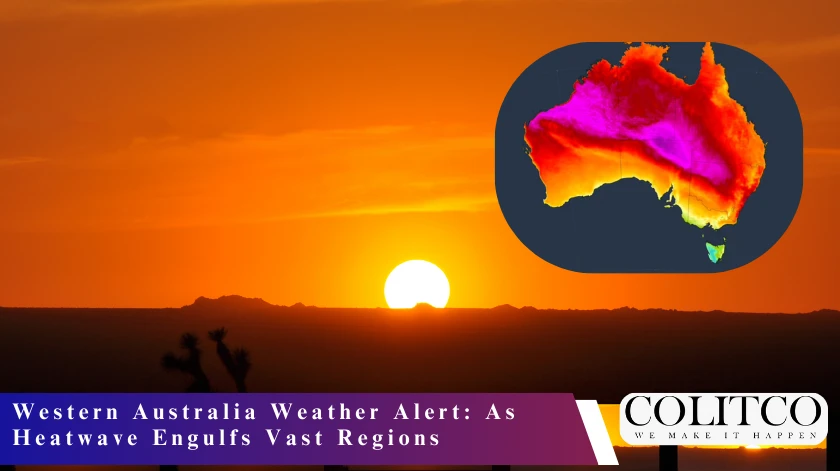
A wide-ranging weather alert has been issued for the whole of Western Australia due to a really strong heat wave that is raising the temperatures far more than what is usually the case in January in the entire State.
According to meteorologists, a heat wave is a period when both the minimum and the maximum temperatures are abnormally high for at least three continuous days, and this criterion has already been surpassed in a number of regions.
The heat will be so intense that it will last longer than the minimum definition, thereby increasing the strain on the communities, services, and infrastructure, and at the same time, making health and fire risks higher.
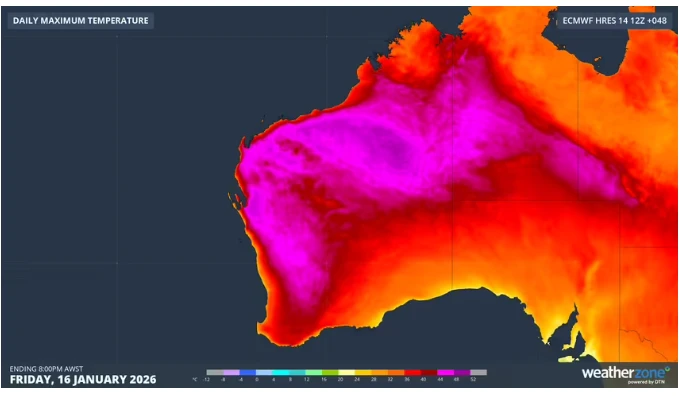
Persistent high pressure is driving prolonged heat across Western Australia. [WeatherZone]
Which Regions Are Most Affected By The Western Australia Heatwave?
The most extreme heat in Western Australia is affecting the Pilbara and Kimberley forecast districts, while the heat wave warnings have also been given to the North Interior, South Interior, Gascoyne, Central West and Southern Wheatbelt apart from the above-mentioned areas.
The Lower West area, which includes areas near Perth, is under lower-intensity heat alerts, while the inland areas remain much hotter and more prone to very high temperatures for a long time.
How Extreme Are Temperatures During This Event?
Marble Bar, which is often called the hottest town in Australia, is experiencing temperatures much greater than its long-term January average of 40.9°C. The recent maximum temperatures reached 44.1°C, and the forecasts indicate that there will be peaks of 45°C, 46°C, and even 47°C coming up over the days.
Marble Bar has a history of severe heat lasting for long periods, such as in the summer of 2023/24, when there was a 26-day continuous stretch of the mercury above 43°C, which is indicative of the area’s susceptibility to heat even when the records are not broken.
Climate Conditions in Western Australia Continue To Amplify Heat Risks
Western Australia is undergoing a broader climate change phenomenon that is characterised by a long-term warming trend, thus raising the average temperatures across all seasons. The higher overnight minimum temperatures are cutting short the nighttime cooling, which in turn is very much affecting human health, agriculture and energy systems negatively.
These trends in the temperature are also causing the heatwaves to be longer and more intense, hence making the present situation more difficult to handle, not only in the cities but also in far-off places.
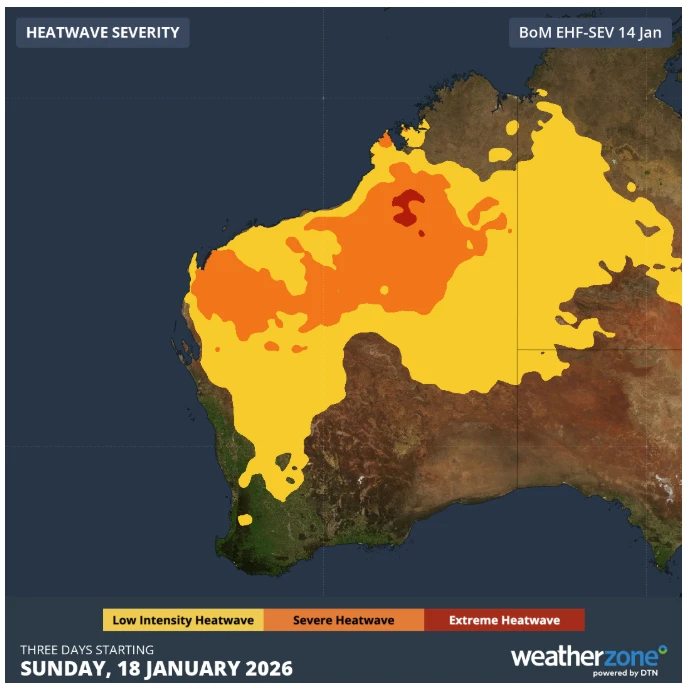
Rising baseline temperatures intensify heatwave frequency and severity. [WeatherZone]
What Weather Patterns Are Driving This Extreme Heat?
Western Australia is now in the grip of a strong high-pressure system that is located over southern Australia, and this system is preventing the cooler air masses from moving into the region. The easterly winds that are rotating around the system are bringing hot and dry air from the interior of the continent to the west coast.
This situation is allowing the heat to accumulate in the northern regions before spreading downwards. A heat trough that is permanently located over the Pilbara and Kimberley is contributing to the accumulation of heat, hence allowing the inland and coastal areas to experience extreme heat over and over again.
What Impacts Are Communities Facing Right Now?
The current heatwave is causing a lot of discomfort and is posing a very serious health risk to the already vulnerable population, which includes the old, outdoor workers and sick people. The authorities are asking the public to drink plenty of water, do their outdoor activities when it’s cooler, and wherever possible, stay in cool places.
The situation is such that the fire danger rating is very high because of the combination of dry air and high temperatures that have persisted for a long period. On the other hand, the electricity demand is increasing as households are heavily relying on cooling systems, which in turn puts a strain on the electricity supply and essential services.
After several days of January temperatures averaging 31.4°C, Perth is expected to reach 40°C, which might increase urban heat stress and electricity demand. So, to be on the safe side, transport infrastructure, agriculture, and livestock operations may also have to deal with the challenges caused by the prolonged extreme heat periods, thus the need for better management through reinfo
Also read: Victoria, SA & NSW Live Weather Updates: Heatwave Triggers Bushfire Alerts
Frequently Asked Questions
Q1: What does a Western Australia weather alert mean?
A1: A Western Australia weather alert signals extreme weather conditions that may impact health, safety, infrastructure and daily activities.
Q2: How long is this Western Australia heatwave expected to last?
A2: Forecasts suggest the heatwave will persist beyond the standard three-day definition, with elevated temperatures continuing through the coming week.
Q3: How do climate conditions in Western Australia influence heatwaves?
A3: Rising baseline temperatures and warmer nights increase the frequency and intensity of heatwaves across the State.
Q4: What precautions should residents take during extreme heat?
A4: People should stay hydrated, avoid peak heat exposure, monitor official updates and support vulnerable community members.