

Paladin Energy Ltd (ASX: PDN) has completed a major debt restructure designed to strengthen liquidity and improve balance sheet flexibility. The update was announced on 18 December 2025, following agreement with its syndicated lending group
The Paladin Energy debt restructure reduces total debt capacity while increasing undrawn funding headroom. Management said the changes better reflect the Company’s financial position after recent equity raisings and operational progress.
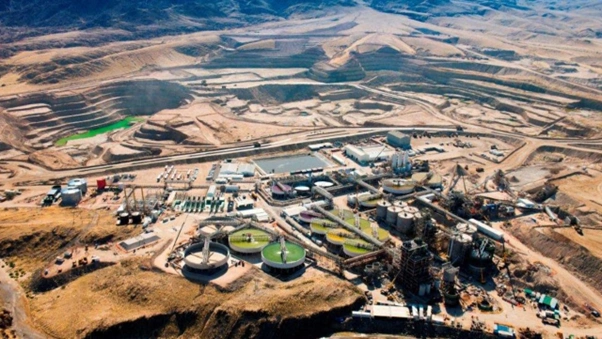
The restructure is closely linked to Paladin’s ramp-up at the Langer Heinrich Mine in Namibia. It also follows the Company’s acquisition of Fission Uranium Corp, which expanded its asset base.
Overview of the Debt Restructure
The ASX PDN debt restructuring reduces total facility capacity from US$150 million to US$110 million. The revised facility was agreed with Nedbank Limited, Nedbank Namibia Limited, and Macquarie Bank
The original debt facility was executed in January 2024. That agreement pre-dated the restart of Langer Heinrich and Paladin’s strengthened cash position.
Management stated the revised structure “right-sizes” debt capacity. It also provides greater financial flexibility as Paladin transitions into a steady-state uranium producer.
Key Facility Terms and Liquidity Position
The restructured facility comprises two components totalling US$110 million
- US$40 million Term Loan Facility, maturing on 28 February 2029
- US$70 million Revolving Credit Facility, currently undrawn
As part of the completion, Paladin will repay US$39.8 million. This repayment materially reduces the outstanding term loan balance.
The revolving credit facility matures in February 2027. It includes options to extend twice by one year, subject to lender approval.
The structure improves Paladin Energy’s liquidity. It also lowers debt servicing costs and increases available undrawn capacity.
Strategic Rationale and Management Perspective
Management said the Paladin Energy debt restructure reflects the Company’s enhanced liquidity position. This improvement follows a A$300 million equity raising and a A$100 million share purchase plan completed in 2025.
The revised facility supports ongoing production ramp-up at Langer Heinrich. It also provides balance sheet resilience during uranium market cycles.
The facility includes customary covenants. These cover debt service coverage, net debt to EBITDA, reserve tail ratios, and minimum cash balances.
Market and Industry Context
Global uranium demand continues to rise. Growth is driven by nuclear power expansion, energy security concerns, and decarbonisation targets.
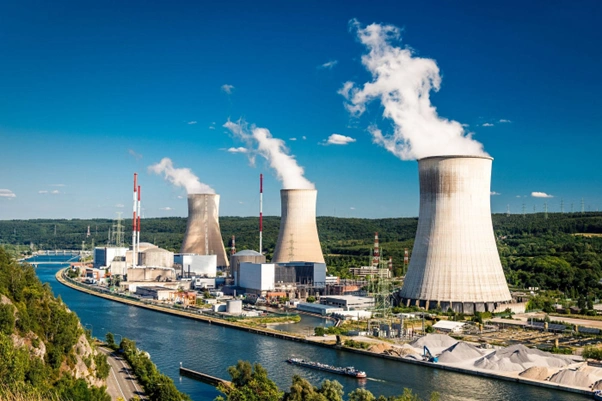
Producers with operating assets and conservative funding structures remain attractive to institutional investors. Access to flexible liquidity is increasingly important across the uranium sector.
Namibia remains a key uranium jurisdiction. The country offers established infrastructure and a long history of uranium exports.
Investor Outlook and Share Market Performance
Paladin Energy shares last traded at $8.29, down 5.15 per cent on the day. Trading volume reached 2.04 million shares.
The Company has a market capitalisation of approximately $3.92 billion. The bid-offer range stood between $8.29 and $8.30.
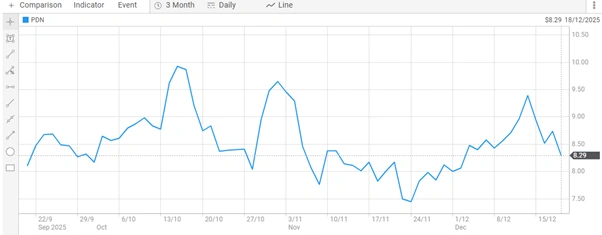
Investor focus remains on Paladin Energy’s liquidity metrics. The Paladin Energy debt restructure is expected to reduce refinancing risk and support cash flow stability.
Also Read: Vicinity Centres Cracks Down on Modern Slavery: Bold Supply Chain Overhaul Revealed
Outlook Following the Restructure
The ASX PDN debt restructuring positions Paladin with a more conservative capital structure. Reduced debt capacity aligns funding with current operating requirements.
The revised facility enhances liquidity and balance sheet flexibility. It also supports disciplined capital management as production ramps up.
The Paladin Energy debt restructure strengthens the Company’s strategic position within the global uranium supply chain. It provides financial resilience while maintaining the capacity to respond to market opportunities.
FAQs
- What is the Paladin Energy debt restructure?
The Paladin Energy debt restructure is a revision of the Company’s syndicated debt facility. It reduces total debt capacity from US$150 million to US$110 million to better align funding with current operations.
- Why did Paladin Energy restructure its debt?
The Company restructured its debt following an improved liquidity position. This followed a A$300 million equity raising and a A$100 million share purchase plan completed in 2025.
- What are the main components of the new debt facility?
The restructured facility includes a US$40 million term loan maturing in February 2029 and a US$70 million revolving credit facility that is currently undrawn.
- How does the restructure affect Paladin Energy’s liquidity?
The restructure improves Paladin Energy’s liquidity by increasing undrawn debt capacity, reducing interest costs, and strengthening balance sheet flexibility.
- Is any debt being repaid under the new structure?
Yes. Paladin will repay US$39.8 million upon completion to reduce the outstanding balance of the term loan facility.
- Has the debt restructure been completed?
The agreement was executed on 18 December 2025. Completion remains subject to customary final conditions.
- How has the market reacted to the announcement?
Paladin Energy shares declined on the day of the announcement, reflecting short-term market reaction to the revised debt facility.
- What does the restructure mean for Paladin’s future financing?
The ASX PDN debt restructuring is expected to reduce refinancing risk and provide greater flexibility to manage funding through commodity market cycles.


