The ASX is home to hundreds of exploration companies. For every exploration success like Sandfire Resources, which went from trading at 10 cents to near $8 after a world-class copper discovery, there are dozens of failures. The upside is real, but so is the risk of losing your entire position.
 Figure 1: Conceptual illustration of financial growth and return progression in investment analysis [Source: Freepik]
Evaluating ASX exploration companies requires a different framework from assessing producers. There are no earnings, no dividends and no operating cash flow to anchor your analysis. What matters instead is the quality of the ground, the credibility of the team, the cash runway and the proximity to a meaningful catalyst.
This guide walks through the key steps to assess how to evaluate ASX miners before committing capital.
How to Evaluate ASX Miners: Understand the Development Stage First
Not all ASX exploration companies carry the same risk. Development-stage mining companies occupy intermediate positions between exploration and production, requiring feasibility study analysis, construction execution risk assessment, and market timing evaluation. Where a company sits on that spectrum determines what you should be analysing.
 Figure 2: Visual representation of capital growth through staged investment accumulation [Source: Freepik]
The broad stages are:
- Grassroots explorer – early stage, no resource estimate, drilling for the first time. Highest risk, highest potential upside
- Resource definition stage – has drill results, working toward a JORC-compliant mineral resource estimate
- Pre-feasibility or definitive feasibility study (PFS/DFS) – has a resource, assessing whether a mine is economic
- Development stage – feasibility complete, working toward financing and construction
- Near-producer – permitted, financed and building toward first production
Each stage carries a different risk. A grassroots explorer is essentially a lottery ticket. A company with a completed DFS and secured financing is a very different proposition.
Mining Company Analysis ASX: The JORC Code and What It Tells You
The JORC Code is the mandatory reporting standard for all ASX-listed mining and exploration companies. The JORC Code has been incorporated in the Listing Rules of the Australian Securities Exchange since 1989, making compliance mandatory for listing public companies in Australia. Understanding is essential for any investor doing mining company analysis on the ASX.
 Figure 3: JORC Code logo representing Australia’s mineral resource and reserve reporting standard [Source: JORC]
The purpose of the JORC Code is to provide a minimum standard for reporting of exploration results, Mineral Resources and Ore Reserves in Australasia, and to ensure that public reports contain all the information which investors and their advisers would reasonably require for making a balanced judgement.
The three resource classification levels to know are:
- Inferred – lowest confidence. Based on limited data. Cannot be used to support a mine plan
- Indicated – moderate confidence. Enough data to apply reasonable assumptions about grade and continuity
- Measured – highest confidence. Sufficient data to support detailed mine planning and reserve estimation
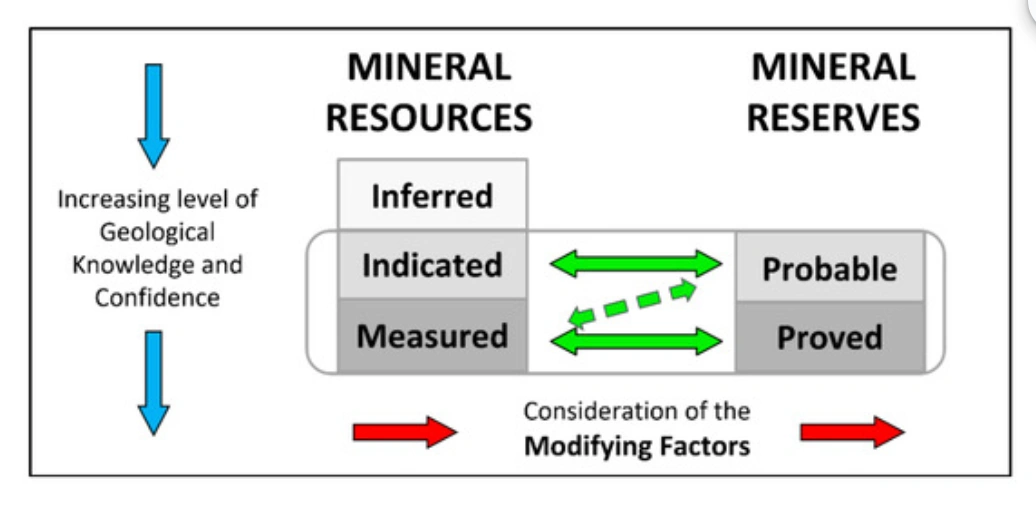 Figure 4: Diagram illustrating mineral resource and ore reserve classification [Source: MDPI]
When reading a resource announcement, focus on:
- What proportion of the resource is measured or indicated versus Inferred
- The grade relative to comparable deposits in the same commodity
- Who signed off as the Competent Person, and whether they are independent
- Whether the resource is open at depth or along strike, indicating further upside
A large inferred resource with low grade in a remote location is worth less than a smaller but high-confidence indicated resource near infrastructure.
ASX Exploration Companies: How to Assess the Ground
The quality of the ground is the foundation of every ASX exploration company. No amount of good management or marketing can turn a poor deposit into a mine. Key geological factors to assess:
- Commodity – is the target commodity in demand? Copper, gold, lithium and critical minerals carry different market dynamics and price outlooks
- Grade – A higher grade generally means a lower cost per unit of production. Compare against industry benchmarks for the commodity
- Deposit style – some deposit types (large bulk tonnage, shallow open pit) are more economically viable than others (narrow high-grade underground veins require more capital and complexity)
- Scale – is the project large enough to support a mine of economic scale? A resource needs sufficient tonnage and grade to justify the capital required to build a mine
- Tenure – does the company have clear title to its tenements? Are there native title considerations, overlapping applications or competing interests?
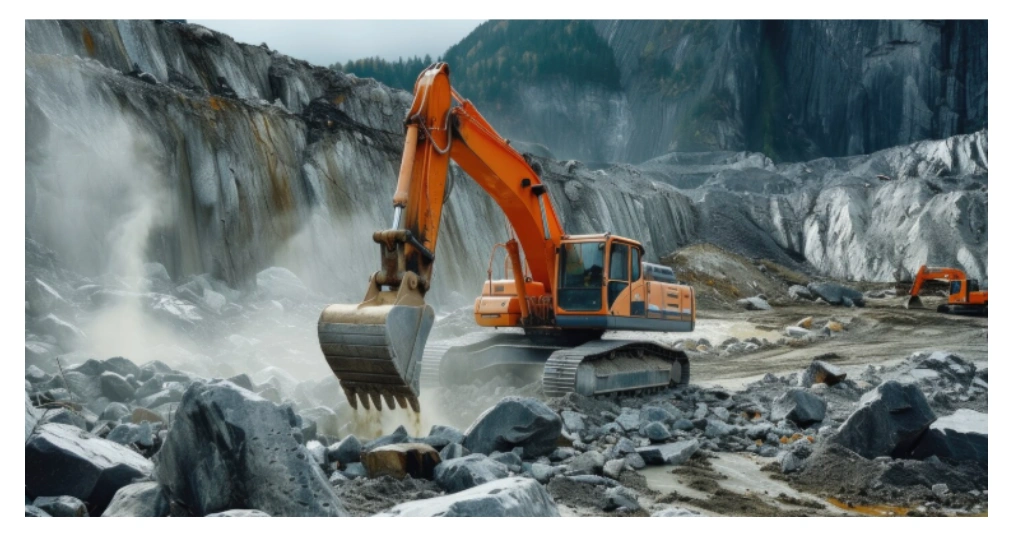 Figure 5: Heavy machinery operating at a surface mining site, representing early-stage project development [Source: Freepik]
Geographic diversification in mining stocks ASX requires careful analysis of jurisdiction-specific risks that affect operational continuity, regulatory compliance costs, and political stability.
Australian projects carry lower sovereign risk than many international jurisdictions. However, permitting timelines, environmental approvals and community engagement requirements still add time and cost to any development pathway.
Mining Company Analysis ASX: Cash, Dilution and Capital Runway
Exploration companies do not generate revenue. They burn cash. Understanding the cash position and burn rate is non-negotiable in any mining company analysis on the ASX.
Key questions to answer:
- How much cash does the company hold? Check the most recent quarterly report
- What is the quarterly cash burn rate? Divide current cash by burn rate to calculate the number of quarters of runway
- When is the next capital raise likely? If a company has less than two to three quarters of cash remaining, a dilutive equity raise is probably coming
- What will the raise be used for? Raises for drilling are generally positive. Raises for overhead and administration are a warning sign
- What is the share count and market cap relative to cash and exploration upside? Deeply discounting cash with a quality project can represent a buying opportunity. The inverse is also true
 Figure 6: Conceptual illustration of revenue growth drivers in business and investment decision-making [Source: Freepik]
Most sophisticated investors allocate small percentages – 1 to 3% per position – to exploration plays while maintaining larger positions in production companies for portfolio stability.
Position sizing matters as much as stock selection with ASX exploration companies. The binary nature of exploration outcomes means concentration risk is a real and serious threat.
ASX Exploration Companies: Catalysts, Timing and the Share Price Cycle
Exploration firms can experience substantial valuation changes based on drilling results and resource estimate revisions. The share price of an exploration company is driven almost entirely by catalysts, not by financial metrics.
Key catalysts to identify and track:
- Upcoming drilling programs – intercept results are the single biggest share price mover for early-stage explorers
- Mineral resource estimate – first JORC resource declaration is a major de-risking event
- Scoping study or pre-feasibility study – confirms whether a project has economic merit
- Definitive feasibility study – highest confidence economic assessment, typically precedes a final investment decision
- Permitting milestones – environmental approvals are often underestimated as catalysts
- Offtake agreements or strategic partnerships – confirms market demand and de-risks the development pathway
Feasibility studies represent pivotal points in a company’s history. This milestone can make or break a company.
Understanding where a company sits in its catalyst calendar helps you assess both the risk and the potential reward at entry. Buying ahead of a major catalyst carries higher risk but potentially a higher reward. Buying after a confirmed discovery at a reset price can offer a more considered entry point.
Investor Outlook
Before investing in any ASX exploration company, work through this checklist:
- Identify the development stage and understand what that means for risk
- Read the JORC resource estimate and note the classification breakdown
- Assess the geological quality, grade, scale and jurisdiction of the project
- Research the management team’s track record in discovery and development
- Check the cash position, burn rate and proximity to the next capital raise
- Map the catalyst calendar and identify the next value-creating milestone
- Size the position appropriately – exploration is high risk and requires diversification across multiple positions
Frequently Asked Questions
Q1. What are ASX exploration companies, and how are they different to producers? Ans. ASX exploration companies are listed entities searching for mineral deposits that have not yet been developed into mines.
Q2. What is the JORC Code and why does it matter for how to evaluate ASX miners?
Ans. The JORC Code is the mandatory reporting standard for all ASX-listed mining companies.
Q3. What financial metrics matter most in mining company analysis on the ASX for exploration stocks?
Ans. For exploration companies with no revenue, the key financial metrics are cash on hand, quarterly cash burn rate, capital runway in quarters, and dilution history.
Q4. How much of a portfolio should be allocated to ASX exploration companies?
Ans. Most experienced resource investors limit individual exploration positions to 1 to 3% of total portfolio value, given the binary and speculative nature of exploration outcomes.