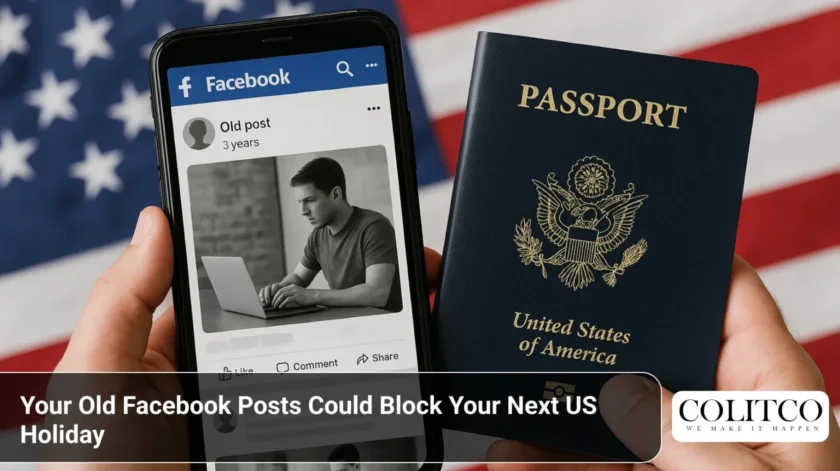
Planning a US trip just became far more complicated. The Trump administration wants every Instagram story, X post, and Facebook comment from the past five years before Australian tourists can enter America.
The proposal could affect hundreds of thousands of Australians who visit the United States each year without needing a visa.
Five Years of Digital History Now Mandatory
US Customs and Border Protection published sweeping new requirements on 10 December that would fundamentally reshape how Australians travel to America.
The plan targets the 42 countries in the Visa Waiver Programme, including Australia. Tourists currently use the Electronic System for Travel Authorisation (ESTA) to visit for 90 days or less. That A$64 online form takes minutes to complete.
The new rules transform that process entirely. Social media vetting would become mandatory rather than optional.
Key requirements under the proposal:
- All social media handles and platforms used in the past five years
- Email addresses from the previous decade
- Telephone numbers from the last five years
- IP addresses and photo metadata
- Additional family member information
The Department of Homeland Security justified the changes by citing Executive Order 14161, signed by President Trump in January. The order demands vetting “to the maximum degree possible” for all foreign visitors.
A 60-day public comment period began this week. The rules are not yet final and could change based on feedback.
What This Means for Australian Travellers
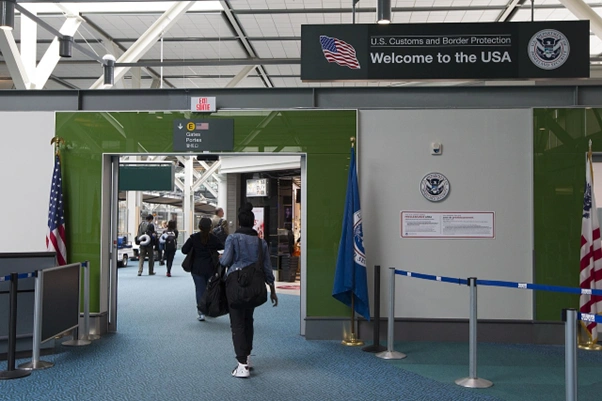
More than 200,000 Australians visit the United States annually, making it one of the top destinations for Australian overseas travel. The US held fourth place in Australia’s top-five destination countries in 2024-25, according to the Australian Bureau of Statistics.
That popularity now faces a significant test.
The New Daily reported that Australian travellers could face tougher measures entering the US under the proposed crackdown. Visitors would need to supply social media handles and make them public across all platforms dating back five years.
Even a single concerning post could trigger delays or denials. Earlier this year, a French scientist was denied US entry after immigration officers found messages on his phone critical of Trump’s cuts to research programmes. American border officers said the messages “conveyed hatred of Trump” and could be construed as terrorism.
Australia’s Department of Foreign Affairs and Trade issued warnings earlier in 2025 that US officials may inspect travellers’ electronic devices, emails, text messages or social media accounts. Those warnings appear prescient given the latest developments.
Privacy Groups Sound Alarm
The Electronic Frontier Foundation condemned the proposal as an invasion of privacy that provides minimal security benefit.
Sophia Cope, a senior staff attorney for the organisation, stated: “It has not proven effective at finding terrorists and other bad guys. But it has chilled the free speech and invaded the privacy of innocent travellers, along with that of their American family, friends and colleagues.”
The organisation noted that the US Department of Homeland Security has never demonstrated whether social media screening improves vetting outcomes. A 2024 report from the DHS Office of Inspector General found early programmes “did not establish criteria for measuring performance.”
Without defined metrics, DHS cannot assess whether the screening provides useful intelligence or improves security, the report concluded.
Digital rights advocates worry about how information will be stored, who accesses it, and retention periods. The proposal lacks specificity about which social media information is required, leaving tourists uncertain about compliance.
Tourism Industry Faces Economic Headwinds
The timing couldn’t be worse for US tourism. The country was already set to lose A$19.4 billion in travel revenue in 2025, according to a May study from the World Travel & Tourism Council and Oxford Economics.
The US stood as the only country among 184 global economies projected to lose tourism dollars this year. Foreign visitor spending was estimated to fall under A$262 billion by year’s end.
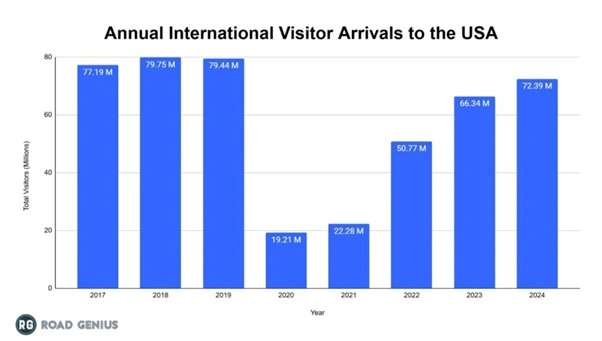
Tourist numbers are also declining. Some 67.9 million visits were forecast for 2025, down from 72.4 million in 2024, the US Travel Association reported.
The decline was attributed to lingering Covid-era requirements, a strong US dollar, and shifting global perceptions of America due to the Trump administration’s “America First” rhetoric.
New social media requirements could accelerate that decline.
World Cup and Olympics Loom Large
Major international events add urgency to the debate. The 2026 FIFA World Cup will bring millions of football fans from around the globe. The US co-hosts with Canada and Mexico.
The 2028 Los Angeles Olympics will similarly attract enormous numbers of international tourists.
A Trump administration official told NBC News that World Cup ticket holders may be fast-tracked but would still face the same requirements as other travellers.
“The FIFA PASS enables ticket holders in countries that have long wait times to get a priority appointment, but it does not change the visa application process whatsoever,” the official said.
Immigration lawyers warn that ESTA’s current rapid processing may change dramatically if officers begin reviewing social media content or account histories.
Not the First Social Media Crackdown
The proposal builds on earlier Trump administration actions targeting digital vetting.
From 15 December 2025, all H-1B workers and their H-4 dependants must ensure social media profiles are public so consular officers can inspect posts.
Students on F, M and J visas faced similar requirements starting in June. The State Department announced that applicants for certain visas would need to make social media profiles publicly accessible for vetting.
Guidance from June 2025 told embassies and consulates they may vet applicants for student visas for “hostile attitudes towards our citizens, culture, government, institutions, or founding principles.”
Applicants were asked to set profiles to public. Lack of an online social media presence could be seen as a negative that may be held against them in the application process.
Since 2019, most global visa applicants have had to list social media usernames on DS-160/DS-260 forms. The Brennan Center for Justice says US policy has shifted from targeted checks to a “broad, expanding web of social-media surveillance.”
Practical Implications for Travellers
The proposal raises difficult questions for Australians planning American holidays.
Should tourists delete old accounts? Immigration lawyers warn against hiding or lying about social media presence. Dishonesty on visa applications carries severe penalties.
Should travellers scrub controversial posts? That approach carries risks if deleted content surfaces through cached versions or third-party archives.
Should people avoid political commentary entirely? That seems unrealistic for the five-year lookback period and raises free speech concerns.
Some tourists may simply choose different destinations rather than navigate the vetting process. Europe, Asia and other regions offer attractive alternatives without digital surveillance requirements.
Global Trend Toward Digital Screening
The US isn’t alone in monitoring digital footprints. China, India, Brazil and Venezuela have rejected visa applications based on social media posts without formal laws.
Australia doesn’t currently mandate social media checks when applying for a visa, but the Department of Home Affairs has authority to reject applicants based on content they share online.
In 2021, Novak Djokovic’s visa was revoked after his Instagram post about COVID-19 status became public. Katie Hopkins had her visa cancelled after posting about flouting quarantine rules.
The Australian government warned that activism or political activities on social media could lead to visa cancellation.
Colombia requires applicants to list social media usernames when applying for a visa. Germany is examining the potential of using social media as part of visa application processes.
The trend toward digital vetting appears global and growing.
What Happens Next
The public has 60 days to comment on the proposal through official channels. US Customs and Border Protection must address substantive concerns in its final rulemaking.
Privacy groups, technology companies, civil liberties organisations and foreign governments are expected to submit formal objections or suggested revisions.
Litigation appears likely if the final rule retains ambiguous terms or broad ideological triggers. Courts could overturn regulations deemed “arbitrary or capricious.”
Countries with strong privacy protections, particularly in Europe, have historically objected when the US expanded digital screening requirements. Some signal the possibility of reciprocal measures.
Tourism, higher education and international business sectors are monitoring developments closely. Even modest increases in screening complexity could impact travel volumes.
Australian Government Response
Neither the Australian Department of Foreign Affairs and Trade nor the Department of Home Affairs has issued formal statements on the proposed US requirements.
Smartraveller, Australia’s official travel advisory service, already advises Australians travelling to the US to be aware that officials may inspect electronic devices.
That advice may need updating if social media vetting becomes mandatory for ESTA applications.
Australian travellers are encouraged to monitor the Smartraveller website for the latest guidance.
Also Read: Australia’s Unemployment Rate Defies Expectations at 4.3% as 21,000 Jobs Vanish
Bottom Line for Tourists
Australian tourists face an uncertain future for US travel. The proposal represents the most sweeping expansion of digital vetting yet attempted by American authorities.
Whether the final rules match the December proposal remains unclear. Public comment could force modifications. Legal challenges could delay or block implementation.
For now, Australians planning American holidays should watch official channels closely. The days of quick, simple ESTA applications may be ending.
Your next US trip might require explaining every social media post from the past five years. That holiday photo from 2020 could become surprisingly relevant to border officials in 2026.










.jpg)