
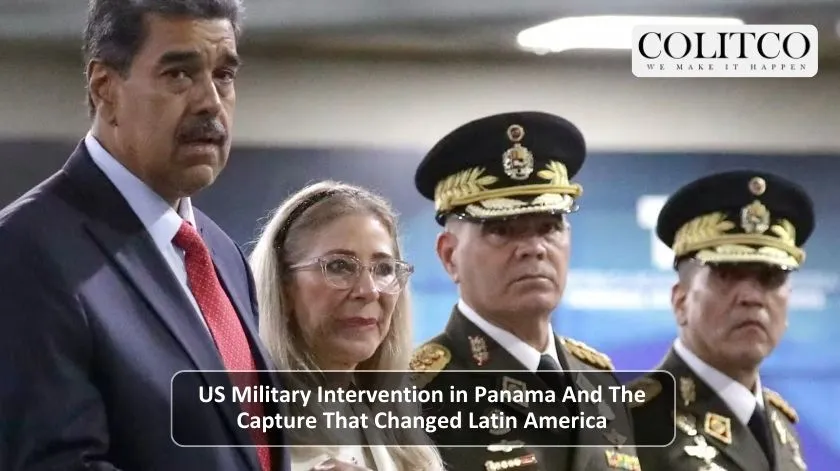
The US military intervention in Panama in 1989 was the first instance of a sitting Latin American leader being captured by Washington. This event altered the regional political landscape and set the tone for the US military’s power projection. The US invasion of Panama in 1989 now catches the limelight anew with the drawing of parallels to the recent scenario in Venezuela.
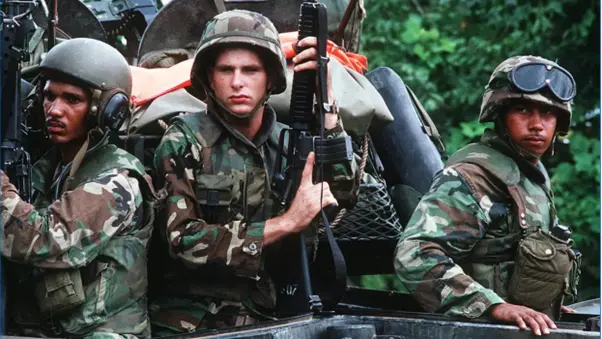
The Panama invasion became a defining moment in US military history. [Source: Responsible Statecraft]
What Triggered The US Military Intervention in Panama?
General Manuel Noriega’s hold on Panama during the 1980s brought about an escalation of tensions. Noriega was indicted on drug-trafficking and money laundering charges in February 1988, but he refused the US demand to vacate his position.
The main points of contention as to why the US invaded Panama are the security of the canal, the stability of the region, and the safety of the US citizens. By December 1989, the relationship between the two countries had deteriorated completely. Noriega called off the elections, silenced the opponents, and proclaimed war on the US. American personnel in Panama City were subjected to detention and harassment.
The US began a full-scale invasion on December 20. The operation comprised a contingent of 27,000 US soldiers who were backed by stealth aircraft, gunships and armoured units. Washington portrayed the intervention as a defensive measure aimed at safeguarding the lives of 35,000 American residents in Panama.
How Did Operation Just Cause Unfold?
The US invasion of Panama in 1989, codenamed Operation Just Cause, quickly moved through the key places. The Panamanian Defence Forces, about 3,000 men, were defeated in a few days.
The city of Panama was heavily damaged in many areas during the attacks. Noriega ran away and took shelter in the Vatican embassy. US troops used psychological tactics to force him to give up. Loud heavy metal music was played non-stop, and the place where he was hiding was surrounded by armoured vehicles.
Noriega ultimately surrendered and on January 3, 1990, was taken to the US under military guards. The operation US military intervention in Panama had thus reached its end.
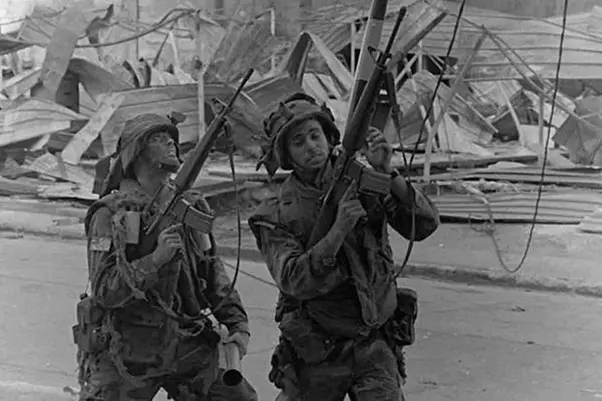
Psychological tactics played a decisive role in Noriega’s surrender. [Source: Military.com]
Who Was Manuel Noriega Before His Arrest?
Noriega’s rise to power happened many years before his downfall. He came from a very poor family; however, he was a military trainee in Peru and later in Panama. Noriega had a long connection with the US intelligence agencies, including the CIA, that dated back to the 1960s.
For nearly thirty years, he was a source of support during the Cold War in Central America. His financial support from the US rose sharply after he took over on the death of General Omar Torrijos in 1981. This friendship soured eventually as Noriega made the drug lords his partners and was ruthless with the opposition inside the country.
What Were The Human And Political Costs?
The invasion caused huge problems for Panama for a long time. The poor neighbourhoods, especially El Chorrillo, were completely wiped out. The number of civilians killed is not clear, but the damage done resulted in a very long period of social trauma and economic difficulty.
Observers from different parts accused the US of using excessive force, and international criticism was raised over the invasion. Historians later depicted the operation as one in which overwhelming power was used against limited resistance.
Even though Noriega was captured, the critics believe the intervention only replaced one crisis with another; thus, the issue of sovereignty and accountability is still open for discussion.
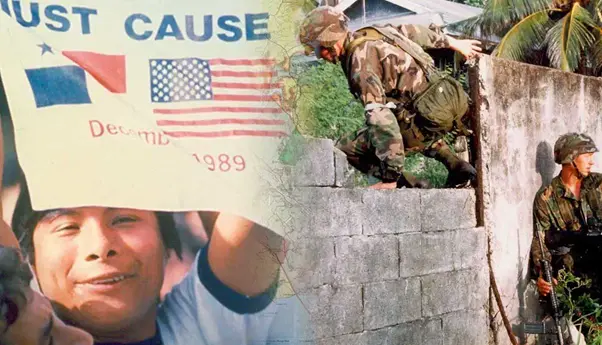
Civilian neighbourhoods bore the lasting cost of the invasion. [Source: TheCollector]
Why Does The US Military Intervention in Panama Still Matter?
The US military intervention in Panama established a precedent for cross-border captures justified through legal indictments. That legacy shapes how global audiences interpret modern US military actions.
Noriega’s prosecution led to decades of imprisonment across multiple countries. He later apologised publicly before his death following brain surgery complications. As global tensions rise, Panama’s history offers lessons about power, restraint, and unintended consequences.
Also read: Danish PM Demands Trump End Greenland Annexation Threats Amid Venezuela Military Operation
FAQs
Q1. Why did the US invade Panama in 1989?
A1: The invasion aimed to remove Noriega, protect US citizens, and secure strategic interests like the Panama Canal.
Q2. How many troops were involved in the Panama invasion?
A2: Approximately 27,000 US troops participated in Operation Just Cause.
Q3. How was Noriega captured?
A3: He surrendered after ten days of psychological pressure while hiding in the Vatican mission.
Q4. What is the lasting impact of the US invasion of Panama in 1989?
A4: It reshaped regional politics and set a precedent for future US military interventions.