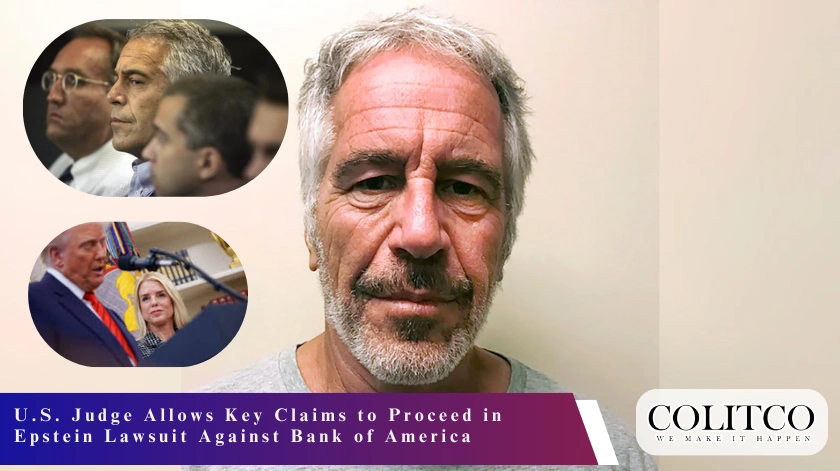
A U.S. federal judge has ruled that a proposed class action lawsuit accusing Bank of America of ignoring red flags linked to Jeffrey Epstein’s sex trafficking activities can move forward, clearing a significant hurdle for alleged victims seeking accountability from the banking giant.
In a detailed opinion issued this week, U.S. District Judge Jed Rakoff said the plaintiffs had presented sufficient allegations that Bank of America acted with “reckless disregard” regarding Epstein’s conduct. The decision permits two major claims to proceed toward trial, while dismissing several others.
The ruling marks another development in the long-running legal fallout from Epstein’s financial dealings and raises renewed scrutiny over how major banks handled accounts tied to the disgraced financier.
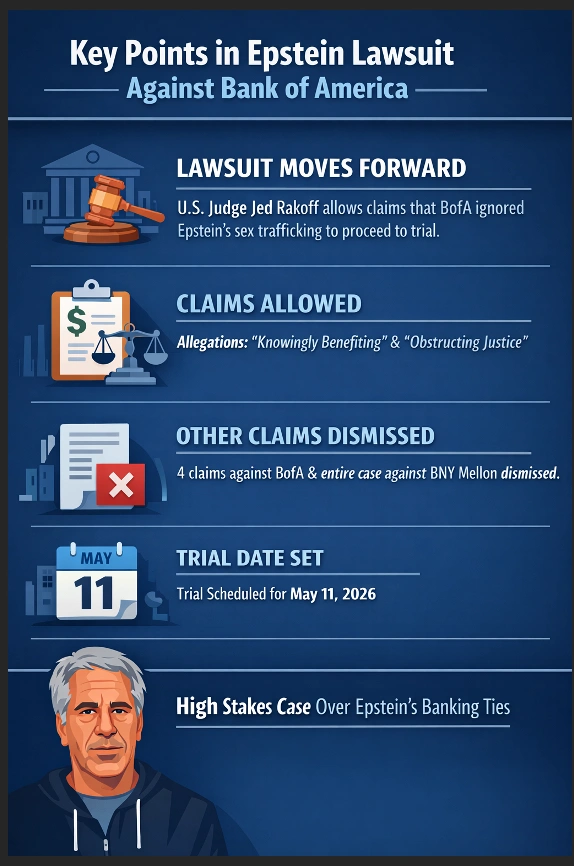
Figure 1: Major points in the Epstein Lawsuit Against Bank of America
Two Core Claims Survive
Judge Rakoff allowed the plaintiffs to pursue claims that Bank of America knowingly benefited from Epstein’s sex trafficking operations and obstructed enforcement of the federal Trafficking Victims Protection Act (TVPA). The judge emphasised that, at this stage, the court was not determining whether the bank is liable, but whether the allegations are legally sufficient to proceed.
The complaint, filed by a woman identified as Jane Doe, alleges that the bank provided specialised banking services that facilitated large financial transfers connected to Epstein. According to the court’s opinion, the plaintiff asserted that the bank granted her “premier” customer status and processed significant sums of money despite warning signs surrounding Epstein’s activities.
Rakoff wrote that the plaintiff plausibly claimed the bank had reason to question the transactions, particularly given widespread media coverage of Epstein’s past criminal conduct and the nature of certain account movements. He noted allegations that the bank failed to scrutinise large transfers moving in and out of accounts held by a young woman with limited financial means.
The judge also cited claims that a former banker who had previously handled Epstein-related accounts at other institutions later worked at Bank of America and allegedly had direct knowledge of Epstein’s misconduct. If proven, such knowledge could potentially expose the bank to civil liability.
Other Claims Dismissed
While allowing two claims to proceed, Rakoff dismissed four additional allegations against Bank of America. He also threw out all claims in a similar lawsuit filed against Bank of New York Mellon (BNY Mellon), finding the pleadings insufficient in that case.
The court’s ruling does not represent a finding of wrongdoing. Instead, it narrows the scope of the litigation and sets the stage for further proceedings. A trial is currently scheduled for May 11.
Bank of America said in a statement that it welcomes a full examination of the facts and intends to defend itself vigorously. The bank has previously argued that the plaintiff failed to show it intentionally interfered with law enforcement or knowingly supported Epstein’s criminal enterprise.
Broader Scrutiny of Banks
The decision comes amid continuing political and regulatory scrutiny of financial institutions that maintained relationships with Epstein.
Separately, U.S. Senator Ron Wyden has pressed BNY Mellon for additional information regarding accounts allegedly linked to Epstein. In a recent letter to the bank’s chief executive, Wyden questioned why certain large wire transfers were not reported to regulators earlier, suggesting that delayed reporting may have hindered law enforcement efforts.
Wyden pointed to a pattern of high-value transfers moving between Epstein-linked accounts and other banks, raising concerns about compliance with anti-money laundering obligations. He has requested documentation related to customer due diligence, suspicious activity reporting, and internal oversight.
BNY Mellon has denied wrongdoing and stated that Epstein was not a direct client of the bank. The institution has said it will defend itself against what it describes as unfounded allegations.
Legal and Financial Fallout
Epstein, who was arrested in July 2019 on federal sex trafficking charges, died in a Manhattan jail cell the following month. Authorities ruled his death a suicide. His arrest and subsequent death triggered a wave of litigation targeting individuals and institutions alleged to have enabled or profited from his activities.
In 2023, JPMorgan Chase and Deutsche Bank agreed to pay substantial settlements to resolve claims brought by Epstein accusers. Those settlements, totalling hundreds of millions of dollars, did not include admissions of wrongdoing but underscored the significant financial and reputational risks facing banks linked to the financier.
The current case against Bank of America represents one of the remaining major legal battles stemming from Epstein’s financial network. By allowing key claims to advance, the court has signalled that institutions may face trial if plaintiffs can plausibly argue that banks ignored warning signs or benefited from illicit conduct.
What Comes Next
As the case heads toward trial, both sides are expected to engage in further discovery and pre-trial motions. The outcome could hinge on whether plaintiffs can demonstrate that Bank of America had actual or constructive knowledge of Epstein’s activities and nonetheless continued to provide services that enabled them.
Legal experts note that cases brought under the Trafficking Victims Protection Act require plaintiffs to show that a defendant knowingly benefited from participation in a venture engaged in trafficking. Proving that level of awareness and benefit often presents a complex evidentiary challenge.
For now, the judge’s decision ensures that the allegations will receive a full hearing in court. With a trial date set and public attention still focused on Epstein’s financial network, the proceedings are likely to draw significant interest from regulators, lawmakers and the broader financial industry.
The case adds to the continuing debate over the responsibility of major banks to detect and report suspicious activity, and whether stronger oversight mechanisms are needed to prevent similar controversies in the future.