

Gold managed to gain slightly and was moving towards a gain for the week as the traders were trying to assess the impact of the U.S. jobs report on gold and the changing rate expectations. Bullion was very close to the recent highs as the investors were mainly concerned with the labour data and looking for central banks’ signals.
The markets were still in a wary mood as the mixed economic indicators were defining the short-term price movements. The investors were on the lookout for insurance as the global risks still hovered high, and the financial markets were of uneven performance.

Bullion Attracts Buyers Amid Policy Uncertainty. [FinancialContent]
What Does The Jobs Data Suggest?
The employment data gave conflicting signals regarding the strength of the economy and the future policy-related decisions. A slower hiring rate can send the interest rate cut expectations upwards, which in turn strengthens the prices of gold.
On the other hand, a stronger labour market may lead to a decrease in gold’s demand due to a stronger dollar and higher bond yields. Hence, the traders are always on the lookout for the smallest shifts in payroll growth and unemployment trends to determine the next move.
Gold’s Weekly Rise Reflects Market Sentiment
The weekly rise in the gold price indicates that the investors and the market players are still there, but the outlook is still cautious regarding global growth. The central banks were always there to keep the reserves stocked as part of the long-term diversification strategy.
ETF inflows were also there as the portfolio managers were increasing their defensive exposure. It was these structural factors that helped the prices to remain somewhat stable even in the face of short-term economic surprises.
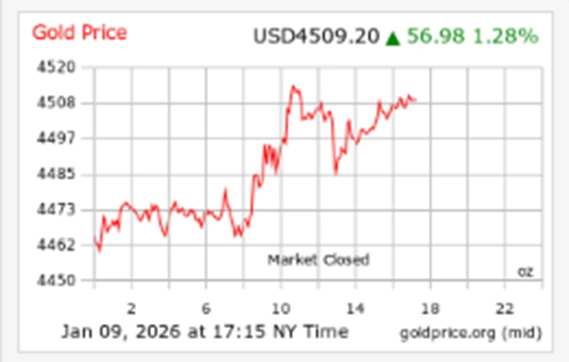 Gold Price Trend. [Goldprice.org]
Why Are Traders Focused On The Fed?
The expectations of rate cuts are still the main reason for the metals to be priced where they are. The traders have been and still are very careful to see the connection between the U.S. jobs data and the gold prices through how the former shapes the latter’s views on the future policy easing.
The lower the rates are, the less costly it is to hold non-yielding assets like gold. This situation makes a stronger bull during periods of economic slowdown or inflation being subdued.
Geopolitical Risks Support Bullion Demand
Safe-haven interest remained high in global markets due to the ongoing geopolitical tensions. The trade wars and regional conflicts increased the worries about the world’s economy and the disruption of supply chains.
To minimise the impact of such risks, investors turned to defensive assets. Gold was one of the main beneficiaries of this trend despite the currency markets showing mixed indications.

Safe Haven Appeal Remains Strong. [Jakarta Globe]
Could Strong Jobs Data Limit Gold Gains?
With the possible scenario of a stronger jobs market and high wages, the expectation of a rate cut could be a balloon that they let slowly deflate. Yield on bonds may rise then, and the dollar could become stronger, which will put additional strain on gold.
The traders will be on guard again for inflation concern revival if the job market remains tight. In this case, gold’s upward trend could be hindered for some time.
What’s Next For Gold Markets?
They wait now for the market players who want further economic data and official policy comments. The adaptation of investor behaviour will depend on the inflation trends, growth outlooks, and developments in global risks.
The impact of the U.S. jobs report on gold will remain the main factor of the short-term direction until traders re-evaluate interest rate paths. Institutional buying and global uncertainty could still be the sources of support for gold over the longer horizon.
Also Read: Larvotto Resources (ASX: LRV) uncovers high-grade antimony-gold growth at Hillgrove
FAQs
Q1: What is the U.S. jobs report impact on gold prices?
A1: Weaker jobs data often raises expectations of rate cuts, which supports gold, while strong data can reduce bullion demand.
Q2: Why did the weekly rise occur?
A2: The rise reflected haven demand, central bank buying, and investor positioning ahead of policy decisions.
Q3: How does U.S. jobs data affect gold prices in the short term?
A3: Jobs data shapes interest rate expectations, which directly influence currency strength and gold investment demand.
Q4: Can geopolitical risks keep supporting gold?
A4: Yes, ongoing global tensions increase demand for defensive assets, helping maintain long-term bullion interest.