
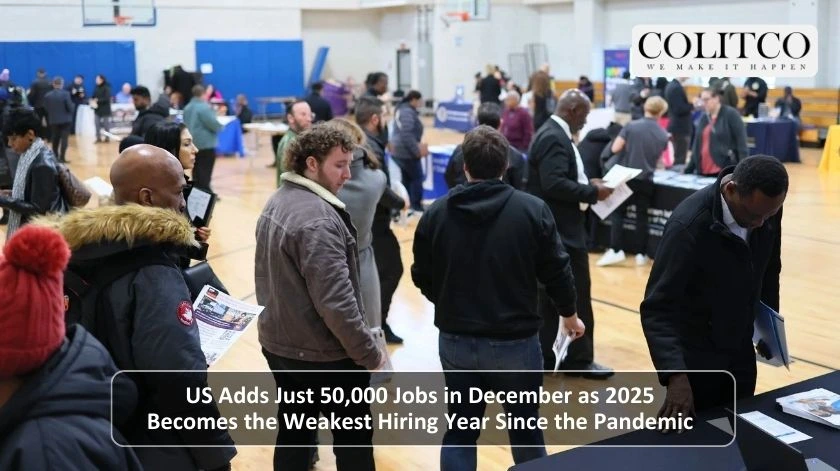
The United States labor market closed 2025 with one of its weakest performances in more than a decade after employers added just 50,000 jobs in December, according to new data released by the US Labor Department. The modest gain capped what economists now describe as the worst year for job creation since 2020, when the Covid-19 pandemic brought much of the global economy to a halt.
Workers leave a job site in the United States as December hiring slows, according to the latest Labor Department report.
The December report was widely seen as a critical test of whether the US economy was stabilising or slipping further into a prolonged slowdown. Instead, the figures confirmed that hiring momentum has faded significantly across much of the country, raising concerns about worker confidence, wage growth, and the broader outlook for 2026.
For the full year, payroll employment rose by just 584,000 jobs, far below the more than two million added in 2024 and well under the levels recorded during the post-pandemic recovery in 2022 and 2023.
December Hiring Falls Short of Expectations
Economists had expected a stronger showing to close out the year, with forecasts calling for around 70,000 new jobs in December. The actual figure of 50,000 highlighted the growing gap between expectations and reality in the US labor market.
Although the unemployment rate edged lower to 4.4 percent from 4.5 percent in November, analysts cautioned that the decline was driven in part by technical adjustments and changes in labor force participation rather than a meaningful rebound in hiring.
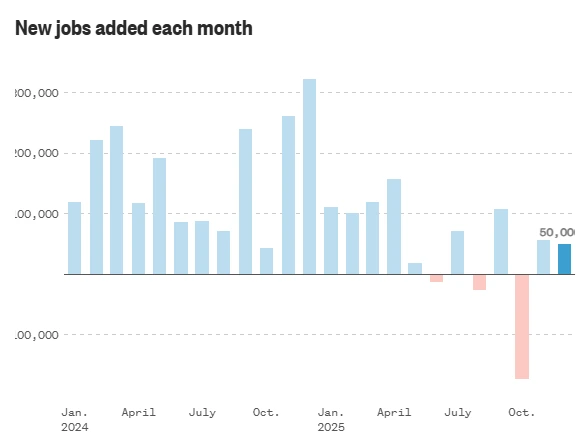
Monthly US job creation shows a sharp slowdown through 2025, with December ending the year at just 50,000 new jobs. (Source: Bureau of Labor Statistics)
The drop in unemployment offered little comfort to workers who are finding it increasingly difficult to secure new roles, particularly those who have already lost jobs in recent months.
Revisions Paint an Even Weaker Picture
The Labor Department also released revised figures for October and November that further undermined confidence in the health of the job market.
October’s payrolls were revised from a loss of 105,000 jobs to a steeper decline of 173,000. November’s job gains were also cut, from 64,000 to 56,000. Together, these downward revisions erased tens of thousands of previously reported jobs and reduced the average monthly job growth in 2025 to just under 50,000.
That pace of hiring is now the slowest recorded outside of an official recession in more than 20 years, highlighting how sharply labor demand has cooled across much of the economy.
A Narrow Group of Industries Is Still Hiring
While overall hiring was weak, some industries continued to add workers.
Food and drinking places led December’s job gains, adding 27,000 positions as consumer spending on dining and hospitality remained relatively resilient. Healthcare also expanded, adding 21,000 jobs, while the social assistance sector contributed another 17,000.
These sectors have been among the most reliable sources of job growth throughout 2025, driven by aging demographics, ongoing demand for care services, and steady activity in hospitality.
Healthcare and hospitality remained among the few sectors still adding jobs in December.
In contrast, retail trade lost 25,000 jobs in December, reflecting the ongoing shift toward e-commerce and cautious consumer spending. Manufacturing, construction, and transportation showed little change, suggesting that many employers in those sectors have paused hiring amid uncertainty about future demand.
Economists noted that without gains in healthcare and social services, the US labor market would likely have posted net job losses for the year.
Long-Term Unemployment Is Rising
One of the most troubling signals in the latest data is the increase in long-term unemployment.
The share of Americans who have been without a job for 27 weeks or longer rose to 26 percent of all unemployed workers in December, the highest level since early 2022. This trend indicates that people who lose jobs are taking much longer to find new work, a classic sign of a cooling labor market.
Surveys from the New York Federal Reserve showed that workers are becoming increasingly pessimistic. The perceived probability of finding a job within three months of losing one fell to a record low in December, reflecting growing anxiety among households heading into 2026.
Private Sector Data Shows Mixed Signals
Not all indicators pointed to a deteriorating jobs market.
Private payroll processor ADP reported that US companies added 41,000 private-sector jobs in December. While modest, the figure suggested that some hiring activity continued outside of government employment.
At the same time, global outplacement firm Challenger, Gray & Christmas said announced job cuts in December were the lowest since mid-2024, offering a small sign that layoffs may be easing.
The Bank of America Institute also reported that its internal payroll estimates showed year-over-year growth stabilising in December, raising hopes that the worst of the slowdown may be passing.
However, economists cautioned that private data often diverges from official Labor Department figures and should be viewed as only part of the broader picture.
Government and Immigration Policies Weigh on Hiring
Several policy factors contributed to the weak labor market in 2025.
Government employment fell sharply, particularly in October, after large numbers of federal workers exited their roles following restructuring and budget cuts. Since January, federal government employment has declined by more than 270,000 jobs.
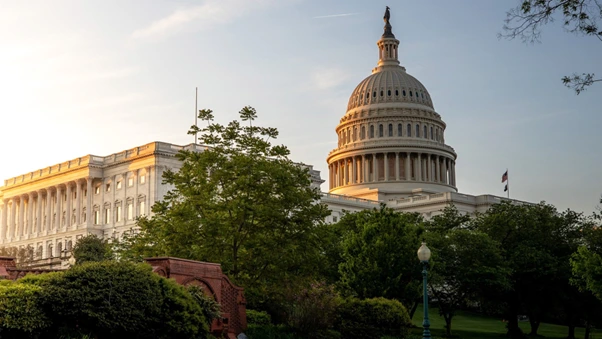
Government workforce reductions and policy shifts have added pressure to the US labor market.(Source: moylan.house.gov)
At the same time, tighter immigration policies reduced the growth of the labor force. Economists say immigration has helped fill critical labor shortages in recent years, and its slowdown has limited the ability of businesses to expand staffing even where demand exists.
These combined effects have left many employers cautious, especially in industries that rely heavily on seasonal or migrant labor.
Federal Reserve Unlikely to Cut Rates in January
Despite the weak hiring data, most analysts do not expect the Federal Reserve to lower interest rates at its January meeting.
Market pricing shows a high probability that the Fed will keep its benchmark rate unchanged as policymakers assess whether inflation pressures remain contained. Falling unemployment has reduced the urgency for immediate stimulus, even as job growth slows.
Wage data showed that average hourly earnings rose 3.8 percent year-over-year in December, indicating that pay growth remains steady and continues to influence inflation risks.
Also Read: U.S. Jobs Report Impact On Gold Drives Weekly Rise As Traders Weigh Fed Rate Path
What It Means for Workers and the Economy
The December jobs report suggests the US economy is entering 2026 with a labor market that is stable but fragile.
Layoffs remain relatively limited, but hiring has slowed to a point where many workers feel stuck, unable to move to better jobs or negotiate higher pay. Employers, meanwhile, appear reluctant to expand payrolls until economic conditions become clearer.
For households, the slowdown means greater uncertainty around income and job security. For policymakers, it presents a delicate balancing act between supporting growth and avoiding inflation.
Final Thoughts
The addition of just 50,000 jobs in December has cemented 2025 as one of the weakest years for US employment growth since the pandemic era. While some sectors continue to expand, the broader labor market is showing clear signs of fatigue.
Whether the slowdown deepens or begins to reverse will depend on consumer spending, business confidence, and policy decisions in the months ahead. For now, the US job market remains in a cautious holding pattern as it enters a pivotal new year.