
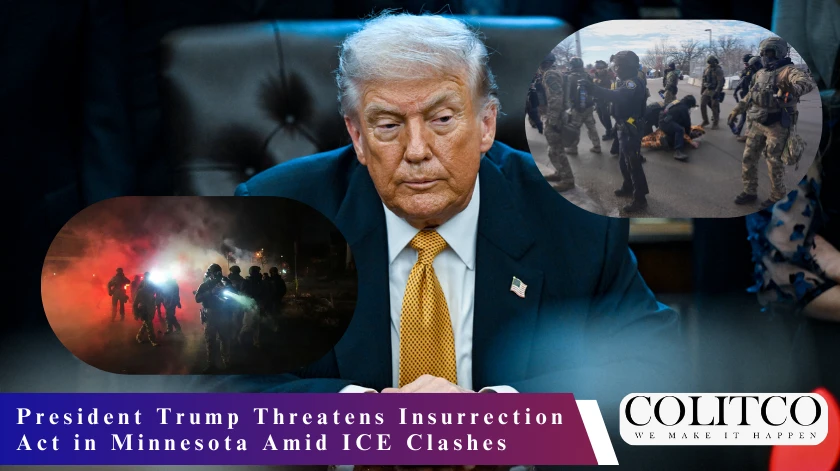
President Donald Trump issued a formal warning to Minnesota leaders on Thursday. He threatened to invoke the Insurrection Act of 1807. This law allows the president to deploy military forces within the United States. Trump aims to stop protests against federal immigration officers in Minneapolis.
The president posted his statement on the Truth Social platform. He addressed the ongoing clashes between activists and Immigration and Customs Enforcement agents. These tensions increased after multiple shootings involving federal personnel this month. Trump demands that state officials prevent attacks on federal employees immediately.
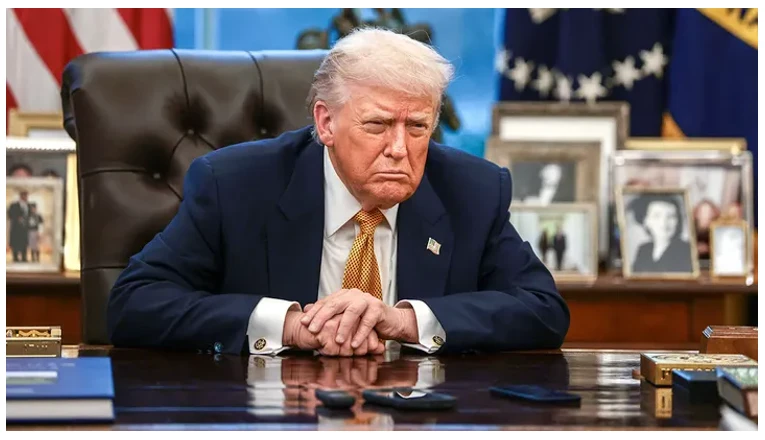
President Donald Trump in his Oval Office
Presidential Social Media Declaration
Trump used social media to outline his potential use of military power. He criticised the management of the state by local politicians. The president claimed that agitators interfere with federal law enforcement duties. He promised to restore order through the historic act.
Trump wrote the following message to his followers:
“If the corrupt politicians of Minnesota don’t obey the law and stop the professional agitators and insurrectionists from attacking the Patriots of I.C.E., who are only trying to do their job, I will institute the INSURRECTION ACT, which many Presidents have done before me, and quickly put an end to the travesty that is taking place in that once great State. Thank you for your attention to this matter! President DJT.”
Recent Violence and Officer Shootings
A federal officer shot a man in the leg on Wednesday night. This incident occurred in north Minneapolis during a traffic stop. The Department of Homeland Security stated the officer faced an ambush. Three individuals allegedly attacked the officer with a shovel and a broom handle.
The victim from the Wednesday shooting remains in the hospital with injuries. This event followed the death of Renee Good on 7 January. An immigration agent fatally shot Good during a separate enforcement operation. These shootings sparked nightly protests across the Twin Cities region.
At 6:50 PM CT, federal law enforcement officers were conducting a targeted traffic stop in Minneapolis of an illegal alien from Venezuela who was released into the country by Joe Biden in 2022.
In an attempt to evade arrest, the subject fled the scene in his vehicle and crashed…
— Homeland Security (@DHSgov) January 15, 2026
Escalating Tensions in Minneapolis
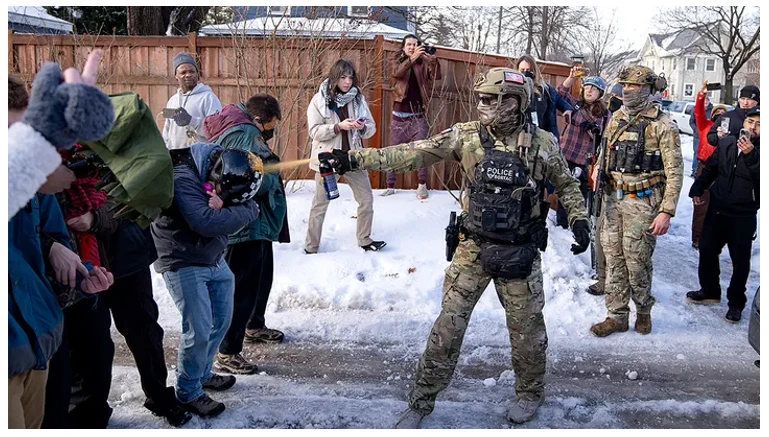
Crowds gathered near the site of the Wednesday shooting to protest. Federal officers wore gas masks and helmets during the confrontation. They used tear gas and flash bangs to disperse the assembly. Protesters threw rocks and launched fireworks at the law enforcement lines.
Police Chief Brian O’Hara described the gathering as an unlawful assembly. He ordered the participants to leave the area late Wednesday night. Small groups of demonstrators remained at the scene until early Thursday morning. Smoke filled the streets during the height of the conflict.
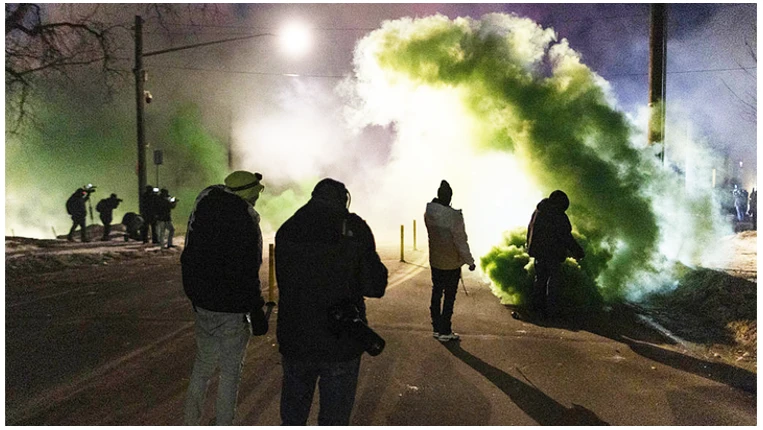
Federal agents deployed tear gas and pepper balls
Federal Immigration Surge Statistics
The Trump administration launched a massive immigration crackdown in December. This operation involves thousands of federal personnel across the state. The Department of Homeland Security provided specific figures regarding the deployment:
- 800 Customs and Border Protection agents operate in the area.
- 2,000 Immigration and Customs Enforcement officers maintain a presence.
- 2,000 arrests occurred in Minnesota since the start of December.
- The Pentagon sent 20 military lawyers to assist with prosecutions.
DHS officials call this the largest operation in the history of the department. They refuse to withdraw despite local opposition. The agency vows to continue the removal of individuals from the country. Federal agents focus on targets across Minneapolis and Saint Paul.
Legal Challenges from Minnesota Officials
Minnesota Attorney General Keith Ellison filed a lawsuit against the federal government. Governor Tim Walz and Mayor Jacob Frey support this legal action. The lawsuit seeks to halt the surge of federal agents. It alleges that the Department of Homeland Security uses excessive force.
The state argues that the federal presence causes harm to the community. Officials claim the agents operate without proper warrants in restaurants and homes. They describe the deployment as a federal invasion of the state. A judge declined to issue a temporary restraining order on Wednesday.
Statements from Administration Officials
Deputy Chief of Staff Stephen Miller defended the federal operations on television. He warned that officials who impede ICE officers will face justice. Miller mentioned potential charges for criminal conspiracy against the United States. He maintains that federal agents possess immunity during these duties.
The White House insists that the president must enforce federal law. Spokespeople argue that state leaders ignore public safety requirements. They claim the immigration sweeps target individuals with criminal histories. The administration continues to move resources into the Minnesota region.
Also Read: The Insurrection Act: How a Historic Law Empowers Presidential Action
Impact on the Twin Cities Community
Local leaders report that the federal surge taxes police capacity. Minneapolis and Saint Paul each employ approximately 600 police officers. These departments must respond to clashes between federal agents and residents. Mayor Frey stated that the federal tactics do not improve safety.
The immigrant population in Minnesota sits at 1.5 per cent. This figure remains below the national average for the United States. Attorney General Ellison suggests that political bias influences the federal targeting. He noted that the state percentage is lower than in Florida or Texas.
Future of the Insurrection Act Threat
The Insurrection Act remains a rarely used tool for domestic law enforcement. It requires the president to issue a proclamation to disperse first. Trump has mentioned this act multiple times since his inauguration in 2025. He cites the need to combat urban crime and protect federal facilities.
The situation in Minneapolis remains volatile as protests continue daily. Federal agents remain on the streets to execute arrest warrants. State officials await further rulings from the federal court system. The deployment of the military would mark a significant escalation in the standoff.