Something dramatic has been quietly playing out in global silver markets for nearly five years. The world is running low on the white metal, and ASX investors paying attention are sitting on some of the biggest gains in the sector’s recent history.
The numbers tell a stark story. COMEX registered silver stocks have fallen below 100 million ounces, a threshold that rattled traders when it was breached in February 2026. From their 2020 peak of 346 million ounces, COMEX registered inventories have declined over 70%, dropping to just 82 million ounces by late 2023, before a brief recovery gave way to renewed drawdowns. Meanwhile, Shanghai’s silver inventories dropped below 446 tonnes, the lowest since 2016, with over 300 tonnes lost in October 2025 alone.
This is not a routine market fluctuation. It is a structural shift.
Five Years of Bleeding Dry
The global silver market has run five consecutive annual supply deficits since 2021, totalling roughly 800 million ounces, the equivalent of nearly one full year of global mine production.
Metals Focus says the world is facing the deepest silver supply deficit ever on record, about 295 million ounces for 2025 once ETF flows are counted. The cumulative silver deficit since 2019 now tops 1.3 billion ounces.

COMEX registered silver inventories have shed significantly from their peak [DataTrack]
What drives this relentless drain? Two forces are working in tandem.
On the demand side, solar energy is devouring silver at a pace few predicted. Photovoltaic demand for silver reached 232 million ounces in 2024, a 286.7% surge from 60 million ounces in 2015. Each gigawatt of solar capacity requires hundreds of thousands of ounces of silver for conductive paste, and global solar installation is accelerating, not slowing.
On the supply side, the industry faces an awkward structural problem. Around 70% of global silver output comes as a byproduct of base-metal mining, mainly copper, zinc, and lead, meaning output depends on the economics of those other metals, not silver itself. Even at record silver prices, producers can’t simply flip a switch to boost supply.
The December 2025 episode crystalised how severe things had become. Over 47.6 million ounces of silver were claimed for delivery in the first four trading days of December 2025, more than 60% of COMEX’s total registered silver inventory, an unprecedented depletion rate.
The silver shortage ASX investors had been warned about for years had arrived.
The Paper Market Cracks
For decades, silver has been priced largely through futures markets, where the volume of contracts dwarfs the actual physical metal available. That arrangement held together because most traders settled in cash rather than taking delivery.
That assumption broke down in late 2025.
On the First Notice Day for the March 2026 COMEX contract, delivery notices were issued for 10,526 contracts, representing roughly 52.63 million ounces of silver. This demand represented more than 60% of total registered inventory, leaving a dangerously thin margin for error.
The silver market moved into backwardation, where futures prices trade below spot, signalling severe dislocation between the paper and physical markets. Borrowing costs for silver spiked to extraordinary levels as large holders refused to lend metal they weren’t sure they’d get back.
Silver touched an all-time high of USD $121.62 per ounce in January 2026, a move that caught many mainstream commentators flat-footed.
UBS strategist Joni Teves had flagged silver as increasingly vulnerable to liquidity squeezes, expecting upside bursts and price spikes, especially when investor demand flares up. She projected silver should outperform gold in 2026, with upside cases pointing toward USD $55–$65 per ounce. That forecast now looks conservative.
What This Means for ASX Precious Metals Stocks
Australian investors don’t need to hold physical silver bars to benefit from this dynamic. Several ASX-listed companies offer meaningful exposure, and some have already delivered extraordinary returns.
Evolution Mining (ASX: EVN) is the standout gold-silver play among large caps. Evolution Mining gained 87% over six months to the start of 2026, with the company’s disciplined operational approach and cost control turning elevated commodity prices into strong cash flow. Broker consensus on ASX gold stocks remains broadly constructive, though analysts have flagged that at current valuations, the easy money has likely been made.
South32 (ASX: S32) offers a different angle. South32 operates across alumina, aluminium, manganese, nickel, copper, zinc, lead, and silver, and gained 72% over six months to early 2026. The Company’s Cannington mine in outback Queensland is one of the world’s largest silver and lead producers. For investors who want precious metals exposure without pure-play volatility, South32’s diversified earnings base provides a natural cushion.
For those willing to take on more risk, Silver Mines Ltd (ASX: SVL) holds the Bowdens Silver Project in New South Wales. Bowdens represents the largest known undeveloped silver resource in Australia, with proven and probable mineral reserves of 71.7 million ounces of silver. The stock delivered over 90% returns during 2025’s precious metals rally.
The broader picture from ASX mining analysis is that pure-play silver developers tend to produce the largest gains during a silver bull market, but also the sharpest corrections. Cannington-backed South32 plays the role of the steadier hand.
How Young Is This Bull Market?
Context matters when assessing whether there’s runway left.
The current precious metals bull market began in earnest around October 2022, when gold bottomed near USD $1,627 per ounce and silver near USD $17.83. That makes the cycle roughly two and a half years old as of early 2026.
Historical analysis reveals that precious metals bull markets tend to unfold over multi-year periods, often lasting between five and fifteen years depending on underlying macroeconomic conditions. The 1970s run from 1971 to 1980 lasted nearly a decade. Even shorter cycles, like the 2008–2011 run, lasted three years before peaking.
Gold bull markets following major technical breakouts have historically generated average gains of 300–500% over 3–4 year periods. Mining stocks have frequently delivered leveraged returns, with gold stocks averaging 972% and silver stocks producing 1,612% returns during the 2001–2008 period.
By those yardsticks, the current cycle, which has seen gold gain roughly 144% from its October 2022 low, is still in its middle stages. Silver, with its greater price volatility and smaller market, typically accelerates in the later phases of a precious metals bull run as physical scarcity becomes undeniable.
That is precisely the environment that appears to be unfolding right now.
The Industrial Demand Wild Card
Unlike gold, silver doesn’t just sit in vaults. It gets consumed.
Every solar panel that goes on a rooftop removes silver from the above-ground supply chain permanently. Every electric vehicle produced. Every 5G antenna installed. Every AI data centre requiring specialised electronics.
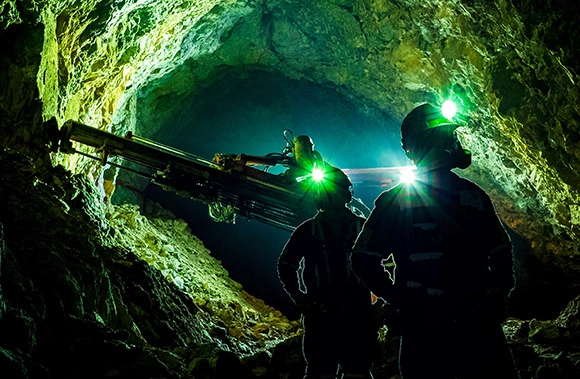
A silver mine in operation [The Silver Institute]
China’s decision to reclassify silver as a strategic material, restricting exports, has fragmented the global market and exacerbated supply shortages, creating a three-way regional split between Asia, North America, and Europe. Each region is now competing for whatever metal it can secure.
Strategic pivots are already underway, with many large-scale electronics and solar manufacturers reportedly negotiating off-take agreements directly with primary silver producers to ensure production lines remain operational.
This shift is significant. When industrial users move to secure supply directly, bypassing exchanges, it removes metal from the pool that traders rely on. It tightens the market further.
For Australian gold and precious metals producers, this structural demand shift is a tailwind that has little to do with monetary policy or investor sentiment. It’s driven by physical reality.
Hedging Through Miners: A Practical Framework
For ASX investors looking to position themselves ahead of a potential Q2 2026 silver rally, a tiered approach makes sense.
- Large-cap, diversified exposure: South32 (ASX: S32) provides silver alongside base metals. Less upside leverage than a pure-play, but far more resilience in a downturn.
- Mid-cap gold-silver producer: Evolution Mining (ASX: EVN) captures the gold-silver complex through its diversified Australian operations and a copper by-product credit from its Ernest Henry mine.
- Development-stage leverage: Silver Mines Ltd (ASX: SVL) and Sun Silver Ltd (ASX: SS1) offer higher-risk, higher-reward exposure for those with a longer time horizon and appetite for volatility.
The key risk to monitor is the gold-to-silver ratio. Historically, when that ratio compresses, meaning silver outperforms gold, it signals the later, more explosive phase of a precious metals bull cycle. The ratio has averaged around 60–70 since 1915, with extremes like nearly 100:1 in 2020 during market volatility and as low as 20:1 in 1980. A compression toward historical averages would imply substantial further gains for silver relative to gold, and significant leverage for ASX gold and silver stocks.
The Bottom Line
The silver drain is not hype. It is measurable, documented, and accelerating. Five years of supply deficits have systematically hollowed out the stockpiles that exchange markets relied on to balance physical demand with paper supply.
The COMEX registered below 100 million ounces. Shanghai is at decade lows. Industrial users are locking in direct supply deals. China has restricted exports.
None of these factors resolve quickly. New primary silver mines take the better part of a decade from discovery to production. Byproduct supply from base metal mining follows its own economic logic.
The precious metals bull market is two years old in a cycle that has historically run five to fifteen. Silver, the more volatile, more industrially essential, and more physically scarce of the two main monetary metals, tends to deliver its most dramatic returns in exactly this kind of environment.
Australian investors with exposure to the right names may be better positioned than they realise.
Also Read: China’s State Iron Ore Buyer Turns the Screws on BHP And This Time, It’s the Big Products
Frequently Asked Questions
Q: What is causing the global silver inventory collapse?
A: Five consecutive years of supply deficits totalling over 1.3 billion ounces since 2019, driven by surging industrial demand from solar panels, electronics, and the energy transition, combined with inelastic byproduct supply from base metal mining.
Q: How much have COMEX silver inventories fallen?
A: COMEX registered silver stocks fell over 70% from their 2020 peak of 346 million ounces. By February 2026, registered stocks had fallen below 100 million ounces, breaching a key psychological threshold.
Q: Which ASX stocks give the best silver exposure?
A: South32 (ASX: S32) via its Cannington mine offers large-cap stability. Evolution Mining (ASX: EVN) provides gold-silver exposure with copper credits. Silver Mines Ltd (ASX: SVL) and Sun Silver Ltd (ASX: SS1) are pure-play development stories with higher risk and reward.
Q: How long do precious metals bull markets typically last?
A: Historical analysis shows precious metals bull cycles typically last between five and fifteen years. The current cycle, which began around October 2022, is roughly two and a half years old.
Q: Will silver prices keep rising in Q2 2026?
A: UBS and multiple institutional analysts have flagged silver’s upside potential, with structural physical tightness, China’s export restrictions, and growing industrial demand all pointing to sustained price support. That said, precious metals are volatile and past performance does not guarantee future results.